Tests, articles and news about car trackdays and motorsport
The paddock of a track day looks like a well-behaved zoo: you always meet the same species, each convinced it is the only one of its kind. There are dozens of varieties, but five turn up at every outing, whatever the circuit, the weather or the price of the coffee. Here is the field guide, to be read with a smile. Good news: everyone recognises themselves in it, and those who claim otherwise are probably number 4. 1. The beginner who has read everything He has read three books, watched forty videos and learned the ideal line for every corner of a circuit he has never seen. He arrives the day before to scout the car park, with a notebook, a stopwatch and a laminated checklist. In the morning briefing he is the only one taking notes, and he asks a question about tyre pressures to which the instructor responds with a polite smile. On track, everything gets complicated: he applies everything at once, which amounts to applying nothing at all. He thinks about the apex, the far-away gaze, weight transfer, the mirror and the next corner, and he discovers that a brain does not have as many processors as a modern car. By the second lap he already drives like someone reciting a poem learned by heart: correctly, but without understanding a word. His gear deserves a mention. A race suit bought before he ever drove a lap, matching gloves, and a bag so neatly packed that it takes him ten minutes to find his wheel wrench. He printed the track map and highlighted the braking zones in three colors, which will be useful right up to the first corner. At the lunch break, he is the one rereading his notes over his sandwich, before heading back out with a new theory. It usually lasts a lap and a half, which is how long it takes the circuit to offer another one. In the evening he leaves tired, head full, and already signed up for the next date: the mark of the very best. 2. The one with perfect tyres and no level to match His tyres cost two months' salary, his wheels are forged, his brake pads have an Italian name and his calipers are painted a colour that does not exist in nature. In the pits he likes to open the boot and let a circle of admirers take the guided tour. He knows the part number of every component, the price of every component and, on good days, the purpose of a few of them. On track, though, he laps three seconds behind an old standard hatchback driven by someone very calm, and that is where the argument with himself begins: "There must be a setting." There always is, of course: the body is too high, the track too narrow, the temperature too cold. Each new piece of kit removes a little of his excuse, but plenty remain, and he already has an order form for the next one. He also has the car that silences the pits when it starts. The engine is tuned, the exhaust has been "optimized", and the noise is such that you recognize his arrival before you see him. The brakes are racing brakes, but he treats them as if they were borrowed. The best part is the comparison moment: the neighbor in the next pit, driving a standard sedan, politely asks him how much horsepower he has. He answers precisely, down to the last horse, then asks the same question back and gets: "I don't know, enough." It is the most dangerous answer in the paddock. 3. The lap-time fan He knows his times to the hundredth: yesterday's, those from two years ago and those of his neighbour in the pits, which he obtained without asking. He checks his app at every return, with the look of a trader in front of his screen, even though the day is made for driving, not for comparing. In the pit lane he is already setting up the recording of the next lap. His best lap was always "ruined by traffic", by a yellow flag or by a car whose driver "never looks". He sometimes leaves the pits just behind someone faster to "benefit from the slipstream", which is an elegant way of asking to be overtaken in the first corner. By dint of chasing the hundredth, he sometimes forgets the corner that was supposed to bring it to him. In the car, the camera is mounted, the GPS too, and the data streams live to a phone sitting on the dashboard. Back at the pits, he sets up a laptop in the middle of the garage and overlays his curves on yesterday's, looking like a Formula 1 engineer with a camping budget. In the evening, at the debrief with himself, he has gained two tenths in the chicane and lost four on the straight, without quite knowing why. He goes home delighted anyway: on a graph, there is always a reason to hope. And the following weekend, he comes back to hunt for that tenth like a treasure hunter. 4. The king of the missing mirror He drives straight, focused, confident: what happens behind is an unimportant detail. Faster cars caught up with him three corners ago, flashed their headlights, then flashed them a second time, and he still has not noticed. In his world, the track starts at the front bumper and stops at the windscreen. In the pits afterwards, he complains that "people tailgate", that "some drive like idiots" and that the day would have been perfect without the others. He does not understand that the others are precisely the ones who waited, with admirable patience, for a gap that never came. The marshals, for their part, know him well: they have already waved a blue flag in his direction with the serenity of people who know he will not see it. There is a more sophisticated variant: the one who looks carefully behind him, but only to decide to change nothing. He saw you, that much is certain, and concluded that the line was his. You follow him for three corners thinking his car has a transmission problem, before realizing it is a problem of principle. Most track days do provide clear passing rules, repeated at the morning briefing. The king of the missing mirror, for his part, did not read the rules: he looked at the pictures. 5. The quiet pro An old car with no stickers, a plain helmet, a flask and a smile. He arrives early, sets up his corner of the pits in ten minutes, and looks like anything but someone you would notice. While the others compare their wheels, he checks his pressures, his fluid levels and his torque settings, then sits down with a coffee, like a man with nothing to prove. On track, he drives so smoothly you think he is slow, until you look at his lap time. He never brakes late, he brakes right. He does not overwork the car, he lets it breathe. He moves over without a thought when a faster car arrives, and when he overtakes he leaves the necessary room to the one he passes. At the end of the day he has done more laps than anyone, with brakes that have not faded. He says nothing about his technique, but gladly answers anyone who asks, without the tone of a know-it-all. It is the only species to take inspiration from without saying so: calm, clean, consistent, and always one eye on the mirror. You do not become him by buying something, but by driving a lot, listening to those who know more and accepting, from time to time, to be the beginner of the day. To observe these species in their natural habitat, the EuropaTrackdays calendar lists the track days near you, with the circuit, the organiser and the format. See you in the pits. Read also: Getting started on the track: what you need to know before your first day Any resemblance to existing drivers is, of course, purely coincidental.

EuropaTrackdays turns 20 on 1 January 2027 (already!). A good occasion for the biggest update the site has had in a long time: bug fixes, better navigation on phones, search with filters, simpler photo upload and a few other new features that we leave you the pleasure of discovering. The heart of the site is still the calendar, which is slowly taking shape for 2027: most of the dates will arrive by the end of the year or very early in 2027, depending on the organisers. Take a lap around the site and tell us what you think: a bug, a page that does not look right, an idea for an improvement? Write to us from the contact page. Thank you for your loyalty, and welcome to the newcomers 😊.

Racer's was an online magazine devoted to track driving in France. Its first issue came out in spring 2013, and EuropaTrackdays was already welcoming the initiative, with a tone that was "both professional and relaxed". The magazine's motto said it all: "the magazine for trackday drivers.. written by trackday drivers". Free at the start, it was later offered at 2 € an issue. A simple idea: learning to drive calmly on a circuit Often shunned because wrongly lumped in with dangerous driving on the road, circuits were attracting more and more sports car owners. Racer's wanted to give them all the keys to driving with peace of mind. Its writing never claimed to replace the advice of a qualified driving instructor on the spot, but to serve as a foundation before heading out alone on a track, or for improving. Every issue brought together the same regular features: a track test of a car, often rare or modified, carried out on a circuit and not on the road; a driving feature: racing lines, load transfer, braking, heel-and-toe, driving position; a technical subject: the turbo, suspension set-up, tyre warm-up; "La bonne traj'": a circuit under the microscope, with the ideal racing line and the braking points; news, photographers' portfolios and, depending on the issue, reader trackday drivers in the spotlight. Marc Peraldi According to the introduction published in the first issue, Marc Peraldi is a state-qualified driving instructor and mechanical engineer, and he put this twofold experience at the service of Racer's readers. He was then an instructor at renowned driving schools, such as the Porsche Sport Driving School or the Le Mans driving school, and a volunteer in the organisation of the 24 Hours of Le Mans, where he drove the Safety Cars or worked in race control. He built up his driving experience at club track days, then kept progressing by rubbing shoulders with professional drivers. He was thus as close as possible to what readers go through all year round: preparing their car, fine-tuning their driving and looking for the best car to drive. A team of enthusiasts Marc Peraldi was not alone. Three professional instructors, Dimitri Enjalbert, Vincent Capillaire and Guillaume Greuet, each had solid international racing experience and had been teaching driving for many years. Racer's gave them "the pro's eye" at the end of each article, and they also wrote features: driving position for Dimitri, the Sébastien Loeb Racing LMP2 for Vincent, tyre warm-up for Guillaume. Dimitri Enjalbert has his own page among the EuropaTrackdays instructors: see his page. Dimitri Enjalbert Professional instructor Vincent Capillaire Professional instructor Guillaume Greuet Professional instructor Kevin Goudin Photographer On the pictures side, two passionate photographers. Kevin Goudin, based in the south-west, covers as many events as possible at the circuits in his region, notably the Racercar and GT de Série races at Nogaro. Loïc, in Belgium, an amateur driver of a BMW M3 e46, photographs the circuits in his region and the Nürburgring, where he covered the Nissan GT-R test in issue 3. The issues, one by one Issue 1 (April 2013): test of the Porsche 997 GT3 RS, racing line theory, the turbo, the ideal lines on the Bugatti circuit at Le Mans. Issue 2: test of the Nissan GT-R, load transfer, Magny-Cours in F1 layout. Issue 3: test of the BAC Mono at Spa-Francorchamps, braking. Issue 4: test of the BMW M3 E92 DM Performance, heel-and-toe, Nogaro, insurance. Issue 5 (November 2013): test of the Mégane RS 330 hp, suspension set-up, driving tips for Dijon-Prenois. Issue 6: more than 1,000 hp gathered on the Lurcy-Lévis track, the French Evo Days, driving position, the Sébastien Loeb Racing LMP2, racing lines at the Chambley circuit. Issue 7 (August 2014): test of a Ferrari 355 Challenge, the right lines at Issoire, advice for beginners at track days. Issue 8 (February 2015): test of a Renault Clio 3 Cup, racing in the Clio Cup, tyre warm-up, readers' trackday drivers. Racer's articles on EuropaTrackdays Some of the magazine's articles have found a new home here, with Marc's agreement: Porsche 997 GT3 RS (issue 1) Nissan GT-R GLR 600+ (issue 2) BAC Mono, put to the test at Spa-Francorchamps (issue 3) Heel-and-toe (issue 4) BMW M3 E92 DM Performance (issue 4) Renault Mégane 3 RS (issue 5) Suspension and chassis set-up (issue 5) Renault Clio 3 Cup (issue 8) Warming up your tyres: the method (issue 8) The driving position (issue 6) Racing lines (issue 1) Load transfer (issue 2) Braking (issue 3) More Racer's articles will be added over time.
"How much does a track day cost?" This is the first question every beginner asks, and their partner too, usually in a different tone. The short answer: registration is just the tip of the iceberg. Here's the long answer, with figures, price ranges, and a few tips to keep the bill within reason (which, on the track, is a very relative concept). Because depending on the organizer, the track, and especially the car, the same satisfaction at the end of the day can cost €100 or €10,000. Registration: the displayed price This is the line you see on the calendar. According to the open track days listed by EuropaTrackdays in 2026, the median registration fee for a full day is around €200, with most days costing between €120 and €400. A half-day generally costs a little more than half the price of a full day. Some organizers also offer packages (ten half-days, membership cards) which lower the final price, provided you stick to them; otherwise, it's a great way to support an organizer, who certainly deserves it. Small local club days, which exist everywhere and cost much less, are harder to spot and often just as nice, but the organization is not always very rigorous and your bodywork might not appreciate the free aperitif at noon. Three price differences: the organizer, the circuit, the car A median doesn't tell the whole story: two track days may only have the word "track" in common. There are three main sources of discrepancy: The organizer: a little bit. On the same circuit, organizers don't charge the same price because they don't offer the same services: limited or unlimited number of cars, instructors, insurance, meals, support. At Spa-Francorchamps, a day's admission ranges from €469 with one organizer to €990 with another; at Hockenheim, from €390 for a German club (for its members) to over €700 with a coached organizer; at Le Castellet, track access with lunch and an open bar costs €650 to €800 with a car-brand club this year, €890 for a day of open track time with another, and €990 for seven hours of track time with a third. The difference is rarely more than double, but enough to compare what's actually included before choosing the cheapest option. The circuit: a lot. A registration at La Châtre (it's a remote spot in France) will cost you less than €100, while an all-inclusive day at Le Castellet (also in France, but closer to the sea) starts at €650 and can exceed €1,500. On one hand, a family day out, where you picnic on the hood of your car and everyone knows each other; on the other, a day out where they bring you drinks before you're even thirsty. Both have their regulars, and we respect the differences. A well-known circuit is expensive to rent, and that's reflected in the registration price. The same gradation can be found throughout Europe: a lap of the Nürburgring Nordschleife on open laps costs €35 at the ticket office, while a day on a major Formula 1 circuit like Barcelona-Catalunya costs between €550 and €900 with open track day organizers, and much more in coached formulas or those reserved for racing cars. The car: enormously. It's the difference we forget when comparing entry fees, yet it's the one that weighs most heavily on the season. On a Focus ST, a set of sporty front brake pads costs €120 to €180, a set of discs around €250, a set of four sport tires around €700, and fuel for the day around €80. On a supercar with carbon-ceramic brakes, the pads cost hundreds of euros, a set of discs is ten thousand or more, a set of semi-slick tires costs €1,500 to €2,500, and the number of liters of gasoline (or kerosene, if you prefer) consumed by your V12 will make you long for a turbocharged 3-cylinder. We won't even mention the differences in repair costs in case of over-enthusiastic braking at the end of a straight. In short, the enjoyment is virtually identical, down to the tenth of a second, the grin on the way home is the same, and only the bill is worlds apart. The most sensible approach: choose the car, the circuit, and the organizer in that order, not the other way around. Fuel: it goes fast On the track, a sports car consumes... (I'll let you fill in the blanks based on your own experience): you're very often at full throttle. Expect 20 to 50 liters per 100 km, or 30 to 250 liters per day, depending on the car and the actual track time. I'm not converting that to euros; it's not the right time for that. Tires, brakes: those are consumables too This is where the budget comes into play, and where we understand why experienced drivers look at their tires with the tenderness of a cat owner. A set of sport tires costs several hundred euros, a complete set often between €600 and €1,000 for an ordinary car, more for a sports car. On the track, they wear out two to three times faster than on the road: a set typically lasts three to six days, not a season. The same applies to brakes. A set of pads lasts a few days, a set of discs about ten, and the brake fluid needs to be changed at least once a year (see the article on getting started on the track). The good news: you don't need racing pads to begin with; good sport pads do the job perfectly well, and you change them less often than you might fear. The bad news: it all depends on the car, as you can see just above with the difference between a Focus ST and a supercar with carbon-ceramic brakes. Maintenance and wear and tear An oil change every two or three days, wheel alignment checks as often as possible, wheel nuts tightened before every drive, a clutch replacement now and then—and there you have it, maintenance takes its toll on the budget. The car will also age much faster with all the physical stress you put it through. In short, expect to spend a few hundred to a few thousand euros per year on maintenance, in addition to your usual routine. Travel, accommodation and meals The ideal circuit is rarely close to home. A 300-kilometer round trip costs around €100 for fuel and tolls, plus a hotel night and a meal once you exceed 250 kilometers, bringing the total to at least €100 to €150 per person. This is why day trips are often more economical than they seem when chosen close to home, and why group weekends with carpooling or shared accommodation are a viable option. Here too, the price range is wide. On one hand, there's the paddock breakfast, with coffee and industrially produced chocolate croissants included in the entry fee, which has the advantage of being free and keeping you going until noon. On the other hand, there's the local gourmet restaurant, where you spend €180 per person and leave feeling heavier for the afternoon. The former costs around €5 and doesn't show up in your lap time, while the latter costs significantly more and is noticeable in the first two sessions. The same goes for the hotel: between a room a stone's throw from the circuit and a luxury hotel with a sea view, the difference isn't measured in lap times. Insurance: Read before you pay Your car insurance policy very often excludes track use. There are day policies available (around €20 to €30 for track liability, more to cover your own car), and annual policies that cover all track days. In any case, it's best to discuss this beforehand, in writing, not after you've watched your fender weeping all by itself in the gravel trap. A season's budget: an example To give you an idea, here's the budget for an amateur driver who does five track days a year in their home country (or a neighboring one) with a standard sports car, driving moderately but also not holding back. These figures are current estimates and should be adjusted based on your car and location. The calculation isn't new: in 2009, a speedster driver who raced ten days a year drew up his own, line by line, and arrived at "less than 8,500 euros all included," of which 350 euros was for a crash into the gravel trap, fiberglass repair included. Seventeen years later, tires have increased in value, brake pads too, and the crash hasn't aged a day. Four days, four bills Nothing shows where the money goes better than an example. Here are four very different outings, with all the expense lines, including car wear and tear (that is, the amount of tire and brake wear consumed during the day). The registrations are from the calendar; the rest is an estimate that may need adjusting. To make a fair comparison, all four outings depart from Brussels. How to reduce the bill Without giving up on enjoyment, you can lighten the bill in several ways, and most of them consist of spending less on repairs rather than cutting back on the rest. In conclusion If you only remember one thing: the entry fee is just the tip of the iceberg, and rarely the biggest part. The rest is determined elsewhere: by the car you bring, its tires, brakes, and maintenance; by the distance between you and the track; and above all, by the cleanliness of your driving. A driver who brakes in time, checks their mirrors, and pits when the car tells them to will use less tire, brake pads, clutch, and patience, and will never encounter the most expensive line in their budget: going off the track. To compare prices for multiple days, the EuropaTrackdays calendar displays the rates for each day, along with the track, organizer, and package. Have a budget question or a great deal to share? Let us know via the contact form; other drivers will benefit.
There's a big difference between those who think a racetrack is just a road without speed cameras, and those who show up wearing a mountain bike helmet and wonder why they're getting strange looks. Yet, driving on a racetrack is within reach of almost everyone: a car in good condition, a helmet, a little humility, and you're good to go. So, for your first day, here's what you need to know before hitting the track, what to do once you're there, and above all, what you should avoid doing (we'll come back to that, it's a classic). A racetrack is not a place to let off steam On the road, you drive at whatever speed other drivers and the police are willing to let you go. On a track, you can finally drive fast, in an environment designed for it: no intersections, no pedestrians, no tractors coming out of corners, run-off areas, marshals. It's the ideal place to improve, and the only sensible place to find out what your car is truly capable of. However, be warned: this isn't a place where anything goes. The faster you go, the harder it is to recover once the car loses traction, and the more serious the consequences of going off the track. Driving on a racetrack remains a risky activity, one that's best to accept consciously before fastening your helmet. And if you hit another car, the rules of the road don't apply: on the track, each driver usually bears their own material damage. In other words, everyone pays for their own car, and no one pays for their neighbor's. Choosing your organizer This is the most important decision of the day, and it's made even before booking. There are some excellent organizers, and others less so. Many are very friendly enthusiasts who mean well, but they aren't always aware of the risks they take and the risks they impose on participants, not to mention the regulations, which are often overlooked. It's better to choose a reputable and experienced organization, even if it costs a little more: on the track, the savings rarely materialize at the end of the day. A few points to consider before registering: Not all insurance policies cover track driving: your car insurance contract very often excludes track use, usually in small print, just before the "have a good trip" message. If in doubt, ask the organizer and your insurer in writing before driving, rather than after. Second choice: the format. In sessions, the cars are divided into groups (usually three) that alternate every 20 minutes, with the advantage of driving cars of similar performance. With open track time, you can go out whenever you want, as long as the maximum number of cars hasn't been reached. Some organizers combine the two: sessions in the morning, open track in the afternoon. For a first-timer, sessions and an instructor by your side are much better than a track open to all comers. The dates on the EuropaTrackdays calendar indicate the type of format. The driver (you) Above all, stay humble. The goal is to have fun, not to land a Formula 1 seat on a Tuesday afternoon at Magny-Cours. The main risk factor on a track isn't the car or the circuit: it's you. So don't try to do too much, take breaks throughout the day, and use those breaks to chat with others; there's always someone to tell you where to brake and someone else to tell you where not to. Be in good shape, because you'll need your full attention: if the journey is long, arrive the day before, and avoid celebrating until 2 a.m. Arrive on time for the briefing; it's mandatory, and that's where they tell you what the signs don't: the direction of rotation, the local meaning of the flags, instructions for exiting the pits, and the day's overtaking rules. Two times are particularly important to watch out for: the early afternoon, when you feel confident (sometimes a little too much so), and the end of the day, when fatigue sets in unexpectedly. And for everyone, the golden rule: don't do too many laps. The car Even though you'll see more Porsches than old diesels, track days are generally open to all cars in good condition. What matters is maintenance, especially the brakes: on the track, you brake hard, often, and for long periods, something a city car's brake pads have never had to do. The pads shouldn't be more than half worn, and the brake fluid should have been changed recently, ideally with high-temperature fluid (no more than six months old, and it can be done in an hour at any friendly mechanic's). The tires must be in good condition: "I'll wear them out on the track" is a phrase rarely uttered twice, especially if it's raining. Before the weekend, you should also check the oil level and pressure, and the tightness of the wheel nuts. And before going out on the track: If you drive regularly, you'll want to upgrade your car. Keep it well-balanced: there's no point in fitting slick tires if the brakes and chassis are stock. On the track, better brakes and a better chassis save more time than 20 extra horsepower, and with far fewer cold sweats. Exiting the pits: first test Drive slowly to the track and wait for the starter's instructions. The pit lane is not an acceleration zone: spectators walk there, sometimes with children, and a driver trying to emulate Verstappen in the pits will attract attention, but not for good reasons. Turn on your hazard lights as you exit the pits and leave them on until the car is at the correct operating temperature (engine, tires, brakes). At the end of the lane, a marshal will indicate when the track is clear: follow their instructions, then accelerate briskly once you're in the designated area to merge into traffic without obstructing anyone. A tip from a driver who's had his share of tough mornings: test your brakes as soon as you leave the pits. Sessions come thick and fast, and brakes don't always keep up. Check that no one is following you too closely, then, right at the beginning of acceleration, not at the end, briefly press the brake pedal. It's better to know then than at the end of the straight. On the track Don't push too hard right away. The first few laps are for warming up the car (tires, brakes, engine) and the driver (learning and memorizing the track). Gradually increase your pace, not from the very first corner, and if you're unfamiliar with the circuit, do your research beforehand: learn about its potential hazards, its layout, and ask those who know it. Better yet, if a more experienced driver offers you a ride alongside them, accept—it's the best deal of the day, and it's free. After three or four laps, stop for a moment to check the tire pressure: it is measured when hot, and it will probably be higher than you expected. Flags: things to know before seeing one They are shown by the marshals, and the marshals are always right. The flag system varies slightly from one organizer to another; the briefing is there to clarify this, but here is the principle. Overtaking, or the art of letting others pass This is the crucial point for a successful day. Check your mirrors (inside, right, and left); they're the most important accessory for a beginner. Speed differences between cars are considerable, and overtaking can happen on either side. So, check twice before each corner, because a much faster car might already be overtaking you on the inside. There's no shame in being overtaken: the other driver is simply faster, more experienced, or less young at heart. Whatever you do, don't try to stay in front; that's the best way to end up in the gravel trap. Stick to your usual line and, to make it easier for the other driver to pass, move to one side of the track and signal with your turn signal: left signal, you're staying or moving to the left, the car will overtake you on the right; right signal, it's the opposite. Once the other car has passed, resume your line and your pace, without trying to hang on to show off your skills. You might also find yourself catching up to another car (yes, really). In that case, don't tailgate the car in front of you. Wait for the driver to signal which way they're moving, overtake cautiously, and wait until you've regained your racing line before picking up your pace. On a racetrack, no one will blame you for being overtaken. Many people will criticize you for not checking your mirrors. Some piloting tips for beginners Don't panic, no one expects you to remember everything the first time; it will all sink in as the days go by. However, there are a few principles that all instructors share: The car goes where you look. So look as quickly as possible at the exit of the curve, and not at the guardrail you're trying to avoid. This is true on a motorcycle, it's true on a scooter, and it's even more true at 150 km/h. Braking tapers off. Very hard at the beginning, then you ease off as you approach the turn. The opposite (the turn is coming up, I brake even harder) is an understandable reaction, but it doesn't give good results. You accelerate by straightening the steering wheel. Not before: as long as the steering wheel is not straightened, you do not accelerate, otherwise the car will let you know. The steering wheel is pulled, not pushed. And the thumbs should be on the rim, not inside the spokes: if the steering wheel suddenly turns, pinched thumbs will hurt. Downshift methodically. During heavy braking, you need to resynchronize the gearbox and engine, otherwise you risk the gearbox locking up, which is like pulling the handbrake at 150 km/h. Hence the double-clutching or heel-and-toe technique: it's explained here . If you start to spin out, press both pedals, brake and clutch, keep your eyes on the direction you want to go, and wait for it to pass. Your hands should follow your gaze, not the other way around. Know when to stop: a suspicious noise, a spongy brake pedal due to overheating, tires starting to slip, braking zones lengthening, a tired driver. One less lap has never ruined a day, but one too many laps will. If you go off track It happens to everyone sooner or later, and that's precisely why gravel traps exist. If the car can continue, wait until the track is clear before rejoining, without accelerating hard in front of another car (thanks a lot for its hood and windshield), then return to the pits to check the car's condition. If the car can't restart, turn off the ignition and the kill switch, get out, and take shelter behind the barriers. Someone will come and get you, so be patient. Above all, don't stay near the car: another driver could make the exact same mistake as you, in the same spot, and you don't want to give them a chance to meet you. One special case: engine failure. Pull over immediately to the side of the track and wait to be rescued. Do not attempt to reach the pits: you would spill oil on the track, and the day would be interrupted for everyone involved in the cleanup. You would be very popular, but not in a good way. After the track Take a cool-down lap before heading in (unless there's a red or black flag): your car and brakes will thank you, and so will you, after a few focused laps. Pay extra attention to your mirrors, because this calm lap is often when you get overtaken by those who haven't. The pits are not a braking zone: use your hazard lights on the last lap, and approach slowly. Once stopped, drive slowly around the parking lot. Park in reverse, without engaging the handbrake: the heat can cause the brake pads to stick to the discs, or warp them. Put the car in gear to lock it in place. If the engine is turbocharged, let it idle for a minute before turning off the ignition. Then, do a quick inspection: check tire wear and pressure, brake pad wear, and look for any leaks. And the drive home? The road isn't a racetrack. In principle, you've had your fill of thrills and you don't really feel like driving fast on the way back. If that's not the case, we can easily give you the address of another racetrack for the following week. And now, the first day Ultimately, the most important thing is to have fun. Everyone started somewhere, with the same anxieties and the same mistakes, and nobody became a pilot overnight. However, a huge smile on your face when you get back is guaranteed. To find your first track day, the EuropaTrackdays calendar lists track days open to everyone, in France and across Europe, along with the circuits, organizers, and prices. Have a beginner's question or a tip to add? Let us know via the contact form ; other drivers will benefit. And to find out what a day really costs, all in: How much does it cost to drive on a racetrack?
We readily talk about grip, tires, brakes, and the best way to miss a corner at Dijon. But what decides the future of a racetrack is almost never the lap time: it's the decibel level. A sports car at full throttle can be heard for miles, and unfortunately, the people who live nearby don't have a switch to turn it off. So here's a report on the residents, the noise limits in place across Europe, how it's all measured, and what the driver can do with their exhaust to pass inspection without breaking a sweat. The residents, or the art of being very, very right Almost every racetrack has, at some point, seen a house built on its doorstep, followed by the seemingly magical appearance of a residents' association. The legal proceedings are lengthy, costly, and often more enduring than the tires themselves. The Albi circuit was twice condemned before finally winning before the Court of Cassation on November 28, 2023. The Bresse circuit has been subject to legal proceedings since 2008: it has always paid its fines, yet the noise level hasn't decreased, according to Reporterre. Nogaro has reportedly been at odds with some of its neighbors for about twenty years. In the Creuse region, the reopening of the Mas du Clos remains contested, and in the Dordogne, the Faveyrol project was rejected by the courts in 2021. The problem is arithmetic. According to French regulations from 2017, sporting activity must not exceed ambient noise levels by more than 5 dB during the day and 3 dB at night, outside the racetrack. With 40 dB of background noise in the countryside, this translates to a maximum of 45 dB. Engines, however, produce 90 to 100 dB at the source. Do the math: there's a slight gap. Noise sensors are installed at the discretion of local authorities, and the noise can travel 2 or 3 km. According to the consulting firm Azimut Monitoring, which has been monitoring around thirty racetracks since 2008, approximately 5% of race days do not comply with the regulations. To meet these noise thresholds, racetracks are investing in infrastructure: an 800 m embankment cost one million euros at Le Castellet, which makes for an expensive hill. They are also limiting the number of noisy days. In 2015, the reopening of the Albi circuit was contingent on a maximum of 12 noisy days per year, and the public inquiry into the Tourneix circuit, near Châteauroux, resulted in an unfavorable opinion, as noise was deemed a determining factor. In 2023, the Senate adopted a bill proposed by Senator Nathalie Delattre to allow racetracks to disregard the 2017 decree. The industry, which claims 2.3 billion euros in revenue and 13,500 direct jobs, has clearly not given up. Two ways of measuring, therefore two ways of being surprised Before comparing the figures, one detail: the circuits use two methods, sometimes both on the same day, and the same figure does not mean the same thing at all depending on the method. The stationary measurement, also known as the static measurement, is taken before driving, at registration or in the paddock. An official places the sound level meter's microphone 0.5 meters from the exhaust outlet, at a 45° angle to its axis, and asks you to keep the engine at approximately 75% of its maximum RPM, or at a fixed RPM (4,500 RPM at Castle Combe and Alès). Some French circuits measure at 1 meter, others at 50 centimeters. The values are given in dB(A), a weighting that reflects the sensitivity of the human ear. It's quick, it's simple, and it reveals nothing about the car under load, which explains the second method. The drive-by measurement, also known as dynamic noise measurement, is taken while you're driving. A sound level meter placed at the edge of the track, often at a braking or acceleration point, records each car. The distance varies: 15 meters from the centerline at Spa, 20 meters at Brands Hatch. In the UK, this limit is usually 5 to 6 dB lower than the static limit, because it's measured from a distance, but it captures what the static test misses: engine load, gear selection, intake noise, and exhaust resonance. A car can therefore pass the static noise test with flying colors, then be called back to the pits on the second lap. The Nürburgring is an exception: 95 dB while stationary (tolerated up to 100 in practice), but 130 dB while driving, the limit used for track days. The most widespread standards, country by country There is no single European standard for track days. Each circuit, and sometimes each organizer, sets its own limits and methods within the framework of its local authorization. However, some general guidelines do exist. France. The French Motorsport Federation (FFSA) sets a noise limit of 100 dB measured at the source. The Council of State reiterated this in a 2019 ruling concerning the Alès circuit, where the limit is 95 dB on weekends and 100 dB on weekdays, suggesting that noise is more acceptable when neighbors are at work. On the circuit information sheets on the website, 14 of the 22 circuits that set a noise limit at rest display 95 dB, with values ranging from 89 dB (Le Laquais) to 100 dB (Anneau du Rhin, Pau-Arnos, La Ferté Gaucher). A few circuits only check drive-by noise, with 109 dB at Nogaro, Folembray, and La Châtre. For motorcycles, the FFM has announced its intention to reduce the limit from 102 to 95 dB from 2024, excluding major international events. United Kingdom. This is the best-documented country: a stationary noise limit almost always of 105 dB(A), and a lower drive-by limit. According to the comparison published by evo in 2022, which may have changed since: Silverstone, Brands Hatch, Cadwell Park, Mallory Park, and Snetterton remain at 105 dB stationary (102 dB for evening events at Brands Hatch and Snetterton). Bedford Autodrome is at 101 dB stationary and 87.5 dB drive-by, Castle Combe at 100 dB and 94 dB, Thruxton at 90 dB, and Goodwood at 105 dB and 101 dB (98 and 96 dB if there are more than nine cars). Croft is a special case: following an injunction, the circuit was subjected to an average noise limit of 70 dB over an hour, to the point of canceling all its track days and nearly going bankrupt. Talk about noise being expensive... Germany. No national regulations: each track or organizer sets its own rules. For track days, 98 dB(A) at rest has become the standard. Hockenheim sets the limit at 98 dB for evening sessions. On the Nordschleife, the 130 dB limit is generous, but it's quickly enforced: a Lamborghini Huracán STO recorded at 134 dB was banned from the track for the day. Belgium and the Netherlands. At Spa-Francorchamps, each day has its own noise category, indicated in the circuit's calendar. For track days: category A is above 110 dB, category B is from 103 to 110 dB, and category C is a maximum of 103 dB, measured 15 meters from the track axis. Organizers most often announce 103 dB drive-by and 107 dB stationary. At Zandvoort, organizers announce 98 dB(A), but some report 92 dB: this should be confirmed with the organizer before the track day. Nearby, 1,117 homes have been subject to a maximum noise level of 55 dB(A) related to the circuit since 1997. Italy, Spain, Eastern Europe. In Monza, a German organizer announces 103 dB(A); in Imola, the limit is based on municipal exemptions rather than a single value. In Calafat (Spain) the limit at a standstill is 95 dB, in Łódź (Poland) 98 dB, at the A1 Motor Park (Bulgaria) 102 dB, and at Wachauring (Austria) 83 dB, the lowest value recorded on the site. Passing the check while stopped is a good sign, not a guarantee: a car can be checked while passing, black flagged and called back to the pits. And if it exceeds the limit? The penalty varies depending on the circuit, but it's rarely a pleasant experience. A car that fails the noise test is usually not allowed to continue until it's brought into compliance. Some circuits offer a helping hand: at Castle Combe, a temporary silencer is provided. The car may also be called into the pits or receive a black flag: a Caterham R400 measured at 108 dB was stopped before even completing its warm-up lap. At Nogaro, exceeding the limit results in a warning with mandatory compliance, followed by a ban from the track for repeat offenses. At Bresse, the circuit can refuse entry to vehicles exceeding 100 dB under load, unless they have a standard exhaust system. At Folembray, any modification intended to circumvent the noise test (removing the silencer baffle, etc.) is penalized with a fine and a ban from the circuit: the inspectors are well aware of the trick. At the Nürburgring, exceeding the limit, whether stationary or drive-by, results in a ban for the entire day. The exhaust: the muffler has its reasons Good news: a stock exhaust is almost always within the limits. British organizers say that when inspections cause problems, it's almost always due to a "sport" exhaust, the kind that was supposed to "finally let the engine roar." For the others, here's what comes up most often. The first thing to do is choose the quietest exhaust mode and turn off sport mode if it opens a valve. An additional muffler installed before the day, or a "dB killer" insert, can reduce the noise level by a few decibels, but there's no guarantee: at the Nürburgring, on a Shelby GT500, custom mufflers reduced the noise from 134 to 130 dB. You also need to check for leaks: blown gaskets, loose clamps, cracked welds, worn brackets, and valves that don't close. Worn or missing muffler lining increases the noise level, hence the benefit of replacing it. A removable baffle can be reinstalled, and the popping and banging sounds on deceleration should be disabled, even if you love them. Regarding the catalytic converter, the sources consulted offer no specific recommendations: they only indicate that "sport" exhausts without a catalytic converter should be the first to check before booking. Exhausts directed towards a sound level meter or a reflective surface should be avoided. Measure it yourself, but with a real sound level meter. A smartphone app is inaccurate: one user reported preferring a £25 sound level meter for a more reliable result than their phone. To test yourself, it's best to recreate track conditions: warm engine, desired RPM (or 75% of maximum), 0.5 meters away at a 45° angle from the exit, in an open area with no background noise, as ambient noise skews the measurement. And even when the car is road-legal, there's no guarantee it will pass: road tests measure a car traveling at 50 km/h, while track tests measure a car at full throttle. Where to find the limits on EuropaTrackdays It's best not to wait for the check to learn the limit. On the site, it can be found in two places. If the "Noise Limit" section does not appear on the page, it means the information is missing. This happens: not all circuits publish their rules. A figure, a method, a check? Write to us A missing limit, a changed value, a surprising check experienced on a track day? Tell us via the contact form , with the circuit, the date and the limit if possible: other drivers will benefit.
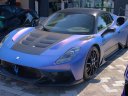
Has your instructor been telling you to "brake later" for three seasons? Maserati may have found a more patient colleague. In late October, in Tampa (Florida), Maserati Corse unveiled project Track Assist by AS.CAR.I, a digital trainer that steps in on braking and acceleration when driving on track, and works out the ideal braking points for each circuit. It does not replace the driver: it coaches them. It comes from AS.CAR.I, a start-up founded in 2023 by Politecnico di Milano researchers who specialise in autonomous racing. Tested on a 640 hp GT2 Stradale, it is not finished yet: it is due to equip Master Maserati courses from 2027. Its decisive edge over humans: it never sighs over the intercom.
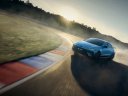
Just five years ago, an electric car on track lasted two laps before going into limp mode. Automobile Propre took the Ioniq 6 N to Brands Hatch. It puts out 609 hp (650 hp on overboost) for 2.2 tonnes, roughly two and a half Peugeot 205 GTIs. The result is surprising: neutral and precise, with brakes that hold up. And its battery stayed below 40 °C after two sessions, which is cooler than your forehead on the way out of Paddock Hill Bend. Price: €79,000. Now that's what makes you sweat.
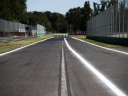
Even temples need a lick of paint. At the end of the 2026 season, Monza starts the second phase of its works: a permanent roof over the Paddock Club terrace (no more drinks in the rain), a 400-seat media centre replacing the old circuit offices, and a renovated race control. No track activity at all until July 2027: the GT World Challenge has already packed its bags for Imola. The rest of the programme will be announced in the coming months, so check with the organisers before booking a trackday. Until then, the Parabolica is taking a nap.
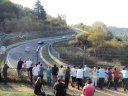
Bad news for your bank manager, good news for your body shop: there are only four weeks of Touristenfahrten left. The last scheduled day on the Nordschleife is Sunday 15 November. A lap still costs €35, roughly the price of a tank of fuel, but with a lot more adrenaline and a slightly higher chance of ending up in the barrier at Brünnchen. Before the winter break, the Ring still holds a free family day on Sunday 25 October, to show the kids where the holiday money goes.

EuropaTrackdays news is back in business, and what better place than the Paris Motor Show to turn the key again? The Paris Motor Show is open until 18 October at Paris Expo Porte de Versailles. Between the 2.5-tonne electric SUVs, we still found some cars that make you want to hit the track. On the menu: the Lotus Emira 420 Sport (420 hp, 0-100 km/h in 3.9 s), the 816 hp Peugeot E-T16 concept that brings the 205 T16 back to life, the Peugeot e-208 GTi, the Renault 5 Turbo 3E and the Alfa Romeo 33 Stradale, which you will never see at a club trackday. Alpine also drip-feeds a few details about the future A110. Bring trainers, and put your credit card in airplane mode.

You never know what to give at Christmas, in addition to birthdays and other holidays, find the ideal gift with Extrem Cars! Much more than just a driving course, Extrem cars offers coaching on its cars, designed and optimized for circuit racing! And at the end of the year, only Extrem cars offers the emblematic Porsche GT4 RS, a circuit and purist car by Porsche excellence. This RS will delight drivers on discovery formulas from 2 laps, or by the hour, half a day, or even a full day! Click here: Extrem Cars

The 2023 season is already in full swing, it was the occasion for a major update of the EuropaTrackdays calendar, which now lists almost 2000 driving dates on European circuits! And if you're starting to look around your car, want to change a bit, or just don't have one, don't hesitate to take a quick trip to Extreme Cars, which offers a varied fleet for hire for the track (from the Yaris GR Track to the F488 GTB via the BMW M2 or the 992 GT3, and many more). It's here: www.extremcarsevents.fr :-)

The GT Track club was created by the Racetrack Days team for car and circuit enthusiasts. The desire is to bring together owners of sports cars around a club whose DNA is driving on the most beautiful circuits in France. For this 2022 season, no less than 16 days of driving are offered on 6 different circuits: Magny-Cours (2x), Dijon-Prenois (2x), Val de Vienne, Nogaro, Lédenon, Le Mans... And, because of its close links with the Racetrack Days, the GT TRACK Club also offers the possibility of driving at the Circuit Paul Ricard under the best conditions... Club membership allows you to ride on all these circuits with two main possibilities: • Registration "on a case-by-case basis" on one of the dates of the year • Purchase of an UNLIMITED DRIVING PACK allowing access to the club's 16 driving days for 2150€ (i.e. 135€ per day!) ... The Club welcomes most sports GT models from Alpine to Ferrari, including Lotus, Audi, Nissan, BMW, Lamborghini... and soon, perhaps, your car? The priorities of the GT TRACK CLUB are: • Security • Driving Pleasure • The friendliness and quality of the services delivered Moreover, • Particular emphasis is placed on the support of beginners with the presence of BPJEPS coaches for the supervision ... • PIRELLI is the tire partner and a service is provided by the Ivalto teams on all circuits • A Drivers Club is present on most runs: an open bar is served there for all members of the GT TRACK CLUB...

Each year, the FFSA changes the safety rules for circuit practice, Benjamin explains the changes for 2022.
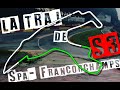
Is it possible to go full Blanchimont? Benjamin offers you in this video to discover the correct trajectory of sector 3 of Spa-Francorchamps.
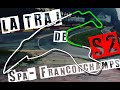
Benjamin offers you in this video to discover the good trajectory of sector 2 of Francorchamps with the most beautiful double left in the world, Pouhon!
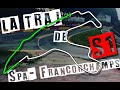
Benjamin offers you in this video to discover the good trajectory of sector 1 of Francorchamps with the mythical raidillon!
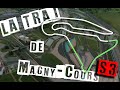
The Magny-Cours circuit is part of the history of mechanical sport in France. I suggest you discover the benchmarks for 3rd sector.

Small setbacks have prevented the update of the site in recent weeks, my apologies to the impatient participants and the organizers who sent me their events! Next goal: a 2022 calendar as complete as possible by the end of January :-) Happy New Year 2022 !!!

End the season in style and enjoy the Mediterranean climate on December 6 on the Paul Ricard circuit with JourneeCircuit.fr. For the occasion, thanks to EuropaTrackdays, you benefit from a 10% reduction with the code EUROPA for a registration before November 22. Register now by clicking here!
The Magny-Cours circuit is part of the history of motor sport in France. Benjamin invites you to discover the benchmarks for this second very technical sector.
The Magny-Cours circuit is part of the history of motor sport in France. Benjamin invites you to discover the benchmarks for this first sector.
There are many chrono applications on the track. Whether it's Racechrono pro, Harry's laptimer or the latest one, LapTrophy! LapTrophy offers an ideal offer for beginners and experienced pilots, in this video Benjamin presents it to you in all its facets. To download the app: https://apps.apple.com/us/app/laptrophy-track-lap-timer/id1244558686
In this video Benjamin invites you to discover THE right trajectory of one of the most technical circuits in France, Le Val de Vienne.
In this video Benjamin invites you to discover THE right trajectory of one of the most technical circuits in France, Le Val de Vienne.
Should the brake pads be lapped or not? Is there a method? Can we ice platelets?

Should the brake pads be lapped or not? Is there a method? Can we ice platelets?

In this video Benjamin offers you to understand how brake fluid works and how to choose it.

Don't you want to blow a hose on the track? So watch this video!
In this video Benjamin invites you to discover the interest of sports discs, drilled or grooved and to dissect their difference.

In this video, Benjamin offers you a selection of products to find under the Christmas tree!
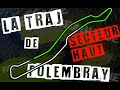
Hi trackers, discover all the secrets of the Folembray circuit to improve your lap times!
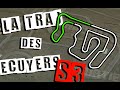
Hi trackers, discover all the secrets of the Ecuyers circuit to improve your lap times!
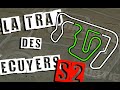
Hi trackers, discover all the secrets of the Ecuyers circuit to improve your lap times!
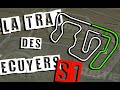
Hi trackers, discover all the secrets of the Ecuyers circuit to improve your lap times!
Hi trackers, discover all the secrets of the Ecuyers circuit to improve your lap times!
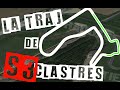
Each circuit has its subtleties to go fast! In this video Benjamin shares with you his experience by giving you the right trajectory on the Clastres circuit.
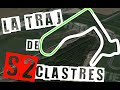
Each circuit has its subtleties to go fast! In this video Benjamin shares with you his experience by giving you the right trajectory on the Clastres circuit.
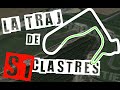
Each circuit has its subtleties to go fast! In this video Benjamin shares with you his experience by giving you the right trajectory on the Clastres circuit.
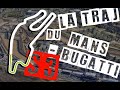
Each circuit has its subtleties to go fast! In this video Benjamin shares with you his experience by giving you the right trajectory on the Bugatti circuit at Le Mans.
Each circuit has its subtleties to go fast! In this video Benjamin shares with you his experience by giving you the right trajectory on the Bugatti circuit at Le Mans.
Each circuit has its subtleties to go fast! In this video Benjamin shares with you his experience by giving you the right trajectory on the Bugatti circuit at Le Mans.
Each circuit has its subtleties to go fast! In this video Benjamin shares with you his experience by giving you the right trajectory on the Dijon Prenois circuit.
Each circuit has its subtleties to go fast! In this video Benjamin shares with you his experience by giving you the right trajectory on the Dijon Prenois circuit.
Climb aboard a Porsche Cayman on the Nevers Magny-Cours track with Marion, who is discovering the circuit.

Today Benjamin offers us his advice on how to best negotiate the first sector of the Dijon-Prenois circuit. To subscribe to Benjamin's YouTube channel, it's here

In a press release dated May 10, the FFSA indicates that the joint work carried out with the grouping of circuits CACEIPA, the GNPK and the flight schools (ADEPA) allows to authorize the resumption of the activities on circuit (except competition for the moment) from May 11. Depending on the circuits, the application of sanitary measures is more or less complicated and the reopening will not take place everywhere on this date. EuropaTrackdays tries as much as possible to keep the trackdays calendar up to date, systematically contact the organizer of the days in which you wish to participate for confirmation and detailed information.

Do not get carried away but it is a first sign of recovery: only for the Germans, without public, with strict health instructions, and in the rain, the famous Nürburgring is open again since yesterday! In France it seems that the circuits will gradually welcome us from May 11, we will know more on May 7... Even if at first we will limit ourselves to circuits located less than 100 km from home, difficult not to start believing!

We keep waiting for the tracks to reopen with the second video by Benjamin Breton, this time devoted to the RaceChrono Pro timing application, available on iPhone and Android.

Here is a quick point on the closings of European circuits, based on the few information available to date. The circuits are closed until May 3 in Belgium, Italy and Spain and until May 7 in the United Kingdom. In Germany, the opening to the public of the Nordshleife seems to be maintained for the next week, with a high probability of postponement. Finally, the French sports ministry has proposed to the government a resumption of progressive activity between May 11 and June 15, which has not yet been validated. Given the many uncertainties surrounding this covid-19 pandemic, the dates will inevitably be adjusted in the coming weeks. You can therefore remove the heating blankets for the tires but do not connect them immediately!

Until the circuits open their doors again, EuropaTrackdays inaugurates a new section with the videos of Benjamin Breton. The first video in this series looks at the cost of a circuit day and the second arrives just after!

A majority of circuits in France have announced that they have closed their doors yesterday, since the Prime Minister's announcement following the coronavirus epidemic and the transition to stage 3 with the closure of all "places welcoming non-public essential to the life of the Nation ". The activity of many European circuits is also suspended, in particular in Italy and Spain.

trackdays.fr becomes EuropaTrackdays.com and wish you a great 2020 !!! This year you will be able to choose your trackdays throughout Europe and in 7 languages. As always since the birth of trackdays.fr 13 years ago, any feedback is welcome and if some have more satisfying language skills than automatic translation tools, they can contact us :-)

Both organizers are pleased to announce now and for the season 2020 the reconciliation between the two structures: - The Championship ROSCAR is designed for multi GT and exists since 2003. The FFSA Championship labeled enables true gentlemen drivers to race on the best circuits France (Magny Cours, Dijon, Val de Vienne, Lédenon, etc.) and sometimes in Europe, in an atmosphere "club" - In parallel to the races of this Championship, owners of multi-series GT Club 911 IDF (created in 1995, celebrates 25 years) enjoy exceptional driving conditions on the same events! Note that the fact ROSCAR his sleeve "Finale" at the weekend of Racetrack Days for several years ... - The Racetrack Days, created it 10 years ago, offer them also for Series GT owners, but also typed Car Racing (GT prototypes or cars) to run in optimum conditions at the Circuit Paul Ricard in Used Premium events. Five weekends are thus the program in 2019, with a final rolling 3 days 9,10 and 11 November ... with ROSCAR !!! The Racetrack Days allow including many beginners take their first steps into the circuit through the program "Discovery Pack" accompanying a BPJEPS instructor ... The two organizers, Christian Rossi (Club 911 IDF - ROSCAR) and Philippe Naniche (Racetrack Days), which are primarily Passion, agreed on a reconciliation at the edge of the 2020 season with the following objectives: - Make harmoniously coexist both calendars trackdays to the delight of their customers and their respective club and offer a full schedule of ten weekends on the most beautiful routes in France ... - Develop Roscar Championship taking into account the following guidelines: o Maintaining the spirit Club, pledge of responsible behavior on the track o Maintain realistic financial conditions to allow enthusiasts to participate in a true championship at reasonable rates o Provide an opportunity to start in motorsport with appropriate support and a supportive environment. The 2020 calendar is already being prepared ... contacts - Christian Rossi: 06 84 84 09 11 - www.roscar.fr - www.club911idf.fr - Philippe NANICHE - 06 07 78 02 25 - www.racetrack-days.com

Drift and Grip is pleased to announce the opening last month of a new racetrack (approved FFSA): and July 14 .

Last October, the

After the brand Racetrack Days, Challenges & Events Organization launched the brand INSIDE Motorsport with the objective to offer VIP services on the southern motorsports events in France. INSIDE Motorsport and offers a lodge with panoramic views of the track of Paul Ricard, catering service, open bar ... for the most beautiful car competitions South of France: GT Open, VdeV Endurance Series, Dix Mille Tours, Fun Cup, Porsche Club Motorsport Renault Clio Cup International Final and of course the Grand Prix of France (A pack is also proposed for the Grand Prix of Monaco). These services are also available on the track days Racetrack Days, with full tour of the circuit and the possibility of baptisms. All information about www.inside-motorsport.fr

Michelin offers on tires Pilot Sport Cup 2 sensors and a box that allow you to control the pressure and temperature in real time. No need to stop all 3 towers to connect the gauge and put his hand on the tires against by adjusting the pressure is still rolling! Recall that the pressure track loader must be closely monitored to limit their wear and optimize performance. It is currently reserved for Michelin Pilot Sport Cup 2 Connect with dimensions more suitable for your 488 and your 205. All information on the Michelin site test by Auto Argus

With a bit of spark retard, or rather a spark of tires at startup, the 2018 calendar days tour starts to be well supplied with already more than 970 dates listed on www.trackdays.fr. It will continue to expand gradually as the year progresses and you have the opportunity to propose dates that would have been missed using the https : //www.trackdays.fr/proposition-de-journee-circuit . Soon on the track!

trackdays.fr wish you an excellent start to the year 2018 and 365 days full of good things.

Exclusive Drive, the "Moving Motor Show" is unique in France, returns to the Le Mans circuit for the 6th edition, 23, 24 & 25 March 2018! A true giant center trials, the event received almost 10 000 people last year, 950 Gentlemen drivers, and more than 7,000 tests of cars and baptisms on track, road or competition ... With 35 000 m2 of exhibition, Exclusive Drive is a permanent show on the track with modern cars, classics and 9h to 21h race, over 3 days ... From enthusiasts today, gentlemen or spectators can book their seats or their online activities www.exclusivedrive.fr ! The 2018 edition some surprises ... COME, ENJOY, vibrate ...

With 45 years experience in race car construction (F1 sports prototype, F3, IndyCar ...) Dallara out its first road car, the Stradale. Surprisingly, this is not an SUV that will compete with the 3008 :-), but a pure track car homologated for the road, a machine designed for trackdays. Chassis and carbon composite materials, 855 kg 400 hp, 0 to 100 in 3,25s, available in coupe body, spider or tray without windshield. Oh, the price? 155 000 EUR HT anyway. Full info and photos with our friends AutomotivPress.fr .

We remember the participation in Le Mans 24 Hours 2016 Frederick Sausset pilot quad amputee, alongside Tinseau. The latter also being trackdays organizer, the two men have again partnered to enable November 8 to disabled drivers to drive on the Bugatti circuit as part of a test day reserved for them. About 25 drivers with various disabilities have thus taken the wheel of GT prototypes or specially equipped. Congratulations on this initiative, which calls more! A small report of the day and an interview Frédéric Sausset be read on the excellent Endurance-Info .

The Esquires circuit organizes its tenth anniversary celebration of the Classics. This is an opportunity to enjoy a day of running for cars before 1985 and many activities, including a space purchase / sale with test sessions on track. See you on September 17th! More information on the website of the Esquires circuit.

Swimming upstream, they imagined a different car event that breaks the codes and decompartmentalizes with DNA sport and motoring passion, but above all an event where the visitor is also an actor of the event! If you own a sports car, exceptional, race, modern or classic ... If you are a gentleman driver, a member of a club, beginner pilot, confirmed or dismissed, passionate lover ... EXCLUSIVE DRIVE is for you! Events on Friday 17 to Sunday 19 March on the Le Mans circuit

It's been 10 years since trackdays.fr gives you complete information about the days tour in France and nearby. Over the years the features have been enhanced and the number of days listed has steadily increased, in 2016 was a record with more than 1,800 days. The 2017 calendar is already full and will continue to grow during the year. You are of course always invited to all your criticisms and suggestions, which will allow further progress in the next 10 years! It is the top of its 10 years trackdays.fr wish you a great 2017!

As part of the days Racetrack Days at the Circuit Paul Ricard, a new running group will take to the track Sunday, November 27: SPRINT group. This group is for small sporting 200 to 350 hp: Mini JCW, Audi S1, TT or S3, Megane or Clio RS, Focus ST and RS, Fiesta ST, Golf GTI 308 GTI, Honda Civic R, Alfa Romeo 4C, etc. (Not exhaustive) It will give them the opportunity to discover the great driver circuit 5.8 kms and will focus on safety and education. Aware that many novice drivers will be on this track, a suitable program has been planned. After a full briefing, pilots discover the route by turning monitors company BPJEPS cornering. They then leave for 1:30 open pit lane and, again, the monitors will be available to them to ride with them and refine their path ... The GT and Pro Race groups are also planned that day! The liability insurance is included in the proposed tariff of EUR 325 Contact: Challenges & Events Organization Team 09 83 90 91 93.

Everything about the new Bugatti Circuit at Le Mans coating: www.constructioncayola.com/infrastructures/article/2016/10/19/108070/mans-circuit-bugatti-remis-neuf.php

This summer has been particularly difficult for our passion. In late July, the famous Nürburgring, a young couple of 29 years died in the shock of their Civic with a vehicle commissioners, wounding 3 of them ( tf1). There are 2 weeks is on the Bugatti circuit of Le Mans a pilot was severely burned in the fire of his car after losing control ( Maine Libre ). The same weekend a member of RMA-Trackdays of staff died and another was injured in an accident on his way to a day spa circuit ( RMA ). Whatever the causes of these tragedies, they remind us that "Motorsport is dangerous". We all'S LIABILITY limit these risks. Contrary to what one hears and sees all too often, the circuits are absolutely not places where one lets off steam. It is imperative that we respect scrupulously all the data safety instructions, that the state of our cars is beyond reproach, and that we be humble on the track. Spread the message. All our thoughts are with the victims and their families.

Some residents and other opponents lead now hard life to the circuit Geopark in St. Die in the Vosges. The subject of the dispute is the extension that was built in 2012 with a statement of work. It turns out that a building permit was required and the manager of the circuit thus started the process to regularize the situation. But local residents asked to stop operation of the complete circuit before obtaining this permission, even if there is no report. It seems that these residents have returned in a logic of systematic opposition to the circuit. We do not think that local residents and conservationists have always wrong in disputes with the circuits and we promote efforts to reduce noise and environmental pollution. In the case of Geopark, it seems that we are dealing with the bad faith of the residents and we are therefore seeking to sign the petition to support circuit. Sign the petition Read the article Vosges Matin

The many discussions eventually led to the publication of new Technical Rules and Security by the FFSA. The rule of the much maligned changing weight configurations and now defines three categories (less than 950 kg from 800 to 1800 kg over 1500 kg), but mostly it is a recommendation and not a requirement. In addition, the cars and the prototypes are now allowed to ride together. The application of these new RTS is immediate. The organizers are aware of the differences in weight, performance and vehicle design, they can be more free trays and responsibly. trackdays.fr thank all participants and actors came forward and committed, especially the grouping of CACEIPA circuits, which brought the final contribution in connection with the FFSA.

The display of trackdays.fr on your mobile and tablets is now optimized, you can finally enjoy both of the information about the days circuit and the summer weather. The topics and information remain the same, with a slightly revised for navigation even easier. Feel free to

To take advantage of the dynamics of the coming of the Formula E in Paris on 23 April, the Council of Paris wants to give a boost to the promotion of electric mobility for all. For this, the City Council will organize the day an endurance race open to all bicycle, scooter or skateboard electric and decided to perpetuate the circuit Invalides order to experience various events. This is of course not to make a permanent circuit in the center of Paris but the facilities for the Formula E can be installed and removed in less than 4 hours and welcome including a day of running every 2 months . Indeed, the last Sunday afternoon of the month will be organized a trackday peers reserved for electric and hybrid vehicles (level limited to 80 dB sound). In agreement with the FIA, the city of Paris will communicate these decisions to the occasion of the Grand Prix Formula E so as not to overshadow the event. The first day of testing is planned from June 26 www.paris-eprix.com

Exclusive Drive is a different car event that breaks the codes and decompartmentalizes by bringing an exceptional automobile plate: racing cars, GT, sports cars, supercars ... You can also see the F1 drivers. This year Exclusive Drive hosts Aston Martin, BMW, Jaguar, Mini, Tesla ... You understand that Exclusive Drive is for all lovers of fine engineering. You will not be a mere visitor, you will also be player of the event participants running sessions on the Bugatti circuit. Exclusive Drive takes place every year on the third weekend in March at Le Mans on the Bugatti circuit. Each year, a real "Moving Motor Show" invades the Bugatti! See you on Friday 18 and Saturday, March 19, 2016.

trackdays.fr wish you a great 2016!

Dijon circuit take this winter to start the complete reconstruction of the buildings that line the pitlane. The work was broken down into 3 phases, 3-season, with no impact on the operating activity of the circuit. The first phase is well underway and will be completed end of February to the beginning of the season 2016. All of the boxes and the host lodge therefore will gradually make way for brand new buildings, which are expected to accommodate the different races as well as track days in optimal conditions. Photos works are facebook page circuit.

Unsurprisingly, this is the list of Nicolas Deschaux who was re-elected at the head of the FFSA. Hopefully his team will get back in touch with the world of trackdays and consult with stakeholders to achieve safety rules really effective, clear and acceptable to all. A huge thank you to the more than 1600 signatories of the open letter, showing that we all speak with one voice on this subject. Continue to sign and disseminate information to show that many of us seek a constructive dialogue with the federation.

Despite the constructive meeting we had in September with the FFSA about the technical safety rules circuit, they were republished last month ... without taking into account the returns that had been made. Recall that these are the rules now prohibit cohabitation of some cars depending on their weight and thus limit access to factual circuits for cars up to 800 kilograms. Effective measures for security and acceptable to all could yet be taken if they are the result of joint work between the federation and the players involved. As part of the early elections of the director of the FFSA Committee on December 10, we propose to make our voice heard by signing this petition: https: // goo. gl / bkn1rM A big thank you to AutomotivPress.fr for giving us a page to explain the history and approach.

The development work started on the Nürburgring to secure the areas where the speed was limited after accidents in 2015. In addition to building fences in many places, the bump before Flugplatz turn will be leveled. This bump was originally takeoff of a Nissan during a VLN race, which had led to the death of a spectator last March. The facilities have been validated by the FIA without the route of the northern loop is denatured. 2016 should enable those who were penalized by the introduction of speed limits to regain some lost tenths. Phew!

Former F1 driver Jonathan Palmer has bought the site of a former military base in Couvron, in Aisne, to implant a circuit. The project includes a circuit of asphalt 8 km, with a stretch of 2 km, an oval and rally tracks and off-road. Work should start in early 2017 for an opening in April 2018. Palmer already owns several circuits in England, he reiterated his commitment to compliance and preservation of the environment for the construction of the new complex.

As many know, the FFSA published last April a new rule that, for simplicity, prohibits cohabitation of vehicles of more than 800 kg with those under 800 kg during track days on the French circuit. In association with Ludovic site super-trackday.com , we brought together professional organizers and we met a delegation of the FFSA week last. Although of course we have not achieved the removal of this rule, which destabilizes organizers and circuits, we found in front of us people really listening and sharing was enriching for both sides. Here's what spring in outline: - Contrary to popular belief, the FFSA has any legitimacy to lay down rules concerning the practice of motor sport including outside of any competition and the circuits just approved by the prefectures. Failure of some items can be enjoyed by some jurisdictions as up to the crime. - The origin of this rule on the weight comes from the observation that many different vehicles can run on all circuit and collisions faders, generate a significant risk. Without seeking extreme cases, it is true that the possibility of a Nissan GTR 1700-kg would hit a Caterham 500kg raises questions. However the rule is criticized because it does not take into account multiple factors (performance of the car, pilot experience, etc.) and has a major impact on the organization of track days. - In general, many days tour are now organized outside the law (Code of French sport and Technical Rules and the FFSA Security), but it is not the role of the Federation of carry out checks. It is the responsibility of both the organizers and participants to know the laws in this area. The debate continues on how to apply intelligently and transparently existing laws and ensure better security for all. - We have been asked to suggest alternatives to the rule about weight configurations. We hope that the next safety committee, scheduled for October, will reflect our positions and suggestions. Beyond the criticism that can be read in all the forums, if you have ideas to reduce the risk due to the heterogeneity of vehicles on the track, do not hesitate to let us know before September 30.

Following the flight of Nissan GTR in March in Flugplatz during a VLN race, which caused the death of a spectator, the company managing the system decided to limit this portion 250 km / h in waiting to find satisfactory solutions. The result is ultimately the establishment of new speed limits in several places of the circuit! It already existed for the public open days, especially on the portion of Breitscheid (50 km / h). The new limits are 200 or 250 km / h on the fastest part of the circuit and applicable to all, including manufacturers who rent the track for their trials. For the vast majority of cars and drivers, this should not change much but the principle risk to shock many. This measure will be reviewed at the end of the year. Source: www.bridgetogantry.com

Despite the difficulties encountered by existing or projected circuits, some managed to sprout. The Circuit Vaison track in Torcy, is one of them. Throughout 2000 m, with varied turns, it was drawn by Christophe drivers Vaison and Pascal Fabre. The facilities consist of 10 boxes, a reception building with briefing room and terrace for spectators. A flat area of 6000 m² complete it all, with the possibility of watering. It will not wait long to lay the wheel since the opening is scheduled for 11 June, to start a weekend of 4 days of running, then open 2 days a week from 15 June.

The news has been full these days about the future of some circuits with a main concern about noise. The public inquiry for land Tourneix circuit near Châteauroux led to an unfavorable opinion of the Committee. The noise issue has apparently been key. Another project with a use oriented recreation rather than competition could be introduced in the coming months. Jonathan Palmer his side, the draft circuit in Aisne Laon-Couvron is currently on track, anticipating the problem. The former pilot has invited politicians to visit the Bedford circuit, on which he has set up devices reducing pollution. Hopefully he will be able to convince them! Finally, after the Albi circuit was placed in receivership last year, city council decided to entrust the management to the company SN Diffusion as the city of Albi remains the owner. He was asked the new manager to diversify activities to meet up to 12 days noisy on the circuit, which is surrounded by houses.

Our partner requirement MOTORSPORT launches Trackdays Services. You practice driving on track, you want to improve your car, maintain it with more efficient parts but your mechanic will not climb the parts he has not sold! Make your self benefit from the expertise of a real car racing team, 10 years of experience. From simple to complex drainage work through replacing more brake pads typed track! This service is made for track cyclists and affordable !!

Exclusive Drive is a premium automotive event, friendly and innovative. This is an unforgettable day on a legendary circuit, surrounded by legendary cars and extreme sports and racing cars. If you are passionate car, own a sports car, exceptional or race, if you are a gentleman driver, beginner pilot confirmed or dismissed ... this event is for you! Exclusive Drive is Friday 20 and Saturday 21 March, on the Le Mans Bugatti circuit.

Work on Ales circuit full swing, with the aim to get approval for the circuit in 2 directions of rotation (not at the same time, at least at first). The changes relate mainly to the rails, which are replaced by low walls, clearances and the addition of a turn.

In this issue, always at the incredible price of 2 EUR: testing a Clio race reasonably priced, superb page 2, tires that rise in temperature, and a Honda Civic pink. download here
The various track tests in Racer's magazine have taken us through several worlds of trackdays. Sometimes very exclusive like the BAC Mono, or with heavily modified cars like the Nissan GT-R, BMW M3 or Mitsubishi Evo that I have been lucky enough to drive, they all represent a substantial budget. And even if it is impossible to deny that motorsport is expensive, we are going to try to offer you an interesting alternative, on a more reasonable budget: the Clio Cup. Race car This is where I start to lose a good number of readers: between the Renault-phobes and those who don't have the E(B) licence to tow, it's not a done deal... But looking at it more closely, this car is particularly interesting. Whether in terms of driving technique, sensations or budget, the Clio Cup is a very good compromise for enjoying yourself on a circuit. I will try a Clio 3 Cup here, but those on smaller budgets can also opt for a Clio 2 Cup, older but no less interesting. The version I am trying today is very understated on the outside, letting you appreciate the overall lines and the racing atmosphere. From a distance, you might even think it is a well-equipped road version, but it is as you get closer that you realise it is a race car. Very low and with aggressive suspension settings, it seems to have only one desire: to hit the track! And given today's very kind weather, I'm not going to deny myself... Opening the very light driver's door sets the tone: unlike the outside, the inside has nothing left in common with a standard Clio. To settle into the bucket seat, you hook up the window net and clamber over the imposing roll cage as best you can. In terms of comfort, forget it, there is absolutely nothing in the cabin! A central control panel with a few switches, a brake bias adjuster and a digital display just behind the steering wheel are the only equipment present. But once settled in, you feel good, with a fairly low driving position, close to the steering wheel and the gear lever. The throttle and brake pedals are close enough to make heel-and-toe easy, and a big alloy footrest lets you brace your left foot properly. Perfect! First impressions Well strapped into the bucket seat, I wait patiently for our track session to open. It is 26 °C this early afternoon, which will be perfect for getting the slick tyres up to temperature quickly, but right now I would rather be in a GT with the air conditioning. No point hoping for a little fresh air in the cabin at a standstill, I am HOT! I look at the little vent above my head, which opens directly from the roof air intake, but it doesn't look very sympathetic... At last the light turns green: I engage first by pulling the lever towards me. The clutch is fairly docile, you need a bit of throttle to get the car moving but everything happens quite naturally. My first goal will be to warm up the tyres and get the measure of the car's general behaviour. First stage: the gearbox. It is simple to use, but it requires perfect mastery of heel-and-toe. Going up through the gears, you don't need to touch the clutch: you stay flat on the throttle and pull the lever towards you. But for downshifting, you have to use the clutch and push the lever while heel-and-toeing, without being too timid with the throttle blip, or you risk not getting the lower gear in or having the gearbox lock up. On paper, it may sound complicated, but you get used to it very quickly and it is rather fun to use. Next, getting the tyres up to temperature. While the exercise is fairly easy for the front, the temperature of the rear tyres often gives drivers a hard time. Indeed, the Clio is a front-wheel-drive car with all the mass on the front, and to heat the rear tyres you have to be patient! For my part, given the outside temperature during the test, I won't have much difficulty... I'll take the opportunity to make a parenthesis on this subject: you are not alone on the track! When you drive at a trackday, you cannot afford to weave around all over the place to heat the tyres as if you were racing. Especially if you are on an open day, you are going to merge into traffic with drivers who are already up to speed. So remember to keep an eye on your mirrors and to follow Guillaume Greuet's advice on warming up tyres, published in this issue. In terms of behaviour, this Clio seems very sound and particularly well set up. Guillaume Greuet, our columnist driver, went back to racing in the TTE championship (Trophée Tourisme Endurance) at the wheel of this Clio 3 Cup and fine-tuned the suspension settings as he went along. That is certainly why I find it effective... With the big 17-inch wheels and the slicks nicely hot helping, you find a very responsive and precise front end. On the brake side, the feel is good: a firm pedal at the initial bite, but sensitive enough to handle a good trail-off of the brakes. In short, all the conditions are met to pick up the pace and do what it is meant for: attack! Sensations The time has therefore come to go and tickle the high revs and push on. I hold my steering wheel firmly, straighten the wheels and floor the right-hand pedal! I have no words in my vocabulary to describe what happens, I would need to find the exact opposite of "Wow!". I had forgotten, in this very appealing racing atmosphere, that the Clio is powered by a 4-cylinder engine of a little over 200 hp. It is linear to a fault and there isn't a whiff of torque... Fortunately the gearbox is short and the engine noise fills the cabin, because to be honest, it is deadly boring in pure acceleration! As someone who loves engine sensations, I'll pass... But this apparent flaw is actually a very interesting point in terms of driving. If you slip up and don't prepare your corner exit properly, you won't be able to use the engine to make up for the blunder you have just committed. Imagine yourself with 20 other guys behind (or women, to our great pleasure), who have exactly the same car as you and who haven't slipped up: you will quickly drop down the race classification. And with that in mind, you get a monstrous kick out of driving this car while enjoying its many other qualities. It brakes late, the front end is incisive and when you hit the brakes hard, you have to be precise so as not to let the rear step out. It is playful and gives the driver good information, encouraging you to ask more of it on every lap. In "motorsport", there is "sport", and this Clio Cup reminds me of it at every moment. This is real driving, there are no superfluous electronic aids to help you out of trouble. I sweat behind the wheel, I love it... Using the gearbox is really fun, you have to be firm and precise on the lever. The engine noise is very present in the cabin and, even though it is only a 4-cylinder, you enjoy listening to it at every downshift. I even get caught out on a 3rd-to-2nd shift: I don't blip the throttle enough and rush the lever a bit too much, second doesn't go in, you have to stay focused! All the car's mass is on the front and, when you go onto the brakes, the rear quickly becomes unloaded, forcing a few steering corrections so as not to slide too much. You constantly try to prepare the exit well, to keep speed so as not to lose too much time. In fast corners, the car hops a little but you must not lift off the throttle. It goes through hard and the sensations are good, very good. You get carried away, even when you are used to driving much more powerful cars. Back to the pits During the cool-down lap, just before handing it back to its owner, I realise I am smiling to myself in my helmet. I didn't take a lap time, nor even compare myself with the other cars on the track, I just had a crazy amount of fun at the wheel during the few laps I was allowed. And even though I had time to look at the scenery on the straights, because the engine doesn't really push you around, you must keep your eyes well open to brake late and make the most of the car's potential. The Clio Cup demands technique from its driver to go fast and sends top-level sensations back in return. And when I drive at a club day, that is what I am looking for above all... It is also rather comfortable not having to wonder whether the brakes will last more than 5 laps or whether the oil temperature will climb too high. It's a race car, it is made for this! So what can you compare it to? Well, actually, not much... A Renault Clio 3 Cup in good condition and well equipped changes hands today for around 25,000 €. With that budget, there is a good number of cars available on the market, but to reach this level of performance, safety and reliability you would certainly have to add a few parts to them. For those who want to get hold of a modern race car, the Clio Cup is one of the best ways to do it, but you must be vigilant when buying. I was lucky enough to try a sound, particularly well set up example, but there are also plenty of "lemons" on the market, owing to their busy past in competition. Be vigilant and don't hesitate to get help from a professional for any purchase. The importance of suspension settings By Dimitri Enjalbert When you race in a single-make formula like the Clio Cup, all the participants have the same car and the fight to make the difference is intense. The only modifications possible for the drivers are the suspension settings: ride height, caster, camber and toe. The details of these modifications were covered in issue 5 of Racer's, in which I took part. A car like the Clio Cup is sensitive to settings, you play a lot with camber to try to scrape the last tenths. With marked negative camber, you gain top speed because there is less contact with the ground, and you increase grip in corners. But increasing it too much doesn't bring only advantages: you lose stability at high speed, it takes longer to heat the tyres and wear can quickly become premature. Under braking, with a lot of negative camber, you often lock the rear wheels because of the small contact area with the ground in a straight line. You end up with flat spots on the tyres, which become very troublesome... So when you are trying to set up a car like the Clio Cup, you have to go about it sparingly. On a starting grid, you can clearly see the differences in settings from the outside and yet the gap between the pole-sitter and the others is counted in tenths, even hundredths. It really depends on the feel you have at the wheel of the car, on each person's preferences. If you drive a Clio Cup at trackdays or in competition, I recommend a setup that favours safety and endurance. Since there are a lot of Clio Cups on the market, you see all sorts of things in terms of suspension settings. You must not change everything at once, otherwise you end up driving a completely different car and a driver who struggles. The main thing is the feel at the wheel... And the Clio 2 Cup? By Bastien Bastien, what made you switch from the Mégane 3 RS to a Clio 2 Cup for club driving? It is mainly a question of running cost. The Mégane was about 120 litres of petrol over a day, with the Clio it is barely 80. Consumables are generally cheaper too. The only problem comes from the tyres: it is hard to find used slicks in the Clio 2 Cup's size... Then, even though the Mégane 3 RS is an incredible car, it remains very "simple" to drive. I needed more sensations and to progress technically behind the wheel. The Clio Cup is a technical challenge for me every time I drive it. I also share this passion with my wife, who also dreamed of a race car! What are its main qualities when you drive? And its flaws? What I like about this car is the sensations it gives! Very lively, with a great sound inside and a fantastic sequential gearbox. You hear absolutely everything in the car, you feel the slightest bump, the slightest vibration. When you drive, it smells of petrol, the roll cage puts you in the mood and the bucket seats with side wings show that you are not here to mess about: it is this slightly extreme atmosphere I like on board, there is nothing superfluous! But what I like best is that with my small budget, I can go and play without complex with some big, far more prestigious GTs. My best memory remains a memorable battle with a friend in a Nissan GT-R at Dijon, very good-natured. I would catch up in the twisty part, and he would pull a huge gap on me on the straight. It pushed me to push hard to catch up on every lap. Just thinking about it, I'm grinning from ear to ear! Its flaws? It's a bit short on engine for me, but honestly that's the only thing... If you had to change, what would you take? On a reasonable budget, I would like to move to a Clio 3 Cup. But if I had more means, I would take a Porsche 997 Cup, without hesitation. It is the same concept, but everything better! This article comes from issue 8 of Racer's, Marc Peraldi's magazine. Thank you Marc!
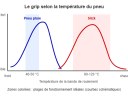
By Guillaume Greuet, with technical explanations from Manu Hugon, race engineer (LMP1 and LMP2 at OAK Racing, 24 Hours of the Nürburgring with BMW Motorsport, V8 Supercars with Ford Performance Racing, Dunlop Motorsport tyre development). Before trying to put a good driving technique in place on a warm-up lap, you need to understand the basics of how a tyre works. Its grip on the road, which obviously depends on outside conditions, rests on two principles: mechanical grip and chemical grip. Preamble: mechanical grip, chemical grip In the first case, "mechanical" means the contact with the ground that stops the tyre from sliding: friction. For example, if I pin a sheet of paper to the wall with a drawing pin, it is the contact of the pin with the wall that holds the sheet up. It is the same for a tyre: the mass of the car presses it onto the ground, which creates a frictional force that stops it from sliding. But if I stick that same sheet up with glue or adhesive putty, it is the sticky molecules of the product that hold it to the wall. For a tyre, we talk about "chemical" grip, which comes from the transformation of the molecules when it is brought up to temperature. It becomes tacky, a bit like chewing gum. You can easily feel this if you put your hand on a slick that has just been running… This is where the big difference lies between road tyres and racing tyres. On an everyday car, the split is roughly 50/50, which gives an effective tyre even when you drive out of the garage. But on a slick, the share of chemical grip is greater and comes close to 70/30, or even 80/20. To sum up, slicks are heat-sensitive compounds whose grip depends heavily on their operating temperature. A cold slick may offer only 10% of the grip it can deliver when hot! That is why they have to be warmed up to work properly. The optimum operating temperature varies by make and model, but it lies between 80 °C and 120 °C. Below it, as above it, the grip you get can be dramatically lower. It is not unusual, in fact, to see drivers running rain tyres on a dry track in temperatures close to zero. In good driving schools, cars run on rain tyres as soon as the thermometer drops below 10 °C, because it is too hard for novice trainees to keep slicks up to temperature. The context In my opinion, warming up the tyres is one of the key elements in getting the best out of a racing car. Some owners cannot get them warm and end up with a car that is difficult and treacherous to drive. On a front-wheel-drive car like the Clio Cup, featured in this issue of Racer's, it is often hard to get the rear tyres up to temperature, whereas on a rear-wheel-drive car, it is the front tyres that are the key to good performance. First of all, you have to pay close attention to the context you are in when you go out on track: in the middle of summer with new tyres, or at the first track day of the year with used tyres that have slept all winter in your garage. In the first case, slicks work very quickly and the warm-up is very fast, even almost non-existent with very soft compounds. In the second, the tread has hardened and formed a kind of very hard crust, which is difficult to remove. Even in full sun, it will take three laps to warm them up properly… Then, if you restart a session in the middle of the day after a short break, or if you have not driven for a good while, that also changes things. If you drove ten minutes earlier, the brakes have kept giving off their heat and the air inside the tyres has stayed warm. All that is left to warm up is the tread, and as the rest is already at temperature, it happens by itself. On the other hand, if the car has not run for a good while (long enough for the brakes to cool), you will need to do a proper, full warm-up again. Finally, when outside temperatures fall below about 15 °C, it becomes essential to be careful every time you go back out on track. It is also often a brake on buying this kind of car, because people do not feel "up to it" when it comes to warming slicks properly. But I am going to show you that with a bit of common sense and method, it is very simple… How do you do it? Contrary to a common belief, it is not necessarily essential to weave. It is done in racing because, behind the leading car (the "leading car"), you cannot pick up speed (about 120 km/h): you make up for it by weaving, with bursts of acceleration and braking. This technique is pointless and strongly discouraged at club track days, because you can pick up speed. What is more, other vehicles out that day on road tyres do not need to warm their tyres and are likely to overtake you! An incident is guaranteed: they think you are letting them by when you move to the right, they commit… and you swing back towards them violently. The right technique at a club day is to use the heat generated by the brakes. Tyres are warmed more by the heat the brakes give off than by friction with the ground. The heat rises into the rim and the air inside the tyre, which in turn warm the tread from the inside. Friction then completes the warm-up. When you go out on track for the first time (in the morning, for example), everything is cold. You have certainly warmed up the engine and possibly the gearbox, but the brakes, the wheels and the tyres are completely cold. My first piece of advice: caution and progressiveness! The first acceleration (at the end of the pit lane, on the way out, not in front of the garages) can, however, be quite firm: with a front-wheel-drive car there is little risk of getting sideways. It removes the first layer of dirt (stones, picked-up rubber, etc.) and gives the tread of the front tyres a first bit of heat. With a rear-wheel-drive car, depending on the power, you need to be careful, because the rear will have absolutely no grip. I have already seen a car spin in the pit lane on cold tyres… In short, a good burnout does no harm, but without going as far as a cloud of smoke, OK! On track, start gently with braking zones lengthened considerably (120% of normal, for example). Gradually increase your speed on each straight, which will force you to brake harder and harder and warm the brakes. On the longest straights, alternate acceleration and braking in a straight line, always with a view to heating the brakes, which will pass the heat on to the tyres. In the corners, you take a large margin at the start (for example 50% of your normal pace), then gradually increase the cornering loads. After one full lap like this, you start to test the grip a little in the safest corners, that is, the slowest ones. Please avoid doing these first tests at Blanchimont at Spa or the Dunlop curve at Le Mans. You deliberately turn in more than you should in the middle of the corner to "stress" the car a little. At this stage the rear tyres are not yet hot and you obviously expect it to let go. The rear brakes are smaller and negative camber does not help: you therefore have to anticipate it and correct with the steering wheel. It is on the second or third lap, depending on the circuit, that the front tyres are properly hot. The car brakes hard, it is very agile and you start to get cornering speeds close to the real thing. This is precisely when you need to be wary, especially with a front-wheel-drive car! The outer part of the rear tyres may not have touched the ground because of negative camber. Everything is hot, except those famous outer 5 cm of rubber that only touch the ground under heavy cornering loads. There is still that crust of stones and picked-up rubber… At this stage of the warm-up, you have to force yourself to exaggerate the cornering loads, to overdo it to reach that area and feel strong load. Do not set off on a flat-out lap until you have felt those heavy loads on each side! Often, on a circuit like the Bugatti at Le Mans, which turns much more to the right than to the left, you feel ready and you "go for it". But when you reach the first real left-hander, the Musée, it is a disaster! A big slide, even a spin, simply because the outer strip of the right rear tyre has not been warmed or cleaned of its dirt. But once the loads in fast corners have been tested on both sides, the warm-up is over. Floor it! One last point, concerning club track days: I strongly recommend being wary of the new generations of semi-slick tyres such as the Michelin Sport Cup or Pirelli Trofeo R. Some of these tyres also need to be brought up to temperature to work, and above all they lose a large part of their effectiveness if it is too cold or there is too much moisture on the track. Remember that you must always start a session gently to "feel" the grip of the tyres, and that you must force yourself to brake: it is free warm-up! Semi-slicks As you will have seen from the explanations given in this article by Guillaume (the driver) and Manu (the engineer), tackling the subject of tyres is not easy: it takes experience and practice to master how they work. And even after years of experience, it is still changing… At club track days it is exactly the same, with the spread of high-performance road tyres, known as semi-slicks. The principle is to offer an approved tyre that lets you drive to your track days on the road, but with performance clearly superior to a conventional tyre when used intensively on track. Every make is present in this market: Michelin, Dunlop, Pirelli, Toyo, Bridgestone and many more. So how do you find your way and choose for your car? Here is some advice. How they work You need to understand that the explanations given in this article about competition tyres also apply to semi-slicks: manufacturers make different choices in the make-up of the tyre, which influence behaviour on a circuit. The compound is softer on some models and harder on others, which gives different operating ranges and levels of grip. But in every case you have to take account of the operating temperature, which essentially comes down to good management of tyre pressure. The big difference from a competition tyre is that a semi-slick has to suit several uses: weather, outside temperature, type of car, and so on. And this is where it gets complicated! In racing, if the tyre is not right, you come into the pits and put on another set, better suited. At a track day, you generally do not have 36 possible set-ups: although more and more of you arrive on a trailer, the great majority come on the road and do not change wheels to drive on the track… Behaviour The arms race is clearly visible among the manufacturers in this sector, with new products coming out at the pace of the new supercars on the market. It is therefore hard to get detailed information on their technical choices and on the optimum conditions of use. So, when you are an amateur driver and drive with a club, what do we have at our disposal? I can hardly imagine half the paddock taking temperature readings every session, and it would not be of much use for recreational track driving. So we have to use two things: pressure management and the feel at the wheel. Pressure is a good way of playing on the operating temperature, and the feel at the wheel lets us know whether or not we are outside the working range: if it slides too much, that is generally a bad sign! But to feel the differences and judge the behaviour of a tyre, or of a car in general, you need certain notions of driving. If you go into a hairpin at full lock and with your foot flat to the floor, avoid a hasty conclusion of the "it understeers, my front tyres are rubbish" kind. There is certainly a little work to do between the seat and the steering wheel before emptying your bank account… How do you choose? First, analyse your use. Do you do two track outings a year and 20,000 km on the road, or does the car only come out for fun on circuit? Some manufacturers make fairly radical choices, which may not suit mainly road use, even if the tyres are approved. I have in mind the latest addition to the Pirelli range: the Trofeo R. I had the chance to talk to a member of staff on a launch day, who told me it should not be used in the rain because it was catastrophic: "quite honestly, this tyre is practically a recut slick". I then drove it several times on different days, and that is indeed the case. In the dry, you are close to the behaviour of a racing tyre: you have to get it up to temperature, otherwise there is no grip, and once hot, its performance is quite incredible. You can string laps together without any loss of effectiveness and at a very high pace, a delight! But the first time I drove it in the rain, I did two laps and came back into the pits thinking there was a problem: zero grip! Analysing your use carefully is therefore vital with this tyre, because if you land on a rainy day, you get no pleasure on track and it becomes dangerous on the road. It will suit an intensive user perfectly, perhaps with another set of wheels for difficult conditions, or who is not afraid of losing a day on track if it rains. Others will prefer the Michelin Pilot Sport Cup 2, more versatile: slightly less performing in the dry, but usable in the rain. You also have to take into account the type of vehicle you use. Take the example of a tyre that is very common at track days, notably because it offers good value for money: the Toyo R888. It is a very good tyre on light cars (such as a Lotus or Clio RS), easy to use and quite high-performing. But on a heavier car, such as a prestige GT, it has a narrower operating range and a "peak" of operation. When it gets too hot, it loses effectiveness and wears out fairly quickly. On a light car, you manage to keep a correct operating temperature, but as soon as you move to a heavy car, you quickly leave the optimum range and you feel it at the wheel. Incidentally, Toyo was then announcing the new version of the R888, developed on supercars. As you will have understood, there is no universal solution, as in many areas of motorsport driving. It is impossible to say that a semi-slick is good or bad. It can be very effective on one car and in a given condition, but completely out of its depth in another configuration. Before making a choice, you need to ask other users, browse the specialist forums and seek advice. And sometimes you simply have to accept that you made the wrong choice: you cannot feel your car, you keep changing the alignment settings without improving your lap time, and you do not understand why you cannot get it right when all your friends sing the praises of this tyre. The only link with the road is the tyre: it is a very important choice, and you have to find the tyre that suits you and your driving. This article comes from issue 8 of Racer's, Marc Peraldi's magazine. Thank you, Marc!

This year gives you trackdays.fr dates of touristenfahrten the Nürburgring . Now the circuit is under snow, it is an opportunity to (re) view this video and check that you know well circuit, in other terms with a Playstation! The Nordschleife in car on snow!

trackdays.fr wish you a Happy New Year. 2015 looks even auspicious days in circuit, with already more than 600 dates listed in the calendar and more to come in the coming weeks!

Couvron is a small commune of the Aisne which, like many others, is home to a disused airbase. This type of location makes it an ideal target for the creation of a circuit, as it has already done in Clastres and more recently with the mechanical division of the Ardennes. A Couvron is the former F1 driver Jonathan Palmer bringing in many months the project. After delays due to funding and removal of a bank, Palmer's ambitions and reduce its budget and now is a new agri-Valley project comes compete. However, it seems to remain confident in the project and is ready to implement it elsewhere if Couvron chose another path for the development of the former military base. To know more : Interview with Jonathan Palmer in Aisne New

Yesterday we had a press conference about the project circuit in Châteauroux. Jean-Jacques Oliva, who works on the subject for more than 3 years are presented future alphalte tracks and land and related infrastructure. The environmental protection aspect seems to have been particularly well, hope it will achieve the goal of commissioning in 2017. All information on the website of the New Republic The official project page

There is much talk of autonomous car lately, it is true that gradually driving aids take the driver's seat and probably happen soon to the marketing of cars we will be that passengers. Some applaud the increased safety and comfort of being transported without tiring, others regret driving pleasure. But where it concerns us is when Audi showed us that it also works on the racetrack! Imagine, no more runway excursions because of devolution, need to memorize the route, days tour will finally allow us to look at the car quietly take them ideal trajectories effortlessly. Deeply! :-) For more information: www.audi.fr/fr/brand/fr/tools/news/pool/2014/10/voiture_autonome.html

In the circumstances, I will limit myself to press the ACO: "Shortly before 16 hours in Saturday, September 27 tragic accident took place on the Bugatti circuit at an open day driving enthusiasts, accident where one of the drivers was killed. On top of the pit straight, the car of the victim suddenly losing oil. The area was immediately reported by dangerous teams in the race direction inviting other vehicles to slow down. Unfortunately, the driver of another car lost control of his vehicle crashed head from the first car down, immobilized on the side, it then catching fire. Despite rapid relief Automobile Club de l'Ouest's medical service, the driver of the vehicle rammed lost his life following the violent collision. Immediately supported, the driver of the other car, seriously wounded, was immediately transferred to Le Mans hospital. The accident took place at a private day of testing, "Tinseau Test Day," in which forty vehicles were involved in 27 September. An investigation is currently underway and the Automobile Club de l'Ouest will not comment before completion. This painful event affects all the Automobile Club de l'Ouest which presents its condolences to the family of the victim. " www.24h-lemans.com/fr/actualites/dramatique-accident-sur-le-circuit-du-mans-17268 Serious accidents during track days are quite systematically stifled, probably for fear that new regulations come restrict the freedoms we take on tour. Of course "Motorsport is dangerous", of course it happened on one of the best circuits built in France, with an organizer recognized for its experience and its reliability, the drivers were not beginners. So even though this time it was fate, even though no one actually committed fault, this drama must at least serve to remind the obvious. Not the circuit is not a place to let off steam, there are safety regulations, and so of course I am responsible for the condition of my car I'm especially my behavior. If we drive on the track, it should not be in fear of radars but because we want to enjoy our passion without putting road users in danger. Debates about the circumstances of accidents and safety in general are often sterile and are an opportunity to express an inglorious bad faith, so I will not go into it. Perhaps a more restrictive legislation is necessary, most likely a better understanding and greater respect of the current legislation already would greatly reduce the risks we take on tour. Above all, these risks are that we take them, we are responsible and we are especially responsible unique that can reduce adopting irreproachable behavior on the track. We are not on the road but we are not in either race, we are between the two, where one would find only the pleasure of living our passion, and extreme humility of all. Our thoughts are with the relatives and the injured pilot, they find the courage to fight. I added a thought for the relatives of Andrew, who succumbed to his accident Lackey last year and another for victims of accidents that have not been made public. The zero risk does not exist in motorsport but for them we will all do everything to decrease significantly on days circuit. Update 09/10: www.lemainelibre.fr/actualite/le-mans-accident-sur-le-circuit-le-deuxieme-pilote-amateur -is-deceased 09-10-2014-111157 :-(

The team at Racer's magazine has been busy and offers the number 7. In summary, the test of a Ferrari 355 Challenge, good paths in Issoire and valuable tips for beginners day circuit. Good reading ! Download Racer's for only EUR 2.

The association that manages the Albi circuit was placed in liquidation. The deficit reached more than 150 000 and the request for grant advance to the city, needed to remedy the situation, was denied. The holding of the upcoming events in the circuit is greatly compromised but above 5 people who lose their jobs. The ball is now in the court of the town hall for a new structure to resume management of the circuit. All the info is on the Albi circuit site. Petition against closing the circuit

The latest issue of Racer's magazine appeared. This online magazine is a reference for all track racers, it is entirely written by pilots and instructors professionals. You will find in each issue testing and the most complete and detailed control advice available. In each issue a circuit is scrutinized to give you the ideal line, braking points etc. It is 2 EUR only to cultivate your passion for track and move from your couch!
By Dimitri Enjalbert , driver and instructor. Finding your driving position is rarely easy. Who hasn't found themselves in a new car, trying out various adjustments without ever finding the perfect position? But how do you define this so-called "perfect" position? Modern cars now offer a multitude of possible configurations: seat height, distance to the pedals, backrest angle, steering wheel adjustment. But when driving on a track, what should you prioritize? Dimitri attempts to provide some answers and share his experience in the different categories he has the opportunity to drive in. Methodology The ideal driving position cannot be universally defined. It depends on numerous parameters, from the driver's build to the vehicle used, and including any technical constraints that may be imposed. But while a universal rule cannot be established, a certain methodology can be followed in its search. Let's start with the simplest and most common case: a modern sports car with numerous adjustment options. It might seem simplistic, but driving comfort is paramount! The main thing is to be comfortable moving around the car, and it would be a shame not to take advantage of modern technology to get into the right position. Believe me, after sitting in certain race cars, getting into a GT3 RS feels like being in a Rolls-Royce. The distance to the pedals. Always start with where you sit. Fully depress the clutch while trying to keep your left leg slightly bent. Also, make sure you can accelerate and brake fully without having to strain or be on your tiptoes. If the car has an automatic or sequential transmission, adjust the distance relative to your right leg. The seat height. Adjust it by trying to drive as low as possible. For many, this position feels unnatural if they're not used to it. Of course, you need to adjust it according to your height and maintain good visibility, but remember that the main objective is to see far ahead: seeing the end of your hood isn't necessarily essential on a track. Driving low also lowers the car's center of gravity, even if this is barely noticeable on a road car. The distance to the steering wheel. This is the last adjustment point. On a road car, you can adjust the seatback angle, but as soon as you have bucket seats, you're limited to adjusting the steering wheel itself, both height and reach if available. A good bend in the arms is an angle of 100 degrees (slightly more than a right angle). If you're having trouble visualizing this, you can use the "wrist at the top of the wheel" technique: your wrist should rest on the very edge of the wheel, neither before nor after. Also, make sure the steering wheel isn't too low, so you can quickly move from accelerator to brake without your leg hitting it. The harness, last. And finally, we strap ourselves in! Remember to do it last: we too often see amateur drivers on track-driving courses who take 5 minutes to adjust their harness and then realize that they can no longer move the seat as they want afterwards. If you ever feel that your driving position isn't right after these adjustments, it's important not to change everything at once: your driving would be significantly affected and your feel for the car less good. For example, if you're used to sitting high, lower your seat by one notch each week until you reach a lower position. This allows for a smooth adaptation without abruptly disrupting your habits. A story of compromise When you switch to racing cars or historic cars, things get complicated: you have to make do with what you have, which is to say not much! That is the big advantage of modern cars, which offer a whole host of adjustments. In a racing car, you very often have to contend with several external factors: your helmet hitting the roll bar, the steeply raked windshield, your elbows touching the car's bodywork, and so on. Moreover, when you choose your driving position, you choose it once and for all: it often takes the mechanic a good 10 minutes to loosen all the screws and adjust the seat! The priority is to sit as low as possible, even if visibility is reduced (you get used to it eventually), to lower your center of gravity as much as possible. Only then do you try to find a position with acceptable comfort, so you can be efficient and endure the entire race. The position is generally set by the height available in the cockpit: in a GT car, you're usually quite upright, whereas in a prototype or single-seater, you're lying down so your head doesn't protrude in the event of a crash. You also have to consider the other drivers in the car. For example, in Dimitri's Lamborghini Super Trofeo, a different process than the usual expanding foams is used to create "seat inserts" and adapt the driving position between him and the other driver. Their body shapes are quite different: the seat has therefore been completely stripped down (only the shell remains), and each driver installs their own seat insert upon getting into the car. It's made using a bag filled with small beads that perfectly conform to the body's shape and, once vacuum-sealed, create the perfect seat. Not all drivers operate the same way, but for Dimitri, driving position is as much a part of the car's setup as suspension or tire pressure. He regularly pesters his mechanics to find the right position, sometimes spending hours on it. Some drivers can go fast just by jumping in the car; he really needs to feel comfortable to be effective. Harnesses are essential! I can only recommend that anyone driving on track fit a harness. In my opinion, it's one of the first modifications you should make if you want to drive regularly on a track. Being properly secured in your seat is essential for driving, and harnesses were invented for this purpose. You need to feel information in real time to react quickly to the controls. For example, if the car is starting to lose its rear end but you're not making good contact with the seat because your body is unloaded due to a bump, you won't immediately receive the information that you are losing grip. This gap of a few tenths of a second in processing the information could cause a spin. Harnesses are therefore there to ensure you're completely pressed into the seat, whatever the situation. In a road car that isn't fitted with one, you move around much more in the seat. You then need to use your left foot, properly positioned on the footrest, to try not to move. Many amateur drivers grip the steering wheel tightly to limit their movement, but this isn't the right approach. Bracing your left foot plays a crucial role in staying firmly in the seat: don't hesitate to press down firmly on your leg to stay secure. For his part, Dimitri brakes with his left foot whenever the car allows it (sequential gearbox). To make this possible, he tightens his harness very firmly to avoid moving and free his left leg. During the race, he regularly tightens his harness and often has bruises on his body from tightening it so much! Homologation When deciding to equip your vehicle with harnesses or bucket seats, it's wise to understand the applicable regulations. If you only use your equipment for leisure or on club days, you don't need to worry about the FIA expiry date. However, as soon as you plan to participate in official competitions, these standards must be checked. Here, for example, is the information found on a harness label (from the original article, in 2014), which should be found on each strap that makes up a 4 or 6-point harness: the brand, in this case Schroth, usually accompanied by a short slogan or the model used; the validity date of the harness, here until the end of 2014; the mention specifying that these harnesses are designed to work with a Hans system: the shoulder straps are narrower to be able to fit over the Hans; The homologation number assigned by the FIA, which breaks down as follows: The letter D specifies that it is a 6-point harness (for a 4-point harness, it is a B); 136 is a number given by the FIA; T means that it is an aviation buckle (for a seat-belt-type buckle, it is a P); 98 is the FIA standard according to which the harness was homologated. This article is from issue 6 of Racer's, Marc Peraldi's magazine. Thank you, Marc!

The blog BMW offers brand owners a free day of running May 17 on the driving center of Le Castellet. The register and pay online trackdays.fr .

If you want to ride at Magny-Cours in the best conditions. SSO offers fans of trackdays.fr a EUR 50 discount on the day of testing on Friday, April 4th. This is an opportunity to enjoy the spring safely with a recognized organizer for serious. To qualify, appointment , add the 4th of April to cart, then in the summary of the order by entering the code " J'M trackdays.fr "in the Promo code box. This offer is valid until March 28, for inclusion in the day. SSO thank you !!!

2 days Exclusive Drive Le Mans start tomorrow. A reminder of the program: - Sessions of running day and night: you are driving your own car at your own pace, few cars on track (exclusivity and security). - Exclusive Car tests: you drive models made available by our partners or passenger in rare and exceptional car Showroom: Exhibition of GT, Supercars, Sports, Accessories and Lifestyle More information on the official website

The Nürburgring was finally sold to the German company Capricorn Group (specializing in engine and composite parts for motorsport) for the modest sum of € 100 million, the poor Bernie Ecclestone offered only 36 .. . Given the situation that seemed pretty hopeless it is rather good news, the question is what guidance will be provided by the new owner.
trackdays.fr offers promotional codes to use on the SSO website for the day of 16 March in Magny-Cours: - EUR 50 discount (until 18/02)> UQ5S41Q2 - EUR 35 discount (until 18/02)> R0ERU7UD - EUR 20 discount (until 25/02)> Z5CYTAIK - EUR 15 discount (until 25/02)> ERSFPD9T Please note quantities are limited. Here it goes!

The work ends at Dijon-Prenois. The budget of over one million euros has enabled the repair of curbs and tire walls, and especially the complete resurfacing and widening of line with the Weasel. The inauguration of the running season will be done with a weekends open 22
When I told the various contributors to Racer's magazine that the next track test would be devoted to the BAC Mono, I got several reactions that can be summed up in two words: "THE WHAT?". I have to admit that, as I write these lines, I would be in the dark as well if I hadn't been invited to try it! So it was with great curiosity that I accepted RSR's invitation to take the wheel for a few laps, with one of the most beautiful circuits in the world as a bonus: Spa-Francorchamps. It is the end of June, and at this time of year in the Belgian Ardennes, it rains! And not just a little... I am keeping my fingers crossed that I manage a few laps in the dry! Looks The photographer and I arrive first thing in the morning to attend the briefing for the day organised by RSR and to fit in with the rest of the group. We find a very nice and varied grid, ranging from the Clio RS to the Radical SR8, all in all fairly classic for a premium club day. We are then taken to a garage slightly apart to be shown the car we are going to test: the BAC Mono. There are two cars in different colours: a white one and a red one. We choose the red one, which will stand out better in the photos. I rarely dwell on the looks of the cars I test, because we all have different tastes when it comes to aesthetics. But here I can't help repeating the first words that came to my lips when I saw it: WHAT A FACE!!! This car could easily appear in a science-fiction film, it is so original. The nose is wide, aggressive and close to the ground, and the rear is completely stripped, leaving the transmission, the suspension and a diffuser on show. As its name suggests, there is only one seat on board the BAC Mono, with a cockpit reduced to its simplest expression and placed in the centre. There is no dashboard and no speedometer, everything is in the steering wheel! You cannot deny its closeness to a racing car, but I am extremely surprised by the build quality, both in the finish, which mixes carbon and Alcantara, and in the mechanical assemblies. It is clean, neat and unfussy! As the weather is not at its kindest, we decide, in agreement with the organiser, to wait until the afternoon to try to find a window when the track will be dry: the morning will be devoted to static photos. While the photographer prepares his equipment, I take the opportunity to climb in behind the wheel and size up the beast. I quickly regret having eaten a little too much the night before and having stuffed myself with croissants at the breakfast buffet. It is narrow, I touch everything everywhere, but I find a good driving position quite naturally. There is no doubt, this is a racing single-seater that has put on an evening gown to be allowed on the road (in England for the moment). Legs stretched out, slightly reclined and sitting very low, it oozes pure performance. I can't wait to try it on this magnificent circuit, all the more so as the Mono's technical specification makes my mouth water. Indeed, several big names in motorsport are involved in this project. It is fitted with a 2.3-litre 4-cylinder developing 280 hp supplied by Cosworth, coupled to a Hewland 6-speed sequential gearbox with pneumatic actuation, straight out of competition. The braking is entrusted to AP Racing, the damping comes from Sachs Racing, and it is fitted as standard with Kumho V700 semi-slicks. The whole package is quoted at 540 kg with a weight distribution very close to 50/50, it promises well... Getting to grips Late morning brings a glimpse of the long-awaited sun, which will let me do the test in the dry. I am rather reassured to be able to take the Raidillon without the usual streams of water when it rains, in a car I do not know. I will be able to do 5 laps at the wheel and the traffic on the track is reasonable, which will let me find my rhythm quickly in order to answer the next question: is the BAC Mono fun to drive? The start-up procedure is simple: a kill switch and a button at the bottom of the steering wheel for ignition and starting. The digital display on the wheel shows the gear engaged, the engine speed, the road speed and the operating temperatures... but I cannot see a fuel gauge. You have to navigate the menu a little to find it. The Cosworth four-cylinder makes itself heard and I pull the right-hand paddle to engage first: it is firm and precise, I like it! Pulling away is easy thanks to a fairly docile clutch. On track I leave the pits and start the descent towards the Raidillon at a gentle pace to get to know the car: don't worry, sweetheart, I'm warming up, but I'll soon make you sweat! The gearbox ratios are short and the engine seems to be in rude health even though I am not yet revving very high. The first driving sensations are really good, the Mono sends me back all the information I need through very precise, direct steering. The AP Racing brakes are powerful and bite hard, with a very good feel at the pedal, and being strapped almost directly onto the carbon tub lets us feel what the chassis is going through, as in a racing single-seater. The driving position and the aerodynamics have been well worked out, because I feel hardly any buffeting on my helmet, unlike what you can feel in a KTM X-Bow, for example. The taller drivers may be affected by this problem, but for my 1.74 m, it is really perfect! I am already at the Bus Stop chicane, I will have to raise the pace to see what it can do. The engine's 280 hp, which seem rather modest on paper, are more than enough to deliver sensations well above those of most production cars. It climbs to nearly 8000 rpm and screams just behind me, I should have put earplugs in my helmet! It pulls without letting up from first to sixth with real driving pleasure, and it keeps asking for more. First braking at La Source: I hit the brakes at 150 metres but have to release them completely 50 metres later, they are so powerful. I have to get it into my head that this is a racing car and that I am not trying out an ordinary car... The descent to the Raidillon is swallowed up very quickly and the sensations are there, but I will take no risks at this legendary corner. The kerbs are still wet and the RSR instructor looked me straight in the eye before letting me go, saying a few very simple words: "Don't break the car", "Yes, sir". And he is quite right... Even without taking risks, it goes by fast... very fast. Sensations The straight that follows towards Les Combes is going to be a very important test for me. I have had the chance to drive one of its direct rivals, the KTM X-Bow, several times on the same circuit. Besides the very unpleasant turbulence you feel in the helmet in the latter, engine sensation is sorely lacking. When you go through the Raidillon in the KTM, it also goes very fast and you overtake all the modern GTs by a wide margin. But on the long straight that follows you top out at 210 km/h without hearing anything of the engine, and you get re-passed by all the Porsche GT3s and other supercars that took you half the circuit to overtake! With the Mono, you hear the engine and at the end of the straight the speedometer already shows 145 mph (over 230 km/h), even though I took the Raidillon as slowly as my grandfather. The choice of an engine straight out of competition makes perfect sense to me: it vibrates, it makes noise and it is alive! It will certainly be less reliable than the Audi TFSI found in the KTM, but how good it is!!! Building a car with an incredible chassis without fitting a real engine that gives its driver pleasure is a shame. In that respect the BAC Mono is a real sensation machine, and it needs neither more power nor extra parts to satisfy its driver. Attacking I then reach the succession of corners at Les Combes, where I will be able to attack without risk of damaging the car. I have braked much later than most of the cars on the track and I load the front axle on entry. Turning into the right-hander happens naturally and the steering is still very precise, but I am still far from the limits. It rolls very little and its lightness means I can throw it into the left-hander that follows without difficulty. I arrive at the long, tight, downhill right-hander at Rivage, which gives many cars and drivers a hard time. I go in fast and keep good pressure on the brakes to help the front turn, but the tyres are overwhelmed... The Kumho V700s are very good tyres, but the ones fitted to the car I am testing have already lived a lot. It understeers, forcing me to slow down in order to get it back in line before getting back on the throttle. I carry on down towards the double left of Pouhon, catching a Corvette that looks enormous next to the Mono. The car stays stable through these fast corners, but you have to be very careful not to try too much, because here you reach the boundary between a racing car and a car adapted to road use (even though I find it very hard to imagine driving a BAC Mono on the road). There are no aerodynamic appendages and you can feel the front lacking a little downforce at this speed. So you have to grasp the limit not to be crossed in these big fast bends. The descent is over and we arrive at Fagnes. This time I adapt to the tyres and make sure not to overload the front. The rear wraps around with a slight, very healthy slide, and the re-acceleration shoots me quickly into the left-hander. The pneumatically actuated sequential gearbox is excellent. Unlike a latest-generation robotised gearbox, it is a real gearbox that does not smooth out the feel of the gearchanges. Each time you pull the paddles on the wheel, you feel the mechanical action of the gearchange, accompanied by a little jolt. True, you cannot heel-and-toe, but the manual-gearbox zealots have no excuse: it is quick, efficient and full of feel. There is still one point to watch out for when using this gearbox: the automatic blip on downshifts. Indeed, when you pull the left paddle to downshift, the electronics do the throttle blip for us to avoid locking the gearbox (for those who are lost, we will cover the heel-and-toe technique in a future issue). But after talking with the car's designer, who was present that day, he admitted to me that the blip was always the same whatever the revs at which you downshift, for reasons of economy. It is calibrated for driving in "circuit" mode, that is to say at fairly high revs, but when you downshift at low revs, the blip tends to push us a little and make the rear unstable. I felt this when arriving at the Bus Stop chicane, which is taken in second, because I was a little late downshifting. Nothing too serious, but it is unpleasant to find yourself with sudden oversteer when you drop a gear. Which means that on the road, it is better to use the clutch to smooth out this parasitic effect. Another possibility: always drive hard like that, and it never happens! Pleasure The Blanchimont corner raises the same problem as the double left of Pouhon. You go through fast, but always with a big reserve, because you would like to have slicks and aero downforce! But at that point, you might as well buy a real single-seater... I keep stringing laps together and I take more and more pleasure at the wheel. I announced at the beginning of this article that I was going to make it sweat, but it is I who am starting to get damp. A certain mastery is needed to raise the pace, and I strongly advise drivers who have never driven a racing car against going to tease its limits. The more I raise the pace, the more playful it becomes on its tyres, which lost the battle long ago! Please understand that I am not saying they are bad tyres, far from it, but the BAC Mono's abilities are such that the chassis is almost never caught out in this configuration. The 5 laps will seem very short to me and I swallow up pretty much everything that is running on the track. Only the Radicals are out of reach, with experienced drivers at the wheel and on slicks. On my last two laps, I raise the pace a little in the compression at the Raidillon, with big thrills, and a higher speed arriving at the Combes braking point. The braking is truly very effective thanks to the lightness of the car, which greatly eases overtaking the GTs, and the overall balance of the car is perfect. I know I am going to have to come back into the pits and that my test is going to end, but I have only one wish: to fit slicks and keep stringing laps together. Verdict I get out of the car and am greeted by Ian Briggs, designer and director of BAC (Briggs Automotive Company), who looks at me with a smile and has understood that I enjoyed the test. I appreciate his approach, which was to let me size up the car before we talked. He did not try to sell me a dream like a mere salesman trying to sell his product, he just said to me: "Try it and then we'll talk." Our discussion will mainly revolve around the car's homologation, although I slip in a few words about how I would have liked to have slicks. But his wish is to have the vehicle tried as it can be bought by the customer, that is to say in road version. It is rather hard to conceive, but in England, for 91,940 pounds sterling (about 106,000 euros), you can drive a vehicle of this type on the road. I imagine the face of the guy at the McDrive who would see me arrive in a BAC Mono! Ian tells me that the biggest obstacle to getting it homologated in France is the EURO 5 emissions standard. Indeed, in England, for limited and exclusive production runs like this one, they do not need to go as far as that standard. But if you look at it more closely, you have to admit that homologation matters little to someone looking for a track car. The BAC Mono is not a vehicle to be used on the road, just like its rivals, even though I salute the owners of X-Bows or Radical SR3SLs who come by road to their track day. So if you come on a trailer, there is no longer any homologation problem and you can taste the sensations of driving a "civilised" single-seater. It is a solitary pleasure, which can only be shared over a drink after driving, but it will be very hard to tire of the performance it offers. Slicks are almost compulsory to exploit it fully and you need solid driving foundations to be able to raise the pace and approach the limits. But what you should remember from this test is the intense driving pleasure you feel at its wheel. This article comes from issue 3 of Racer's, Marc Peraldi's magazine. Thank you, Marc!
The first three track tests in RACER'S reflect the trend in modern sports cars very well. The clutch pedal is gradually disappearing, giving way to robotised or sequential gearboxes. You can see it at every sports car manufacturer, whether German, French, Italian or Japanese. Ferrari gave up manual gearboxes a long time ago, Nissan has been causing a stir with its dual-clutch gearbox since the launch of the GT-R, the new Clio 4 RS has paddles on the steering wheel, and even Porsche, which held out with its sporting models, no longer offers the GT3 with a manual gearbox. That is how heel-and-toe is slowly being lost, becoming less and less useful for driving. But fortunately for us, there are still plenty of manual gearbox aficionados... Take the career of a young driver who starts in karting, moves up to F4 and then Formula Renault, and ends up in Formula 1: he will never have had to press a clutch pedal to downshift! Incredible, isn't it? There is even a rumour in the trade that some current F1 drivers would be unable to drive a historic car on a track, where heel-and-toe and double-declutching are compulsory. Heel-and-toe So why tackle this subject in 2013? Even though the trend is slowly changing, the vast majority of sports cars that run on club days still have a manual gearbox: Megane RS, Lotus Exige, BMW M3, Porsche 997 GT3 and so on. That said, I will not run down sequential or robotised gearboxes in this article, because everyone is free to choose what they want for their car and finds their driving pleasure in their own way. It is no coincidence, after all, that manual gearboxes have not existed in competition for many years: electronics do it far better than we do, and in terms of performance it is unbeatable! But mastering heel-and-toe still brings a great deal of personal satisfaction, as every blip of the throttle on a downshift awakens our senses. Learning the technique takes a long time, a very long time, and the driving schools that still teach it are becoming rarer and rarer. This article will help you understand what it is for and give you the basics to put it into practice, but the most important advice we can give is to practise it every day to master it, at the risk of looking ridiculous pulling up at a red light in the middle of Paris in your little diesel... Gearbox lock-up Before getting into the technique itself, we need to understand why heel-and-toe is needed on a car with a manual gearbox. There are many misconceptions about it, such as the idea that there is a real one and a fake one, or that it lets you change gear faster, but its main role is to prevent gearbox lock-up. This shows up as a very unpleasant sensation, especially at high speed, of the driven wheels locking. On a front-wheel-drive car, not mastering it has no great consequences, but as soon as you start driving hard in a rear-wheel-drive car, the rear wheels locking can have... surprising effects! To understand what gearbox lock-up is, we need to break down all the stages of a downshift and analyse the impact of our actions on the mechanics and on the behaviour of the car. The main mechanical assemblies that play a part during gear changes are the clutch and the gearbox: conveniently, these are things we can act on! When we say "gearbox", we will treat it as exactly equivalent to the wheels. The rotation speed is of course not the same in value, but it is directly linked and proportional. To begin a downshift, we generally start by pressing the left pedal. We say that we "declutch". This means that we cut the link between the engine and the wheels so that we can operate the gearbox. We are therefore left with two completely separate mechanical assemblies, which will turn at different speeds. The wheels keep a high rotation speed because they are in contact with the road, while the engine's revs fall because it is free. That is where the whole problem lies! When we release the clutch pedal, the engine and the gearbox will be turning at very different speeds, with 2 possible outcomes: either the engine speeds up to match the rotation speed of the wheels, or the wheels slow down to match the engine. If you have ever tried to turn an engine's crankshaft by hand, you will have noticed that it is quite hard... So it is the wheels that slow down! The moment we re-engage the clutch, the gearbox "locks" so that the wheels return to a rotation speed that matches the engine speed. When driving a rear-wheel-drive car this phenomenon is a real nuisance, because during braking there is a load transfer to the front of the car. The rear axle is unloaded, causing the rear wheels to lock instantly when you release the clutch. On a high-speed downshift while the car is loaded up in a corner, it can really, really end badly!!! The throttle blip To get round this problem, we have to give the throttle a blip before releasing the clutch pedal. This brings the engine speed up to a level close to that of the gearbox (and therefore of the wheels), and avoids lock-up. This is called the "throttle blip". The only problem is that at that moment we are rather busy! Left foot on the clutch, right foot on the brake, one hand on the steering wheel and the other changing gear. You can try phoning a friend, but overall we have very little left to spare to give that blip of throttle. We have to press three pedals at the same time when we only have two feet (or so it would seem...), and of course it is the right foot that has to share itself between the brake and the accelerator. The term "heel-and-toe" is a misnomer, because it is not literally the heel that touches the throttle pedal. Depending on the pedal layout, you will adapt the position of your foot across the two pedals. Difficulties There are two big difficulties in applying this technique. The first is that the throttle blip must be made at the right moment and with the right intensity to be effective. If you do it too early, the engine will drop back in revs before you have released the left pedal and will not completely eliminate the gearbox lock-up. If you do it too hard, the engine will be revving too high and will tend to "push" the car when you release the clutch. The second difficulty is one of the most important points to remember from this article: heel-and-toe must NEVER disturb the braking. It will therefore take many long hours of practice to master this technique, the aim being to make it completely automatic so that you can concentrate on the other things you have to manage at that moment. Once you have these prerequisites in mind, you have to get started in stages. First, practise the movements by breaking them down while stationary, with the engine off. Then, without touching the brakes, learn to time a brief, precise throttle blip when you downshift, for example when approaching a roundabout. And finally, put it all together to produce a heel-and-toe. At the start it will look like nothing and you will look ridiculous, the car lurching because you moved too much on the brake pedal, or because the blip was too strong. But before mastering it completely, we have all been through that... The real one, the fake one? For some years now there has been a controversy about how heel-and-toe should be done. There is supposedly a real one and a fake one, and only the "deadly killer drivers" would use the "REAL" one! But in reality it is not a matter of falsifying a technique, but of adapting to technical developments in our gearboxes. Indeed, the old generation of heel-and-toe combined the technique with "double-declutching". For example, on a historic car that does not have a synchromesh gearbox, you must double-declutch for the gears to engage, otherwise it crunches! On modern cars it is no longer necessary, because the synchromesh makes our job easier. To understand properly, you have to look inside a gearbox. If you are lost by the end of this page, don't panic! Doing the first one is more than enough these days. To try to sketch the situation simply, there is an input shaft and an output shaft. The input shaft is the one connected to the engine (when the clutch is engaged), and the output shaft is the one connected to the wheels. Double-declutching consists of spinning up the input shaft so that the gears mesh more easily when you downshift. You release the clutch while the gear lever is in neutral, and blip the throttle at that precise moment. Since the clutch is engaged but the gearbox is in neutral, the engine will give speed back to the input shaft while the output shaft keeps turning with the wheels. When you finish the downshift with the gear lever, the two shafts will be turning at roughly similar speeds, assuming you gave the right blip... The gears will therefore be able to mesh without difficulty and there will be no "crunching". For many years now, gearboxes have had "synchros" that help the gears to mesh. Doing the "simple" version is enough to avoid gearbox lock-up and nasty surprises when driving a rear-wheel-drive car. Going into the whole workings of a gearbox and the function of the synchros would be beyond the scope of motor-racing driving. We have simply given you a few elements to understand what happens mechanically and the point of performing the heel-and-toe technique. For those who want to go deeper into the subject (and who have not fallen asleep), you will find below two very useful links for understanding in detail how a gearbox works. Useful links stephane.genouel.free.fr: an excellent blog explaining how a manual gearbox works. At the bottom of the articles there is an animation that lets you move the gear lever and see the mechanical action it produces. Perfect for understanding how it works. Well done to him! www.engineworld.fr: another very good blog with quality articles, not devoted solely to gearboxes. You will also find articles on mechanics in general, in particular detailed explanations of how new-generation dual-clutch gearboxes work. This article comes from issue 4 of Racer's, Marc Peraldi's magazine. Thank you, Marc!
Trackdays.fr wish you the best trajectory for 2014, both the circuits in all areas that you care about. That these trajectories are bold, effective and spectacular and that you take pleasure in building them, negotiate, track them, modify them as circumstances, share ...
For those who have not adapted to the circuit car, those who want to try a big GT, those wishing to make a real driving course of a day, or those who are in need of Christmas gift ideas for their relatives trackdays.fr now to offers with our partner IdeeSport driving courses.

Number 5 of the online magazine output circuit is available. Contents a Megane RS 330 hp, a folder on trains settings, steering tips to be in front of everyone on the Dijon-Prenois circuit and the usual sections. Download the mag Racer's No. 5

A draft circuit in the Drôme valley, La Roche sur Grane as often divides environmentalists and drivers. We have very little information on this circuit and we will therefore leave the choice of the petition that you want to sign (we have an idea :-)). Article in the Dauphine The FOR petition on Avaaz.org petition on Avaaz.org AGAINST
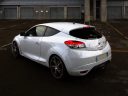
For the first time in the magazine, our track test is devoted to a front-wheel-drive car, more accessible than the sometimes extreme models we have tested. I can already hear some of you crying sacrilege, but if we are going to try one, we might as well pick from among the most capable of the bunch: the Renault Mégane 3 RS. Launched in 2009, it represents one of the best compromises between performance, purchase price and ease of use that can be found in the front-wheel-drive market, and it benefits from very good support from Renault Sport, which regularly offers special editions. It is also important to thank the sporting arm of the diamond brand for the momentum created around its models, because you will not, for example, find any sporting character inherited from competition in a bland Peugeot 208 GTI... Like it or not, Renault deserves credit for maintaining this link in its sports models, to the great delight of the brand's enthusiasts. There is still a little hope while we wait for the result of the RCZ-R, which I have not yet had the chance to try, but to enjoy circuit driving in a modern French car, the RS models are the only viable alternative... Approach I have to admit that when my alarm went off on the day of the test, I did not feel the same excitement as for the previous issues. It is October, the weather does not look very kind, and I am about to test a front-wheel-drive car with a 4-cylinder engine... Great! I have arranged to meet at the Bugatti circuit in Le Mans with Bruno, the car's owner, who comes to drive at practice sessions offered to licence holders by the Automobile Club de l'Ouest. This outing closes a fine, long season for this Mégane RS of more than twenty club days of all kinds: Le Mans, Magny-Cours, Val de Vienne, Spa, Hockenheim, Nürburgring, and so on... perfectly in the spirit of Racer's! Several modifications have been made to the car, both to the chassis and to the engine, and it has always driven to these track days by road. It is a good opportunity to take a close look at the running costs and reliability of a Mégane 3 RS used intensively on track. Not quite standard any more... When you walk up to it, it looks completely standard. But the closer you get, the more you realise it is a well-honed track car. Low, with a little negative camber at the front, there is not much to criticise about the looks of this car. I even dare to say, at the risk of dropping in your esteem, that I find it really beautiful and successful! Apart from the big badge on the front end, I find it well proportioned, with attractive lines. It is above all once the driver's door is open that the sportiness begins to show: the leather sports seats are simply magnificent and, even though it is a rather expensive option, the quality is there. The use of certain plastics reminds us, however, that this is a Renault and not an Audi or a BMW, but the overall atmosphere smells of sportiness: rev counter with a yellow face, Renault Sport plate on the dashboard, RS Monitor and sports steering wheel. Add to that a completely emptied rear section, Oreca harnesses with aviation-style buckles, a fire extinguisher and a helmet bag placed behind the seats, and you are very quickly in the Club atmosphere you are after. Perfect! While the photographer looks for the best angles to show off the car, the owner and I go through the improvements that have been made. The 250 hp offered on a standard Mégane RS is rather lively, but if you hope for a rush of adrenaline each time you turn the ignition key, don't hold your breath. The turbocharged 4-cylinder does not rev very high and, apart from the whoosh the turbo releases at the exhaust, there is nothing to get your teeth into as far as awakening our senses is concerned! Here, a complete Milltek exhaust has been fitted, along with a larger-volume Forge intercooler and a remap carried out by BR-Performance. The power measured on the dyno is close to 330 hp, which is rather interesting on paper provided you manage to get it all down onto the ground... On the chassis side, a complete KW Clubsport kit replaces the standard dampers and a strut brace has been fitted at the front. The braking is entrusted to Endless pads on standard discs, aviation-type brake hoses and high-performance fluid, as well as cooling ducts for better cooling of the system. Added to this setup is a second set of 18-inch wheels, fitted with Michelin Pilot Sport Cup tyres, patiently waiting in the paddock for the track to decide to dry out! I like this kind of setup and these simple modifications, which aim to improve the car's behaviour as a whole. All that remains is to get behind the wheel to see whether it is fun... First impressions We decide to wait until the start of the afternoon to do the test, in the hope that the sky does not darken too much. Half an hour before the track opens, we fit the semi-slicks because it has not rained for quite a while, and I cross every finger I have available for a dry track. In the pre-grid, the atmosphere is good at these sessions reserved for licence holders: a Corvette Z06 lines up behind me, I spot a Nissan GT-R, a Cayman Cup and other Renault Sport models. A varied field, very varied in fact, since on my right a car you could call original is about to take to the track: a Citroën BX! My first thought at that moment? "There is absolutely no way I'm getting overtaken by a BX!!!" I'm always wary of owners who turn up at club days with offbeat cars. At any moment there could be 300 hp in its boot and it will make a fool of me on the track... Fortunately for me and my ego, that won't happen, but I want to congratulate the owner if he is reading us: bravo for the initiative! I take to the track carefully for a reconnaissance lap and to bring the car up to temperature. First bad news on leaving the pits: the Dunlop curve is full of damp patches, so I will have to be very careful. On the rest of the circuit the line is generally dry, but a few damp areas remain and raindrops keep falling. After this first lap, I come to the conclusion that I will be able to push on and report the sensations at the wheel, but I will keep a good margin in reserve so as not to damage anything today... Surprising The first hard braking holds a few surprises for me. The car goes sideways as I try to turn in on the brakes: the Michelin Pilot Sport Cups are still cold and remind me of it immediately! The brake pedal is extremely sensitive and the bite very strong, so I will have to be precise to get anything out of it. The dampers are real planks of wood and the perfect support of the Renault Sport seats, together with the harnesses, gives me good information coming up from the body. But at this stage I already know that it is set up too hard for these still damp conditions. So I take the time to get the tyres properly up to temperature, especially at the rear, and I increase the pace. The Milltek exhaust gives voice and, even though I found it particularly unpleasant at standstill (too dull), it turns out to be showy as the pace rises, with a little pop at each gear change. The engine work seems well done, I have no boost cuts and the turbo's response time stays reasonable. But the increase in torque and power makes second gear unusable, too short: the front end is completely overwhelmed, undermined by the few damp patches still present. So I will keep 3rd gear in the tightest corners... The feel inside is good and, now that they are up to temperature, the Sport Cups offer very good grip. The KW Clubsport suspension setup gives a very incisive front end, with sensitive and precise steering. I even get caught out several times thinking I am in a standard Mégane 3 RS, which is very easy to drive. The front end is glued to the track, but searches for its way a little over the small bumps under braking, sometimes making the rear end wander. That is the price to pay when you choose a very firm setup: you gain in efficiency and precision, but the car becomes less consistent. I like the concept, but I approached it too easily and it lets me know that I will have to sweat a little to set a lap time. Message received... At the limit The Dunlop curve is slippery, still very damp on the run-off widening on the left, and I am forced to lift off the throttle fairly early. In the corner, under load, the Mégane is very stable and hints at a good cornering speed if it were completely dry. Then I hit the brakes for the chicane, with the bite still impressive, and I load the front to place the car into the left. Everything is rather sound and effective if you do things in the right order: the rear follows without complaint and there are not many questions to ask yourself before getting back on the power on the exit, unlike the Corvette Z06 that I let past during the warm-up laps and am now trying to follow. On every straight, I watch it pull away with its V8 and its devastating sound, reminding me that I only have a little turbo 4-cylinder... But the Mégane's agility brings the smile back in the following corners. You have to be patient to let it settle, and I am still surprised by the grip of the tyres. If you set aside second gear in tight corners, traction is very good, it doesn't understeer and the limited-slip differential does its job properly. I enjoy driving it, with a lively and effective car. That is a good point! The Bugatti circuit is a demanding layout for the brakes. It begins to vibrate a little with pad deposits, but the effectiveness is still there. On the opposite straight, I overtake a few participants who politely let me through before I arrive at the fast Chemin aux Bœufs chicane. It is impossible to cheat too much on the kerbs, there are stakes in place on the inside for the upcoming competitions. It goes through quickly, but the rear end starts a small slide on entry: you must not fall asleep at the wheel. Once again, the stiffness of the whole package takes precedence over its apparent ease of use. In the Esses Bleus and the Raccordement, I revel in its precise front end and I complete this first fast lap in 2 min 04 s. It is a reassuring time given the weather conditions, since drops of rain are still falling, which prevent the track from being completely dry, notably in the Dunlop curve and on the heavy braking zones at Garage Vert and Chemin aux Bœufs. I decide all the same to take it a bit further by pushing my braking points later and loading the front end more on entry. The brake pedal is still very sensitive, with a very good initial bite, and I sometimes get caught out by triggering the ABS. The brake assistance is a little too strong for my taste, but that is not inherent to this build because I have the same feeling on every Mégane RS... After 3 laps, I am more and more surprised by the effectiveness of this car which, thanks to the modifications, offers a top-level performance. I also catch up without much effort with the Corvette Z06 I had in my sights, which has a hard time taming its horses with its standard tyres and the greasy track. Even though it is more demanding and more powerful than a standard version, the Mégane remains a front-wheel-drive car where there are fewer questions to ask when getting back on the power than in the car ahead of me... Oops... I start my 5th lap when it begins to show some signs of fatigue: small engine cuts appear in 4th and 5th. I slow my pace a little because I also feel the brake pedal fading and, a few corners later, disaster: I have no brakes at all, the pedal is soft! It is a real shame because, until then, it was almost faultless. It is also rather surprising because the outside temperature is not very high and, even though I am setting a pace, I have only done 5 timed laps and the car is well equipped: suitable brake hoses, high-performance fluid, good pads. To be looked into... This brings me to a crucial point: reliability and running costs. As mentioned at the beginning of the article, this Mégane RS did more than 20 track outings in 2013 (and the same in 2012), and no minor ones either, since it has only run on prestigious, fast and demanding circuits. So I take advantage of the lunch break to badger Bruno about how he uses his car. In 2 years of intensive track use, there have only been consumables to replace, with no particular mechanical problem. Servicing has been doubled, even tripled, to guarantee good oil quality in the engine and gearbox. Apart from the brakes, the tyres and the modifications, there have been no costs. On that subject, it started track driving on Toyo R888 semi-slicks, but recently it has been running on Michelin Pilot Sport Cups. Admittedly more expensive to buy, they offer more consistent grip and better wear resistance on this model. Be careful, however: these tyres are more demanding than the Toyos, they need a longer warm-up. But once hot, they are more consistent and do not have a peak of performance as the Toyos can have. This reliability analysis had not reckoned with a parameter we do not control: chance (or bad luck, call it what you like...). A week after the test, I had the opportunity to try for a lap time again at the Bugatti circuit to try to find perfectly dry conditions. Unfortunately, the car did not agree: a Christmas tree of warning lights on the dashboard with the engine light on, an indication of a faulty injection and a noticeable loss of power. That smells bad! I had to go and say it was reliable for it to throw a tantrum. My test therefore ends there and I will not be able to test it on a dry track. It was then being repaired, for an electronic problem that seems minor at first sight. Verdict To be very frank with you, I thought I would be bored on a big circuit like Le Mans with this car, given the tests carried out in previous issues. That was not the case, far from it. I complete my best lap in 2 min 02 s 44, which is quite promising for totally dry conditions, where I think it should be lapping around 1 min 57 s, or even better. No longer as forgiving as a standard Mégane 3 RS, it requires a little experience to be driven at a good pace and gives good sensations in return. You get a lot of enjoyment at the wheel and, thanks to its improvements, it can allow itself to run on big circuits without blushing in front of more prestigious cars. However, you must always keep in mind that it is at heart a mid-range mass-market saloon. Even though it has a very pronounced sporting character, it is not a car intended for intensive back-to-back track outings. The modifications made here do it a lot of good, but they put the overall reliability to a severe test... This article comes from issue 5 of Racer's, Marc Peraldi's magazine. Thank you Marc!
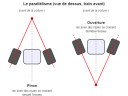
A car's behaviour depends very largely on how its suspension is configured and set up. A change of one degree in certain parameters can have a major effect on stability or handling on track. It is often a real headache for racing drivers: they try different settings, test them on track and refine them as they go, based on the driver's feel and, above all, the verdict of the stopwatch… The suspension There are different types of suspension, which we will not detail here, as they are too far removed from our main subject: driving sensations and performance. But it is important to understand how the most common system works, with a damper and a spring. It is called "suspension" because the main role of the system is to link the unsprung masses (wheels, brakes, etc.) with the sprung masses (chassis, cabin, engine, etc.). As the latter are by far the heavier of the two, an effective, well-matched system is needed to limit body movement and make sure the car stays in contact with the road. Without suspension, the car would take off at the slightest bump, which would make the handling… rather dubious! So you have to keep in mind that every technical choice is a compromise between comfort and performance, and that it depends entirely on the vehicle used. But the only real judge of whether a set-up works on track is the stopwatch! Spring and damper The two main components are the spring and the damper, to which are added an anti-roll bar and a lower arm in the most common layout of modern production cars: the MacPherson strut. The springs' job is to "carry" the car: without them, the dampers would go straight to their bump stops and body movement would not be absorbed. When the road profile changes, the spring compresses or extends and pushes back with a force, depending on its rate, to return to its original position. You have almost certainly played with springs as a child: when you compress one, it reacts quite violently, throwing off whatever you put on top of it. Rather fun, isn't it? True, but if we could stop our car from bouncing at every irregularity in the track, it would feel much safer! That is exactly the job of the damper, made up of a rod that moves in a fluid and regulates these movements. The stiffer the damper, the less freedom it leaves for the spring to oscillate. The softer it is, the greater the body movement. To understand this, nothing could be simpler: press down on the boot of your car to compress the suspension. Each push is followed by a response that brings the body back to its original position. The right compromise Browsing the photo library of our partner Kevin Goudin, you can really see the different set-ups that exist. From an LMP1 prototype at the 24 Hours of Le Mans to a Mini entered in historic racing, via a heavy, lowered American car, there is a world of difference in the settings! But you cannot do just anything when you try to optimise your suspension for track use: it is not enough to stiffen everything to the maximum and lower everything to get the most effective car. In the vast majority of cases, you drive a production car which, however sporty, comes from mass production that has to meet certain comfort and safety requirements. Seeing cracked bodyshells on sports cars regularly used on track is more common than you might think, especially when the modifications have not been properly thought through. One of the first things you change on your car for track driving is the suspension. And that is just as well, because manufacturers have a field day in this performance-parts market. The aim is to firm up the spring/damper assembly to reduce the movements of the sprung masses, but not at any price. First you have to adapt to how you use the car, because there is no optimal, universal setting. If you drive at Le Castellet and go to the Nordschleife the next day, you will need to revise the setting to be really effective: in one case the track is almost perfectly smooth, in the other it is very bumpy, with a lot of elevation change. A very firm setting is possible on a good surface, but less suitable in other cases. Let us be clear: it will always be firmer than a production car, but driving around on a plank of wood is not necessarily the best solution. Do not forget a basic principle of physics, already mentioned in earlier issues: nothing is lost, nothing is created, everything is transformed. When you change your suspension setting, the loads transmitted by the track do not change! Something has to absorb these forces, and it is often the bodyshell that suffers… Stiffen things up, yes, but never forget to look after the chassis as a whole. Carefully checking the mounting points of the various components and reinforcing the shell are essential when you want to modify a production car for track use. Compression and rebound When the wheel is subjected to an impact or a change of load, this results at the damper in a movement of the rod, over a greater or lesser distance and at a greater or lesser speed. When the rod goes in, this is called compression; when it comes out, rebound. These parameters cannot be adjusted on production vehicles (except in special cases). To get access to them, you have to invest in complete suspension kits, which, in the top-end versions, let you adjust each value independently of the other. The aim is to control the compression and rebound speeds of the rod by regulating the flow of fluid inside the damper. This is where it all gets complicated… Take the case of compression adjustment. On track, you look for "slow" compression, which helps to control body movements such as roll and dive. In other words, when the car is loaded, the damper resists so that the wheel does not move up too quickly. This is effective if the surface is perfectly smooth, but the behaviour becomes difficult when there is a high-speed impact, such as a kerb or a bump. As the resistance to the wheel moving up is high, the car tends to skip rather than absorb the irregularities. Now let us look at a braking phase on a circuit. As you hit the brakes, a violent load transfer takes place towards the front and unloads the rear wheels. If the damper's rebound is too slow, the wheels take a long time to come back down and stay properly in contact with the ground. This can encourage rear wheel lock-ups, which are particularly unpleasant at high speed. As you will have understood, it is not for nothing that the set-up skills of a top-level driver are at least as important as his or her steering. As every track and every car is different, it takes hours of practice to find the perfect setting, so numerous are the possibilities. But in the case of a modified production car, as it is for many of our readers, there is one important thing to remember: it is all a matter of compromise. If you drive to your club days, be careful not to make the car dangerous with a setting that is too track-oriented. Depending on the circuit you are driving on, and if your equipment allows it, adapt your settings to the particularities of the track to bring the lap time down! Wheel alignment settings Let us now move on to the different working angles of the suspension: caster, camber and toe, more commonly known together as "alignment" (or "geometry"). Adjusting these parameters has a very big influence on how the car behaves on a circuit, and poor choices can seriously reduce performance. The main difficulty is that they are all closely linked: making a large change to one parameter while neglecting the others does not necessarily bring a gain in performance, and can even have the opposite effect in some extreme cases. It is fairly easy to see that the alignment settings of a Clio competing in a slalom are very different from those of an LMP1 prototype contesting the 24 Hours of Le Mans. For the former, speeds are low with very tight corners; for the latter, the car has to last 24 hours, combining long, fast straights with very technical sequences. So, as with damper settings, you have to find a compromise according to what you are looking for and the vehicle you use: agility in tight corners, stability at high speed, top speed… Moreover, when you drive with a club, it is rare to change your alignment settings every time you go to a different circuit. In that case, you should concentrate on setting up the most well-balanced car possible. Camber is the angle between the plane of the wheel and the perpendicular to the ground. It is negative when the top of the wheel leans towards the inside of the vehicle, and positive in the opposite case. Adjusting camber lets you change how the tyre meets the ground, by altering the inclination of the wheel. On a circuit, negative camber is most often used so that, in a corner, under the effect of body roll, the tyre has the maximum contact area with the track. However, overdoing negative camber does not solve every problem and is not always the best solution. Grip in corners is certainly improved, but when you come back to a straight line, the tyre's contact area is reduced because it is not running "flat". This can cause several problems: less stability at high speed in a straight line, because of the smaller contact area of the tyre; less braking efficiency: as the tyre does not press fully on the track, braking capability is reduced; uneven operating temperatures: in a corner, the tyre is in perfect contact with the ground, but on long straights, the part that does not touch the track cools down while the rest of the tyre continues to heat up. To set camber properly, you have to analyse several pieces of data to find the best compromise. In competition, tyre engineers measure operating temperatures at several points to make the most of the tyre, but on a club day, the main concern is the stability of the car as felt at the wheel. For example, with a fairly heavy car on a fast circuit, too much negative camber can give the feeling of a car that is "looking for its way" on the straights. Conversely, on a light car running on a tighter circuit, you can overdo the negative camber to get the maximum grip in the corners. Caster The best way to picture caster is to look at what happens on a bicycle. The axis of the fork represents the axis around which the whole steering mechanism pivots: this is the steering axis. If you extend this axis down to the ground, you can see that it forms an angle with the vertical taken at the point where the tyre contacts the road. This is the caster angle. All bicycles have positive caster (except in special cases), which, among other things, lets you ride in a straight line without holding the handlebars. But depending on how the bike is used, the design is different: on an ordinary mountain bike, the speeds reached are fairly low (forest rides, tracks, etc.). Agility and ease of use are needed: the caster is smaller; on a road racing bike, speeds are higher and the road surface is of better quality. Stability is needed to be safe in the bends: the caster is greater than on a mountain bike; on a track bike, the surface is perfectly smooth and the bends are banked. The handlebars are hardly turned and the speeds reached are high: the caster angle is even greater. When we talk about increasing or decreasing the caster angle, the changes are tiny. As on a car, we are not talking about differences of 10 or 20 degrees, but a change of just one degree, which can have a big influence on the overall behaviour. On a car, caster is the angle between the perpendicular to the ground and the steering axis, that is, the axis around which the front wheel pivots when you turn. Caster has a direct influence on the steering. The greater it is, the greater the self-centring force of the steering: the steered wheels tend to align themselves with the direction in which the vehicle is travelling. If you let go of the wheel in the middle of a corner, the steering naturally unwinds by itself. On track, and on the vast majority of modern cars, you look for positive caster to guarantee maximum directional stability. The front wheels are said to be "trailing" because the tyre's contact point on the ground is behind the steering axis. The result is a reassuring car that holds its heading well at high speed and in a straight line. Be careful not to increase it too much, however, because you then come up against two phenomena: because of this offset of the steering axis, the body leans in the direction opposite to the corner as soon as you turn the wheel, that is, in the same direction as the centrifugal force. This therefore tends to increase body roll; if the value is too high, the steering is too heavy and you lose precision when you turn the wheels. Caster values are generally quite small on a vehicle, and you must take care not to make suspension modifications that would penalise it too much. Often, when you start to touch the settings or fit new dampers, you concentrate on the camber values and forget caster a little (adjustable top mounts, exaggerated negative camber…). This can lead to a loss of effectiveness on track and less reassuring behaviour. Toe measures the angle between the axis of the wheels and the longitudinal axis of the car. When the wheel axes cross ahead of the axle in question, this is called "toe-in"; if they cross behind the axle, "toe-out". In most cases this is the only adjustment available on a production car. These values are easy to change, but it is completely impossible to do it on your own in your garage, because it requires a precise measuring device. The influence of toe-in or toe-out on how the car behaves is significant. It contributes greatly to the stability of the axles, and in particular accentuates understeer and oversteer. It would be very complicated to detail every possible configuration, but here are two examples that help to show the effects of toe-in and toe-out: if you put too much toe-in on the front axle, you make it too sharp. When you steer left, for example, you load the front right wheel. As it is toed in, pointing inwards, it tends to turn the car quickly in the direction of the corner; if you put too much toe-out on the rear axle, you make it lively. The wheels, pointing outwards, tend in the same way to push the rear axle outwards. You therefore have to try to find a good compromise between agility, stability and precision. There are a great many ways to set your toe, and finding the ideal setting often takes several unsuccessful tries. It depends in particular on the car used (front-wheel drive, rear-wheel drive, heavy or light car), but also on how it is used. If, for example, you drive to your track days on the road, it is important to keep a certain consistency in the handling so as not to make the car dangerous in "normal" driving. But if you arrive on a trailer, you can fine-tune your settings to suit the circuits you usually drive on. In competition, settings are adapted to each circuit, but for most readers, you have to find the best compromise. Pitfalls to avoid Front-wheel drive or rear-wheel drive. The settings and their effects on track behaviour are completely different depending on the car's layout. Be careful not to copy a friend's settings just because they work well on their car, if you have a completely different car. The main difference is this: on a front-wheel-drive car, the front axle pulls the car. The torque applied to the wheels naturally tends to toe them in. So the front axle is usually set fairly neutral, even with a little toe-out to counter this natural toe-in; on a rear-wheel-drive car, the rear pushes the car. Unlike a front-wheel-drive car, the front axle tends to toe out under hard acceleration. So you generally put some toe-in on the front, mainly to avoid too much understeer. Understeer. On a production car with no sporting pretensions, manufacturers make the car naturally understeery by giving the front axle toe-out. But on track, too much toe-out at the front hinders the car's agility: it is not sharp enough on turn-in. Oversteer. In the same way, too much toe-out on the rear axle is not a good solution for driving on a circuit. It makes the rear too lively and, at high speed, that is dangerous. Except for drifting, but that is another discipline. This article comes from issue 5 of Racer's, Marc Peraldi's magazine. Thank you, Marc!
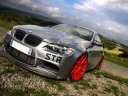
A sunny Saturday, the Nordschleife and an E92 M3 that has very little left of a standard M3: that is the programme for this fourth track test, featuring the build by tuner DM Performance. The M3... When you look back at BMW's history, you can only note an impressive record in competition, all over the world. From the 24 Hours of Le Mans to the Nürburgring 24 Hours, via F1 and the DTM, BMW and its Motorsport division stand for innovation and performance for a great many fans. But what about the road cars we can take on track? From the 1 Series to the 6 Series there are "M" badged models to suit every user, but let's be honest: for us dedicated trackday drivers, only the 1M and the M3 are of any interest on a circuit. Some will try a few laps in an M5 or an M6, or even an X5M for the boldest, and we wish them the best of luck! That leaves the M3 GTS, which was supposed to succeed the magnificent M3 E46 CSL. This version was offered to celebrate the M3's 25th anniversary, but at 138,000 € when it came out, with a performance gap over a standard version that is not that big, it is hard to justify the price difference. The next version promises big changes: forced induction and a new name for our Bavarian coupé: the M4! I will pass over any comment on this new name... well, no, I can't help myself: what kind of half-baked idea is that!!! An M3 has a soul, a history, it lives, it sings! It's as if Porsche suddenly decided to change the name of the 911... unthinkable. We hope it is only a market study and that they will backtrack when the Motorsport coupé is officially launched. Our choice for this track test is therefore an E92 M3, no longer quite standard after passing through the hands of DM Performance. This is the start of a series in which we will try several versions from different tuners, because this generation of the M3 is a very good base for building a track car that gives its driver sensations and emotions. Here we touch a sore point of the Motorsport division, shared by many mainstream manufacturers: to drive on a circuit and string laps together, a few routine modifications are needed. These are rather heavy cars which, however sporty they are, are not made for that. You have to be aware of this when you decide to invest in a BMW for track driving. Stiffening the chassis or upgrading the braking system are examples of work that is generally quite expensive. A Clubsport atmosphere This DM Performance build has one major appeal that matches how many trackday drivers use their cars: it remains civilised. It is not a radical version stripped of all comfort, but a build combining top-level performance and refinement. You can drive there quietly on the road, string laps together and head home enjoying the good sound system once you've had your fill. When I walk up to it, my first thought takes me back to the Porsche GT3 RS (you know, a benchmark for us). You can see the brightly coloured half roll cage through the windows, the same colour as the wheels, and the magnificent BMW Performance bucket seats invite you to climb aboard. Everything is well integrated, the emptied rear section is carpeted in the style of the M3 GTS, and you keep all the comfort of a standard M3. An extra display has been added to the dashboard, again neatly integrated, giving all the basic information to keep an eye on the car: water, oil, gearbox, intake and exhaust temperatures and so on. It is, by the way, absurd that you cannot simply monitor the water temperature on a standard E92 M3: you have to go into a hidden menu with several steps, in other words not very practical on a circuit. A pair of Schroth harnesses completes the interior equipment. A racing yet refined atmosphere: I like it! I take advantage of the static photo session to look at it more closely. Looks-wise, the modifications are subtle and, in my opinion, tasteful, with Vorsteiner bumpers and "flashy" wheels. You like them or you don't, but they certainly make an impression! Note also the carbon boot lid, recalling the curvature of the CSL. It has been painted in the body colour, leaving just the tip of the lid in carbon colour, a small touch that adds further to the refined spirit of this build. You also begin to spot the "performance" parts: big Brembo brakes with 6-piston calipers, Akrapovic exhaust and Bilstein PSS10 dampers. These are the weak points of a standard M3 put right; we will see later on track what that gives. G-Power Next we open the bonnet to discover the heart of the beast. On this point, everyone agrees on handing BMW a big red card: the standard V8 lacks punch, doesn't deliver its horsepower and makes us miss the straight-six engines of earlier generations. You can fix that by modifying the exhaust and reprogramming the ECU, but it is a pity! Here, the "power" problem no longer arises: a G-Power supercharger kit has been fitted, taking the output to a little over 600 hp for 600 Nm of torque measured on the dyno. This is a DKG gearbox version, but it is perfectly possible to fit this kit to a manual version. The maximum boost pressure is fairly low, at 0.6 bar, to guarantee maximum reliability. It remains to be seen how the power curve is distributed, but it promises good sensations at the wheel. Yum! Chassis The discussion continues with David, the owner, and we go through the rest of the modifications. The whole suspension is modified with components from the M3 GT4, the competition/customer version closest to the production car. All of it is coupled to Bilstein PSS10 coilovers with adjustable top mounts to set camber and caster at the front. The brakes are entrusted to a Brembo GT kit with 6-piston calipers at the front and 4 at the rear, and several wheel configurations are possible. For our test, we will be on 19-inch BBS CH-R wheels with Dunlop semi-slick tyres. In short, plenty of good things on paper, but I can't wait to try it! First impressions It is time for me to get behind the wheel and see what it can do. We are at the Nürburgring, on a Saturday, and the weather is fine. Needless to say, it is crowded and it will be impossible for me to set a lap time worthy of the name... So I will concentrate on the driving sensations and on how this M3 behaves. You find your driving position naturally, as in most models from the Bavarian marque, and the BMW Performance seats offer a very good compromise between comfort and support. The Akrapovic exhaust makes the V8 purr with a pleasant sound that is not too intrusive in the cabin; I put the DKG gearbox in manual mode and set off on a first familiarisation lap. The very firm damping immediately gives a feeling of precision, you feel everything going on under the wheels and body movements seem small. I take this first lap calmly to get a feel for the behaviour of this rear-wheel-drive car with more than 600 hp. The first hard acceleration is a very pleasant surprise: the way the power arrives is not distorted by the addition of the supercharger kit. It stays close to the behaviour of a naturally aspirated engine, linear and with a very wide usable range. There is very little response lag, unlike a turbocharged engine, which is often a nuisance on a circuit. But the big difference from a conventional naturally aspirated engine is that, whatever the engine speed, the rev counter is devoured in no time! It pulls hard in 4th at 3,000 rpm without flinching, with an unusual sound. This time, the Akrapovic exhaust gives voice and blends with the characteristic whistle of supercharged engines, and every lift of the throttle produces a blow-off reminding us that there is something serious under the bonnet. The feel at the brake pedal is very good: bitey, powerful and precise. The Brembos are doing their job perfectly for the moment. It always takes some adjusting to drive a 600 hp rear-wheel-drive car, but here, without pushing too hard and well helped by the DKG gearbox, there is no difficulty at all. Of course, I'm not going to stop there and I will ask a bit more of it, but the car's consistency is a good point. Picking up the pace The easy handling inspires confidence, and since I'm not here to mess about, I quickly start picking up the pace! I flirt with the top of the rev counter and the very good impression of the engine is confirmed: the dashboard lights remind us that we will soon need to change gear as we approach 8,000 rpm. It pulls without any parasitic torque effect and the high revs are a delight for the senses! I like it and I want more... The first big braking shows a very well balanced, stable car. The initial bite is good, you can brake late and handle a good trail-off of the brakes without difficulty. The Dunlop semi-slicks offer good grip, but you still feel there is weight to carry on the front. It is also at this moment that an unpleasant sensation appears: the front end "skips" and "bounces" over some bumpy turn-in points. The setting of the Bilstein PSS10 dampers is too firm for the Green Hell circuit; it should be softened a little. The first lap is quickly swallowed and all signals are green for a second lap in a row: nothing is overheating and the brakes are still there. What more could you ask for to raise the pace even further? Once through the toll gate, I set off on a fast lap where I will try to push it harder, despite the heavy traffic. As mentioned earlier, the front end is quite heavy. You have to brake properly to manage to catch the first apex in the Tiergarten corner, otherwise the front pulls us towards the outside and it understeers. Once the front is turned in, the rear follows without complaint. I unwind the steering and get back on the power in second... and it quickly reminds me that I'm not in a standard M3: "there's more than 600 hp here, buddy, and all of it on the rear wheels". But once again, it is very healthy: it warns you, it is easily manageable and I have a mad urge to throw it sideways! But I'm not here for that... The sequences of fast corners are a delight to tackle, the car settles and even if the rear slides a little in places, it remains effective. Even though I'm held up by a red Italian car on the crest before Flugplatz, the speedometer goes past 250 km/h on the following descent, and I still have just as good a feel with the brakes arriving at Aremberg. I start the descent towards the Fuchsröhre compression, which I take in 6th. The DKG gearbox... I regret not having a manual gearbox version: the DKG is showing signs of weakness. An annoying phenomenon appears: at high speed, when I try to downshift quickly and need to get back on the throttle right afterwards, there is a significant delay. For example, just after the compression I brake and select 5th to take the following fast left, which must be taken on the throttle to properly stabilise the rear. But when I put my foot back on the right-hand pedal, nothing happens for a good second: unsettling! I will be caught out by this once or twice more over the rest of the lap, before deciding to hold the gear and lug on the torque instead of downshifting when I need to. It is a problem inherent to BMW's DKG gearbox, which is overheating... On this subject we will have a very interesting discussion with a local tuner who runs well-honed M3s. Cooling on the E92 versions, particularly on models with the DKG gearbox, is a problem they struggle to get around. There is not enough room at the front to fit a very large radiator and increase airflow. If you want to keep a more or less civilised car, there is no real lasting solution. You have to go for much heavier and more extensive modifications to improve the system. In short, there are no two ways about it: learn to heel-and-toe and add a clutch pedal and a gear lever to all this!!! I then arrive at the long section descending towards the village of Adenau. The brakes are still there and even though I'm caught out by my arrival speed at the tight left with the unpronounceable name of Wehrseifen, it goes through without a fuss. I hit the brakes very hard, my pedal goes down a bit further than usual but it stops. We are slightly on the brakes here, so my rear end slides with the sudden load transfer to the front... but I was expecting it and I correct easily with the steering. I catch up with a group of slower cars just before the long climb to the Karussell. No pressure, I calmly wait until the way is clear to pull out and overtake them, helped by the smooth usability of the supercharger. In these fast sections, this M3 is really effective. The front end's heftiness that you feel at low speed is completely forgotten at pace, the car settles in the long corners and doesn't move. I reach the end of the lap and see someone at the side of the track waving a yellow vest. Another Bavarian has crashed on the exit of the small Karussell, on the left, and two cars have stopped to secure the area while waiting for the marshals. The joys of the Nordschleife... Verdict This will conclude our test, since the track will not reopen this evening. I complete this lap in 8'05 BTG and I'm really won over by this configuration from DM Performance. With fewer people on the track, I think it is capable of lapping in 7'30 without the slightest difficulty, but I won't have the chance to get back behind the wheel to try for a real lap time. It is only postponed; we will find a slot to try it again on a clear lap as soon as possible... It is admittedly not the most radical M3 E92 that exists, nor the best track car you can find for this exercise, but it offers a concept that BMW, in my view, failed to deliver with this generation: a true Clubsport in the way that a German colleague, Porsche to name no names, knows how to do. You arrive quietly by road for your track day, in a refined car with all the necessary comfort, and when you cross to the other side of the pit wall it knows how to make you sweat with big sensations in store! It brakes, the chassis is sharp and it goes hard. You will tell me that the M3 GTS existed, and you are right... But writing a cheque for 138,000 € for an orange car, only two seconds faster at the Ring than an M3 E46 CSL almost 10 years its elder: would you sign? It will certainly be a collector's item (it holds a very high value), but I don't think it is suited to our use as trackday drivers. For that budget, a Porsche GT3 is much better! That is why I like this build so much. It was for sale at 60,000 € to make way for a new, more radical project the following year... that is half the price of a used M3 GTS. For anyone who likes German cars and the BMW brand, it is a really accomplished build. The Clubsport concept is pushed to the maximum, with a big herd of horses under the bonnet that does not distort the engine's character, and top-level equipment from reputable, proven brands. The only downside comes from the DKG gearbox, which shows signs of weakness at high temperatures... It bothered me at a high pace, but I think that for the majority of users the phenomenon cannot be that troublesome. Given the choice, I would of course take a manual gearbox. But in that case, it won't be for just anyone: more than 600 hp in a rear-wheel-drive car with a manual gearbox, you have to start working seriously behind the wheel! In 2014, DM Performance will return with a new project based on the M3 E92. This time it will be a much more radical version intended exclusively for the track. The one tested in this issue is equally capable of crossing France for the holidays, with reasonable consumption thanks to the disengageable supercharger, and of lapping the circuit at a high pace. Sensations for the driver, top-flight performance... You are at RACER'S! This article comes from issue 4 of Racer's, Marc Peraldi's magazine. Thank you Marc!

Fell completely by chance on this article, I invite track fans to throw a look. In summary, many insurance policies cover you on track if it is not about competition or timed event. But last February, following an accident on the track, the Paris court issued a judgment indicating that the participant in a "club day" was considered in the "conditions of competition". The conclusion is that it is highly recommended to have a certificate from your insurance clearly stating that you are covered on the circuit, and if not to take the minimum liability insurance offered by the organizers. The full article: http://www.juritravail.com/Actualite/sport/Id/84401

After losing its approval order, the Eure circuit has recovered following the call made by its owner Yves Duprat. However the tour negotiates a rather sharp turn into a safety driving school. The track days will be very few, if any.
The easiest way to approach track braking is to look up its dictionary definition: "a system designed to slow down or stop a moving mechanical assembly." Nothing complicated, since we all agree that the goal of braking is to slow down to adapt our speed to the corner. But to really study it in detail, understand how it works mechanically, and optimize it on the track, we need to start by going back to school... Vehicle dynamics Every moving object possesses kinetic energy directly related to its mass and speed. This energy corresponds to the work required to go from a standstill to a given speed. As your physics teacher probably told you at some point: "nothing is lost, nothing is created, everything is transformed." This means that the energy acquired by the car during acceleration doesn't simply vanish into thin air at the slightest pressure on the brake pedal. It is transformed into heat by the braking system: its primary role is to dissipate the vehicle's kinetic energy. This energy is proportional to the mass and the square of the velocity (E = ½ mv²). It's easy to understand, then, that the heavier a vehicle is, the more substantial its braking system needs to be, capable of dissipating significant energy and withstanding repeated temperature increases. The impact of speed is even more significant: doubling the speed quadruples the energy that must be dissipated during braking. This must be factored into the determination of the braking point on a track: braking distance and heat resistance! How does it work? There are several types of braking systems, but the most common on our vehicles is braking provided by brake fluid, calipers, discs, and pads. Our apologies to owners of classic vehicles equipped with drum brakes, or to those, more ambitious, who have attempted to install electro-pneumatic train braking systems... The complete braking system, from the pedal to the disc, is divided into four parts. The brake booster (master-vac) The first, the brake booster, amplifies the pressure exerted by the driver on the brake pedal. Its detailed operation is not relevant here, as many racing or "extreme" production vehicles are not equipped with it. The major difference lies in the pedal feel: a production vehicle equipped with a brake booster requires less pressure and is more comfortable, whereas a vehicle without assistance offers a very firm pedal with little travel. The master cylinder The second part transforms the pressure exerted by the driver on the pedal into hydraulic energy, distributed to the different wheels: this is the master cylinder (MC). A piston compresses the brake fluid in response to the pedal action and sends it through the brake lines. It is easily located in the engine compartment, as it is generally situated just below the brake fluid reservoir. Its role is crucial, and the system's sealing must be closely monitored: sometimes you can spend hours wondering why the brakes lack bite, when you've neglected the master cylinder. The seals expand with time and wear, which can reduce the internal pressure. On a vehicle that has been sitting for a long time, the piston can also develop some seizing. Finally, there's bleeding the brakes. Be careful with the "old-fashioned" method of pumping the pedal: don't overdo it, or you risk damaging the master cylinder seals! The brake caliper With the fluid compressed, this hydraulic force must now be converted into mechanical energy. This is the role of the caliper, which receives the pressurized fluid and pushes one or more pistons. Manufacturers have many options: fixed or floating calipers, single-piston or multi-piston. On modern sports cars, fixed multi-piston calipers are the most common and effective solution. But you don't have to go back that far to find sports cars with single-piston brakes, like the BMW M3 E36... The single-piston floating caliper is the least expensive and most widely used system by mainstream manufacturers. Its principle is simple: pressurized fluid pushes the piston, which then presses the inner brake pad against the disc. The caliper then moves inward, thanks to sliding guides, continuing to press against the disc, thus bringing the second brake pad into contact. Be aware that this type of caliper can seize with wear, especially on vehicles that have been sitting for extended periods. The multi-piston fixed caliper : manufacturers offer a wide variety of products with two, four, six, or even eight pistons. There are no sliding guides to allow it to move: the pistons bring the brake pads together on each side of the disc. The advantages are numerous: better distributed hydraulic pressure on the pads, less risk of caliper seizing, and smaller, lighter pistons that move very quickly (sharper bite). On the other hand, they are expensive to manufacture, more bulky, and require careful maintenance: more pistons mean more seals subjected to high temperatures and wear. It's all about compromise here: a system with many pistons and large calipers is heavy, bulky (requiring larger rims), and expensive. This is why it's difficult to take a stock city car to the track: its brakes aren't designed to withstand repeated hard braking, but they're sufficient for normal driving conditions. And if you're considering upgrading your calipers to a larger model, remember to factor in the added bulk and increased unsprung weight if you're forced to fit larger rims. Discs and pads We now come to the final components of the system, which play the most important role: dissipating the energy of the moving vehicle. The car slows down through friction: the disc rotates with the wheel, and the brake pads, fixed in the caliper, clamp it under the pressure exerted by the pistons. It is this friction that generates heat and allows the car to brake. The quality of the discs and pads is therefore crucial for effective and consistent braking. Their wear must be closely monitored, and when considering track use with a production vehicle, it's essential to remember that the braking system isn't necessarily designed for intensive use on a racetrack! Warped discs... a myth? This is a sensitive issue that needs clarification before incurring unnecessary expenses. In 99% of cases, a brake disc doesn't warp. What happens is that pad material is deposited on the disc and stagnates there because of high temperatures, causing vibrations under braking. The term "warped" is a misnomer, since the disc doesn't actually twist. The uneven deposit can even locally alter the quality of the cast iron in the event of very high temperatures. The causes of overheating are varied: an undersized braking system for the intended use, an unsuitable braking technique (progressive braking), or inadequate brake cooling. So what should you do when your brakes vibrate? Clean your discs as soon as possible: brake cleaner, disc resurfacing, or heavy braking with highly abrasive pads—any method is good for removing the deposits. It's crucial not to persist for too long if the vibrations continue, because beyond a certain point, it becomes irreversible: the brake pad residue becomes embedded in the material and locally alters the disc's structure. The braking technique With the technical aspects covered, we can finally talk about what happens on the track. As you've probably gathered, it's impossible to define a single rule for braking point, pedal pressure, and where to stop braking, given the significant influence of external factors... It's off to a great start! But all braking maneuvers are similar and share a common goal: to slow down and position the car to prepare for the corner exit. The first thing to keep in mind is that when driving on a track, you have to forget what your driving instructor taught you. There are three ways to brake: progressive braking, constant braking and trail braking (gradually releasing the pedal). In track driving, progressive braking, the kind we all use every day, has no place in your vocabulary: it is comfortable, but completely unsuited to the circuit. Next, we need to distinguish between two categories of vehicles: those without significant aerodynamic downforce, and those with it. For example, a Formula 1 driver who releases the accelerator can experience, depending on the speed, a deceleration of 1 G without even touching the brake pedal. The braking technique in Formula 1 is therefore quite different from that in a Clio RS. To understand this, we need to recall what we saw in issue 2 of the magazine: during braking, there is a load transfer onto the front axle that presses the wheels into the ground. On an F1 car or any other vehicle with aerodynamic downforce, this load varies throughout the deceleration, because aerodynamic downforce is directly related to speed. But on a conventional vehicle, once the transfer has occurred, the load on the front axle remains virtually constant. The wheel lock-up limit therefore varies considerably on a vehicle with aerodynamic downforce, whereas it is almost constant on a production vehicle. Since we seek to get as close as possible to this limit without ever exceeding it, the technique is not exactly the same. Emergency braking: understanding ABS Why analyze emergency braking? To see the action of the ABS, which corrects the pressure as soon as the locking limit is reached. The curve recorded on a production vehicle shows: a firm initial brake application; constant pressure throughout the braking; the ABS kicking in at several points (the small dips). We can see that, during emergency braking, the pressure hardly varies between the start and the end of the braking. This is because the load on the front axle does not change, and therefore the wheel lock-up limit is constant. If this limit decreased with speed, the ABS would adjust the pressure to a lower value as the speed decreased. In action The first thing to do when looking for ideal braking on the track is to find the wheel lock-up limit: to get as close as possible to it, you need to know where it is! Locking the wheels once lets you gauge the maximum pedal pressure for your vehicle and the driving conditions: weather, condition of your tires and of the surface, etc. The aim is to get as close as possible to this value, as quickly as possible, without ever reaching it: this is the initial brake application. It must be firm and precise, and made with the steering as straight as possible. The load transfer to the front is violent, so the rear of the car is unloaded: too much steering angle at that moment can end very badly. This is why, in the special cases where braking takes place in a corner, you must adapt your line so as to have a "straight bit" in which to hit the brakes. The idea is to avoid engaging the ABS every time you brake, since it releases pressure as soon as you reach the locking limit: the braking distance will be longer (the main role of ABS is not to reduce braking distance, but to maintain steering control in an emergency). You have to find the precise balance to stay as close as possible to the limit. Next, you need to adapt to the situation. If it's a textbook straight-line braking and you're in a production car without significant downforce, there's no reason to ease off the pedal: this is a "constant" braking phase, where you try to stay as close as possible to the wheel lock-up limit (pure slowing down). Trail braking only begins when you turn the wheel, for the turn-in phase covered in the previous issue. In reality, at high speed, even a car without significant aerodynamics gets some downforce on the front axle depending on the shape of the bodywork, so you need to adapt your pedal pressure slightly, but these effects are only felt at very high speed. If you're in a car with aero, it gets more complicated: you have to adapt to the load decreasing on the front axle and trail brake right from the start. For the other cars, you have to adapt to the car in question, starting the trail braking very early. Define your braking point As with many aspects of track driving, you have to start from the end to define the actions you want to take: in this case, braking! In theory, braking ends when the driver is able to resume accelerating, that is, when the car is positioned and facing the exit. Except for a few specific cases of very long corners, you either brake or accelerate: there's very little waiting involved. It's impossible to define a single rule that will work on every corner and every car, but generally speaking, the end of braking occurs around the apex. In the example of the Museum corner at Le Mans, it's located slightly before the apex: the goal is to bring the brakes to this point to have the vehicle perfectly positioned and oriented towards the exit. With a car without aero, between hitting the brakes and turning the wheel, you can hold a constant pressure and only start trail braking when you begin to turn in. The pressure must be adapted to the conditions: dry or slippery surface, standard tires or slicks, downhill or uphill corner, bumpy track, etc. When you're starting out, it's often difficult to trail brake because you've scrubbed off too much speed before the corner. You end up with a low entry speed and want to get back on the accelerator too soon! As the positioning isn't finished, this generally means understeer on the exit. You have to adapt to each corner according to your approach speed, delaying your braking point little by little so that the moment you release the brake pedal matches exactly the moment you can get back on the accelerator. Here's a good way to know whether you made the right moves at the right time: "If you have to lift off the accelerator on the way out of a corner, something went wrong on the way in. Normally, once you are back on the power, you shouldn't lift off again until the next braking." This lets you analyze yourself and correct your actions on the next pass. Determining the correct braking point when approaching a corner is never easy, and there's no universal rule: it depends on numerous parameters (approach speed, braking system, tire type and condition, suspension, road surface, weather conditions, etc.). Adapting to the circumstances is key to successfully determining the right braking point yourself, always keeping in mind that the goal of track driving isn't to brake later than everyone else. Braking late, yes, but while aiming for the highest possible corner exit speed. The cool-down lap Taking a cool-down lap at the end of the session is essential to cool your brakes (and the engine...). Stopping in the pits with still-hot brakes can have disastrous consequences: we've seen cars catch fire! Depending on the track day you're driving at, the briefing may give different instructions, but in general you can use your hazard lights to let the other participants know you're on a cool-down lap. Be careful not to do this lap too slowly, otherwise the airflow won't be strong enough to cool the brakes. A speed between 80 and 100 km/h is sufficient for proper ventilation. Try to use the brakes as little as possible during this lap. This article is from issue 3 of Racer's, Marc Peraldi's magazine. Thank you, Marc!
The notion of load transfer in driving is always tricky to approach: it is a vast subject that calls for a solid grounding in mathematics. Here we will clear things up with a simple technical approach, but you will (still) have to do a little maths to understand what happens during acceleration and deceleration on our favorite circuits. It is important to clear up right away a big confusion between the terms "mass" and "load". If a professional instructor ever talks to you about mass transfer during a briefing, you have a very easy way of catching him out! Mass transfer does exist: it literally means that a mass moves from a point A to a point B. It is constantly present when you drive, and corresponds to the movement of the vehicle's center of gravity as the moving parts move. But the forces it generates are much smaller than those of load transfer, which are physical forces directly linked to body movements: squat, dive, roll... If someone talks to you about mass transfer on a driving course, either you are hunting for the last thousandths of a second with your track engineers, or the instructor doesn't know what he is talking about! Load distribution The first thing to remember is that, when you drive, what you do with the pedals is at least as important as what you do with the steering wheel. How much pressure you put on the accelerator or the brake pedal has a direct influence on the behavior of the car. Under acceleration, it squats and "loads" the rear. Under braking, it dives and "loads the front". These body movements are very easy to see on a tall vehicle with "soft" suspension (Dacia Duster owners are called to the stand...), but less so on a competition vehicle such as a single-seater or a prototype. Yet, even when almost imperceptible from the outside on a race car, load transfers are no less important: chassis engineers watch them closely to know how the car will behave in the phases when it is leaning on its tires. When you drive, the car is never in the same position: the load is distributed over the four wheels according to what you ask of it. If you turn left while accelerating, it is the right rear wheel that takes the most load. Since most circuits run clockwise, you turn right more often and sometimes wear the tires on the left side faster! It is also why, in very top-level competition, the suspension settings can be different left and right, to suit the circuit in question. It is enough to make you tear your hair out, there are so many possibilities... Understeer, oversteer The best way to understand the influence of load transfer on the behavior of the car is to pick a flat area and drive in circles. I did say "drive in circles", not do donuts at full throttle with the steering at full opposite lock (BMW fans, I salute you!). You can take a roundabout, but if our "pals" from the police are reading us, they will cry scandal and claim that Racer's is encouraging readers to do anything on the road... Keep a constant speed for your circles, say 50 km/h. Without changing your steering angle (the position of the steering wheel), accelerate... What happens? Your car squats at the rear, the front wheels are "unloaded" and the car drifts away from its initial line, describing larger circles: this is called load transfer to the rear. It has two important consequences. First, it is easy to see that, to put a car's power down, it is preferable to have rear-wheel drive, because under acceleration it is the rear wheels that are pressed into the ground. I have nothing against front-wheel-drive sports cars, which can be very fast, but it is not the most efficient solution (besides, if it were, Formula 1 cars would almost certainly be front-wheel drive...). In reality, the most efficient solution would probably be four-wheel drive: when you turn while accelerating, the front wheel on the outside of the corner is also loaded, so it can be used to put power down. That is why, if you look at the history of motorsport, four-wheel drive was quickly banned. Audi tried it in the early 90s with its Quattro system on the Audi 80 in Supertouring, literally crushing the competition, and then the rules changed. Today, with Audi again, four-wheel drive is making a comeback in endurance racing on the E-Tron Quattro hybrids, a clever workaround of the regulations to redistribute electric power to the... front wheels! Second important point: when you accelerate, the front wheels are unloaded. On a circuit, on the way out of a corner, you therefore can't afford to get back on the throttle too hard with the wheels turned, or the car will "understeer". The front wheels, short of load, can no longer respond to what we ask of them at the steering wheel: we ask them to turn while lifting them off the ground. No wonder the front tires scream for help in this situation! I'll take the opportunity to make a recommendation to amateur drivers who drive at club days: before crying scandal because your car understeers, and investing thousands of euros in new suspension, new tires or new settings, think about taking a driving lesson with an instructor who will ride as a passenger: it will cost you far less. Often, a car understeers excessively because it is being asked to understeer! I'm not saying that fitting "performance" parts is pointless, far from it, and you will find a lot of information on track-oriented equipment in the next issues of Racer's. But this "racing" equipment, which lets us go faster and faster on track, will hide some flaws in your driving if you are a beginner, because it takes the loads better. When you drive on a circuit, you must constantly develop your personal technique before wanting to add speed... Understeer doesn't only occur when you lose load on the front. When the wheels are locked because of overly hard braking, however much you load the front axle, the car won't turn and understeers: our tires have a grip limit that we cannot cross. Let's go back to our flat area, where you are driving in circles at constant speed. Now, still without changing your steering angle, suddenly lift off the accelerator. The front of the car dives and it moves closer to the inside of the corner. By suddenly lifting off, we have generated a load transfer to the front, which gives the wheels more steering ability since they are "pressed" into the ground. That is why, in fast corners such as the Dunlop corner at Le Mans or Blanchimont at Spa-Francorchamps, it is important not to lift off the accelerator mid-corner, or the rear axle will be completely unloaded and will try to come round to the front! This is what we call "lift-off oversteer". It differs from "power" oversteer, where all it takes is flooring the accelerator in a rear-wheel-drive car for the rear wheels to spin and the car to step out. This oversteer is dangerous for the uninitiated and is eliminated on production cars by the manufacturers, thanks to "reassuring" chassis settings and omnipresent electronic aids. But when you switch off the ESP, beware of lifting off in a fast corner! Turning in on the brakes This load transfer to the front is one of the most important points of driving on a circuit. Mastering it gains precious seconds, but it is also the hardest to learn. If you compare two drivers arriving at the same corner at the same speed, one with his foot on the accelerator and the other with his foot on the brake, the lines will be completely different. The whole art of driving lies in modulating the brake pressure to "play" with the load transfer onto the front axle on corner entry. This increases the steering ability (and so helps the car turn) while keeping a higher cornering speed. This is what we call turn-in. If a driving-school instructor ever taught you that when turning you must get back on the accelerator, you will have to get that out of your head to drive on a circuit... Maths... again and again If I started on the mathematical explanation of longitudinal load transfers (front to rear and vice versa) and lateral ones (left to right and vice versa), a single issue of the magazine wouldn't be enough, and I doubt you feel like taking an advanced maths course before a day of track driving! So I will give you just one formula, to give you an idea of the parameters that affect load transfer. Longitudinal load transfer is expressed as follows: Load transfer = M × γ × h / E M: the mass; γ: the acceleration or deceleration (expressed in g); h: the height of the center of gravity; E: the wheelbase. It is easy to see that a Formula 1 car, even though it has a low mass and a very low center of gravity, undergoes a large load transfer because of its very high acceleration and deceleration capabilities! A production car, say a Scénic, undergoes a maximum deceleration of around 1 g in emergency braking with standard tires. On a Formula 1 car, with slick tires and aerodynamic downforce, it can reach 4 g. So you can imagine how large the load transfers are, even though they are barely noticeable from the outside. These load transfers are what we are going to try to exploit in our driving. You will say: easy, I brake later than everyone else, I stay flat on the brakes on entry, I'll get a huge load transfer and I'll turn into my corner perfectly with plenty of speed. But it is not for nothing that mastering load transfer is the hardest thing to learn in driving... The tire's friction circle Before we can exploit load transfers, we must take our environment into account: tires, track condition, weather... It is fairly easy to understand that we cannot ask the same of the contact with the ground in fine weather, with slick tires on a perfectly smooth surface, as in the rain with worn road tires. We can afford to load the front axle more (hard on the brakes) when there is plenty of grip, whereas we must be more vigilant when there is less grip. Weather and surface are parameters we can't act on (unless you are seriously rich!): it is up to us drivers to adapt. We will mainly be limited by our tires which, at a certain point, will no longer accept the load and will slide. This limit can be pushed back by improving the quality of the tires or adding aerodynamic downforce, for example, but there will always be a moment when the tire reaches saturation. Take the example of a Formula 1 car, on slicks on a perfectly dry track, whose driver has the steering turned and the wheels locked. The combination of steering angle and brake pressure is beyond what the tire can take: the wheels lock and the car goes straight on. Even at the highest level, equipment isn't everything and certain rules must be respected. The situation is easy to picture thanks to a graph called the tire's friction circle (or Kamm circle), which is not actually a circle but rather an ellipse. It models the load that can be asked of a tire according to acceleration and steering angle. It represents the limit of grip: inside it, the tire grips; outside it, it slides. You can clearly see that the tire copes better with longitudinal forces than with lateral ones. Depending on the type of tire, this "circle" varies: taller or less tall, wider or narrower. What the ABS does When you are in a straight line and braking, you try to be at point A: you brake hard, up to the tire's grip limit but without exceeding it, otherwise the wheels lock. If you turn the wheels, you have to reduce your brake pressure so as not to leave the circle and keep grip. That is exactly the role of the ABS in emergency braking: it eases off the brake pressure so that you stay within the friction circle and thus keep steering ability. Without ABS, when the wheels are locked, however much you turn them, not much happens and you go straight on! Driving Let's now look at our driving on the approach to a corner. I am at point A (on the friction circle), wheels straight, and I have just done the best braking of my life: late, hard and without locking the wheels! I am going to have to turn my wheels to point B (in this example, I am turning right). I need to follow the line of the circle from A to B. In practice, this means easing off the pressure on the brake pedal as I turn the steering wheel. This type of braking is called trail braking, which follows this rule: the more I turn, the less I brake. There is a permanent link between what you do at the wheel and what you do at the pedals. You will ask me: "That's all very well, but when do I stop braking?" I refer you to the article on racing lines in issue 1 of Racer's, which says that you can only get back on the power in a corner if the car is pointing toward the exit. There is no universal truth about where braking ends. In a tight corner with a variable radius, it is often close to the apex, but every corner has its own characteristics. To work it out, you will have to take your environment into account: the car you are using, the surface, the tires, the weather... But always remember that what matters is preparing the corner exit. And getting back on the power? Once the car is pointing toward the corner exit, I can think about getting back on the power. But if I accelerate too hard with the wheels turned, I will leave the circle... So the pressure on the accelerator must be the exact opposite of that applied during trail braking. This is called progressive acceleration: the more I unwind the steering, the more I can accelerate... This article is from issue 2 of Racer's, Marc Peraldi's magazine. Thank you, Marc!
The antithesis of our track test in the first issue with the Porsche 997 GT3 RS, the Nissan GT-R gets people talking. You can read and hear all sorts of remarks about it: too much on-board electronics, an easy car to drive, unreliable, too heavy… But one thing is certain: it sends lap times tumbling on track, so it had to pass through our hands. We hesitated a lot over doing this test, given how much reaction the Nissan GT-R provokes. Comments on this car appear in every car magazine, and another test wouldn't have added much new to the mix! Then one day, while working on the development and promotion of the magazine, we received an invitation from the French specialist in tuning and servicing Nissan GT-Rs: Ludo, from GL Racing. He offered to lend us his personal GT-R for 2 days so we could do a full report! After careful thought (about two and a half seconds, stopwatch in hand…), we of course accepted! If you're going to test a GT-R, you might as well test a really sharp one… To stay as close as possible to the way Racer's readers use their cars, I am going to drive to the circuit on the road and describe my whole journey. Two full days available, weather that looks kind for this start of May… And what if I went to the circuit where this car has humbled plenty of sports cars? The Nürburgring's northern loop is the obvious choice for this test: more than 1000 kilometres of road there and back and a track open in the evening for a good 2 hours, everything is in place to offer you a complete test! Why this one? Appointment made, I go to the GL Racing workshop to pick up the car. What I liked a lot about this invitation is that the tuning seems "thought through". The aim was not just to add extra horsepower, which is easy on these turbocharged engines where you can get 800 or 1000 hp without too much difficulty, with a wallet to match. Working on the car's overall behaviour was an important goal for this project: engine, chassis, brakes, gearbox and reliability… nothing is left to chance. It's starting to smell good, but I still brace my neck for a few violent assaults because of the claimed power of 620 hp and… 860 Nm of torque. Given that the base is a 2009 version rated at 485 hp and 580 Nm of torque, that leaves you dreaming! Its main flaw comes from the 1750 kilos it shows on the scales. It's not the first GT-R I will try on track, and it's true that its bulk is sometimes a nuisance. The electronics manage a lot of things, but can do nothing about the car's lack of agility in tight corners… we will come back to that later. But the biggest attraction of this car is its price! A 2009 version like this one is easily found for less than 50,000 euros. To find the same level of performance from the competition, you have to spend a lot… a lot more! To drive the point home, Nissan improves the performance year after year with very subtle changes. In general, the GT-R intrigues: either you love it and are grateful for its exceptional performance, or you hate it, claiming it is too easy, that it has no real gearbox and too much on-board electronics. For those in the second category, I think you won't like the new Porsche GT3 either, which will only be available with PDK. First impressions After a quick presentation of the car, I settle in and hit the road. The GPS gives me 535 kilometres to the destination, which leaves me time to get to know the car. One of the particularities of this tuning is the damping: an Öhlins Road & Track kit has been fitted, adjustable in firmness with knobs on the top of the dampers, and replacing the car's original adaptive suspension! I chose to set the car fairly firm, but without overdoing it, because the Nürburgring track is very bumpy and needs a bit of compliance given the mass of the machine. The first few metres are on small country roads that will take me to the expressways and the motorway towards Germany. A first observation comes quickly: I confirm, it's an anvil! The 1750 kilos are well and truly there: the steering is heavy, the GT-R hunts for its line and skips a little over bumps… nothing like a standard version that is rather soft on the road. This behaviour comes from the damper setting I chose. I could correct it by softening everything… but I like staying in this "Racing" mood, even if it means a slightly sore back! The very positive point is that the steering sends back quite a lot of information: I know where my wheels are placed and what is happening at that exact spot on the road surface. The journey continues in the Paris traffic jams (for a change…). The gearbox is very smooth and, when you stay in Auto mode, it quietly goes into sixth at 60 km/h. You get all the comfort of a modern vehicle and a good stereo to keep you busy. The Akrapovic exhaust tips give a dull rumble at low revs and every passage through a tunnel makes other vehicles tremble. At the wheel of a GT-R in traffic, you don't really feel like you're in a car. You literally "fly over" the traffic, in a rather unusual noise mixing transmission whine, turbo whistle and V6 sound. A simple press of the accelerator is enough to extract yourself from any situation, and its size, with its prominent nose, forces other vehicles to move over to the right-hand lane. Out of the Paris region, the motorway clears. I'm going to be able to start… doing absolutely nothing! I'm in France and I need my licence to work, so I stay calm, settled at 140 km/h. At this speed we are at 3000 rpm and the on-board computer shows consumption of around 12 L per 100 km. Another interesting feature of this tuning is that you can change the engine management at any moment from inside the car, with no silly, ugly additional box: everything is integrated into the original controls of the on-board computer. I have the choice of 4 maps: the most powerful mode claiming a little over 600 hp, an intermediate mode around 550 hp, the original configuration (480 hp) and… an "economy" mode to favour fuel consumption on the motorway. Very good idea! For my motorway leg I use this last mode, which makes the car a bit limp but is more than enough for driving at this speed. Powerful? Noooo… Then comes the first toll booth, synonymous with the only moment of freedom on our beautiful French motorways! I select "high roller" mode and I'm going to be able to gauge the health of this engine tuning. The barrier goes up, gearbox in manual mode, I grip the wheel firmly and floor it! The first words that come to mind come from a well-known English expression: "OH MY GOD!!!" The 860 Nm of torque arrives violently, and that with the revs barely past 3000 rpm. The road is a bit greasy and I haven't switched off the traction control: it flashes all over the place to manage this abundance of torque. The Akrapovic exhaust, which until now gave a dull and not very pleasant sound, screams and excites my eardrums! The rev counter is devoured in the blink of an eye and the gears follow one another quickly at the slightest touch of the right-hand paddle. It pulls without a break, without any jerk, and I'm already far above the legal limits while I'm only in 4th! That's promising… The rest of the journey to Germany will seem very long, and the traffic conditions on the autobahn won't let me test the car's top speed. That matters little to me: what I want to know is whether its behaviour and the enjoyment felt at the wheel on track will be there. The Nürburgring Nordschleife is open for 2 hours at the end of the day, in "Tourist" mode. That is, it is not a private trackday but an opening to the public, like a toll road. This original concept is unique and lets anyone come and do a few laps of this legendary circuit: car, motorbike, van… It will therefore be hard to set an "official" lap time for this tuning, because the car park fills up before opening, but we will already have an idea of the beast's potential. My aim will be to see whether you can have fun on track with this Nissan GT-R, without being totally assisted by the electronics, since the adaptive suspension has been dropped. On track I'm going to do the first lap with Loïc, the photographer dedicated to this test, to get a few shots from the inside. It will let me build up the pace calmly and check whether there are any particular warnings on the track, roadworks or otherwise… The car is fitted with standard tyres, in this case Dunlop Sport Maxx, and the braking has been improved with Performance Friction discs and pads, high-performance brake fluid and cooling ducts. The bite is there, with a fairly firm and precise pedal. I raise the pace gently while keeping a big safety margin, and I like the behaviour with these dampers. I get good feedback, but I still miss harnesses to be properly strapped into my seat and take in even more information from the chassis. The engine, thanks to its 600-plus hp, lets me fly past everything on the track at that moment, and the rest time between each corner becomes short because it comes out so quickly. The car's high mass manages to be forgotten, but you must not get too carried away in the fast sections… I can feel I'm going to sweat a bit taking it to the limit! The first lap ends and I drop off the photographer so he can set up at a strategic spot at the trackside. Loïc says to me, almost as white as his helmet: "I thought it was a gentle warm-up lap?" We have just completed a warm-up lap in 8'15 BTG, with a lot of traffic on the track at opening time. All that without trying… it's true that the GT-R is fairly easy to handle when you leave the traction control on. But now the serious business is about to begin… Time attack While the photographer gets into position, I fine-tune my driving position. The original electric seat adjusts in every direction, as does the steering wheel, which makes it easy to find your ideal position. Its size makes you feel small behind the wheel, with its long bonnet and 1.90 m width. A Lotus Elise looks like a model car next to it. Anyway, enough talk: I put the transmission in Race mode, I switch off all the electronics and I set the map to the biggest setting. Here I go… but I'm scared! The engine is incredible, it pulls non-stop, whatever the engine speed. I arrive at the first braking zone at Tiergarten at 230 km/h, the brakes respond perfectly well with good bite. Positioning the car comes fairly naturally, the rear follows me nicely as I brake into the corner, but it's when getting back on the power that I'm caught out a little. I had forgotten how violent the arrival of the torque is, and the car oversteers excessively despite the 4 driven wheels! I'm going to have to go back to some driving basics and remember to wait until I have the wheels straight before releasing all the power… Off to a good start! I arrive at Hocheichen, a series of medium-speed corners in 3rd or 4th. The Öhlins dampers do a remarkable job, I don't feel the 1750 kg at all as I throw it from one corner to the next. The choice of a firm setting suits me perfectly: I kept a bit of compliance so as not to have a car that "bangs" on the slightest bump, but unwanted body movements stay limited. I pass Flugplatz and begin the descent leading to the bump before the left, then the braking for Aremberg. The power is still there, the exhaust screams and I'm in 6th at 270 km/h before braking. A few vehicles stop me taking the compression of the Fuchsröhre at very high speed and we come upon a yellow flag for a broken-down vehicle at the side of the track. At that point I have three vehicles ahead of me: a BMW E36 with a roll cage, an Audi R8 and a rental Swift! At the exit of Adenauer Forst, we are released and I swallow those 3 cars in a few seconds… And yet, judging by the sound, it was an R8 V10, which still develops 525 hp. The engine tuning by GL Racing is astonishingly effective. When you drive tuned turbo engines, it often happens that you get boost drops or dips in the power curve. Here, none of that: the turbos blow hard, the engine doesn't flinch and it keeps asking for more! Next I reach the downhill section taking us to the village of Adenau, which will put the brakes through a severe test. This is where I'd like the GT-R to weigh 200 kilos less: a long fast right-hander with a slight camber to the left leading to a big braking zone and a very tight right/left (Wehrseifen). The brakes don't flinch, even if it's starting to smell a bit hot, but the car suffers… In that situation there is nothing you can do about its bulk, which gradually carries us wide. You have to be patient: there is no run-off there and it is out of the question to tempt fate and damage the car… I pass Ex-Mühle and its uphill corner (it's more of a wall in fact, so steep is the slope). There it's magic: the 860 Nm of torque pull us out of this corner at an incredible speed, where other vehicles struggle to climb this obstacle. As a result, the fast left that follows, before the braking zone of Bergwerk and which is taken flat out by almost all the vehicles I have driven here, forces me to lift off the accelerator slightly. With semi-slick tyres it would go flat without a problem, but the Dunlop Sport Maxx, good as they are, start to slide more and more. Then comes the long climb that takes us further on to the legendary Karussell. With this much power, it isn't that long, since I'm approaching 250 km/h there. I catch up with two Corvette Z06s, which politely put their indicators on to let me through… The Karussell, with its concrete slabs, doesn't suit the GT-R much, again too heavy for this exercise, but the dampers do their job. I'm very surprised by the efficiency of the braking, which shows no signs of weakness. I still have bite and it seems enduring, which is reassuring given the speeds reached. The following sequences of corners, Hohe Acht and Wippermann, are taken with a lot of speed, but you can't be idle behind the wheel. When braking before Brünnchen, the car settles perfectly in a slight four-wheel slide. The GT-R in this configuration is different from a standard GT-R. Without the electronic aids and the adaptive damping, you no longer feel constantly assisted. You are in charge of what you do and mistakes are not forgiven, especially on this track with no run-off! In traffic… I complete this first quick lap in 7'49 BTG, which is already very fast. The official time of a 2009 Nissan GT-R is 7'29 on a full lap, which would be roughly 7'10 BTG. But today we don't have the track to ourselves (maybe one day… if Racer's becomes a big magazine!). Having to manage overtaking means keeping a big safety margin to respect the other track users, in particular the few bikers present, and the yellow flags stop me from setting a time. But I'm still going to try to bring it all down a bit! I set off again and do 7'40 BTG exactly, still with a yellow flag and traffic. I'm struggling to keep a good tyre pressure, as they tend to get a bit too hot and the pressure rises. I have to let them down twice to get back to a reasonable pressure… But another serious problem arrives. I've done 3 laps and the fuel tank is approaching reserve! 3 laps, a little over 60 kilometres, and I put in nearly 50 litres of petrol. I redo my sums several times, but I'm not wrong: that's well over 80 litres per 100 km!!! It stings a bit, but mostly I don't understand Nissan's choice of such a small fuel tank. It must be a part shared with Renault… I've refuelled and finally managed to maintain a good tyre pressure: I set off for a last lap in "Time Attack" mode. The GT-R doesn't flinch: neither the engine nor the brakes show any sign of fatigue. In some places the tyres rub against the arches because the loads are so high, I could perhaps have stiffened the suspension a little more. I get a big sideways moment on turn-in under braking at Aremberg, but it works out. I still don't get the chance to take the compression of the Fuchsröhre the way I'd like, having to make an overtake right in the descent, but I'm still doing 220 km/h there. Another yellow flag is out and there's no way to cheat: the marshals are watching closely! I keep bullying the beast, which regularly reminds me that it weighs 1750 kilos by throwing me wide. The braking is still powerful and it hardly ever understeers if you modulate your brake pressure well on corner entry. On exit, I allow myself a few "a bit early" re-accelerations: it slides when the torque arrives, but it's rather healthy and easily controllable. A few more overtakes to manage, and I complete this lap in 7'34"71 BTG. Good! I won't try for better today: the traffic won't ease and we already have a good idea of the potential of the tuning. I estimate the time lost to the yellow flag at about ten seconds, the bikers made me break my rhythm at Adenau and Ex-Mühle, and I still haven't been able to take the compression of the Fuchsröhre without an overtake to manage. I think the true lap time is around 7'10 BTG without those slowdowns. With an empty track and a few more laps to get used to it, this car is capable of going for the 7 minutes BTG, that's for sure. Verdict Apart from the lap time, which is hard to really take into account because we were on a "Tourist" session, it is the behaviour of this Nissan GT-R tuned by GL Racing that is interesting. To all those who claim that the GT-R is a bicycle you can drive with your eyes closed, I answer that this one is different. With the electronics switched off, it's real driving and it's good!!! Its engine is exceptional, with more than 600 hp and a monstrous 860 Nm of torque… The brakes are durable and the Öhlins dampers send a lot of information back to the driver. Admittedly, it remains too heavy to consider doing track days regularly, its fuel consumption is very high and its running costs are significant. Its use should be limited to big circuits like Spa-Francorchamps or Dijon: no point hoping to lap Folembray or Dreux with a car like this, it would damage it more than anything. On that subject, I think that by removing the leather interior and fitting two proper bucket seats and harnesses (essential!), you would already save quite a few kilos, given that a front seat weighs nearly 60 kg… For what type of driver? If your idea of trackdays is to arrive on a trailer with a sharpened car, this one is not for you. But if, like many, you come by road to your track days while only doing 3 or 4 outings a year, while still enjoying decent everyday comfort, I think you can't do better at this level of performance! It is more capable than the standard car and offers real, unsanitised driving sensations. It's not for just anybody, it will take some time to adapt to the very high performance, but after that… it's so good! It pulls endlessly, the sound is superb, it brakes hard without showing major signs of weakness, and it sets incredible lap times: I like this compromise. I've already had the chance to drive on the road in a Porsche GT3 RS or a Lotus Exige: after 50 km, I no longer felt like driving… Those cars are intended exclusively for the track, even though they are road-legal. The GT-R is versatile, and even more so in this configuration cooked up by GL Racing: when you want to unplug a cable and have fun on track, it knows how to do it and give its driver pleasure thanks to the subtle modifications. The enjoyment of driving is what matters most, isn't it? This article comes from issue 2 of Racer's, Marc Peraldi's magazine. Thank you, Marc!
Two new organizers are now offering online registration on trackdays.fr:
Perfect complement to the Circuit Paul Ricard, find the agenda here .
We are pleased to offer now for registration and online payment for days Ayari Track Experience occur on larger circuits: Bugatti F1 Magny-Cours, Dijon-Prenois, Lédenon. The next day will take place in Dijon Tuesday, May 28:
For amateur drivers who want a pleasant change, the regularity tests are a great way to approach the competition for an investment that can be very reasonable. It is also the type most suitable competition for classic cars. For the 2013 edition of the 100 laps at Pau-Arnos, the organizer offers a contest on its Facebook page to win a registration for both drivers worth 1300 euros. Good luck !
For this first issue of Racer's, we chose the first version of the Porsche 997 GT3 RS. The 3.6-litre version with 415 hp is the one you meet most often on track days: reliable and very quick, it is considered by many to be the modern track car par excellence. Here, there is no question of talking about comfort or CO² emissions (even though this mag is eco-friendly, being produced in digital form only… that's one less thing the Greens can blame us for!). We are going to look for its limits, push it right to the edge, and wear out brakes and tyres. That's the joy of driving, isn't it? First impressions When you sit behind the wheel of the GT3 RS, you don't feel too far from the usual Porsche environment: the dashboard is more or less the same as on a regular 997. Only a few details catch the eye, and not minor ones: the bucket seats invite you to slip inside and fasten the red Schroth harnesses. The half roll cage and the fire extinguisher by the passenger seat set the mood straight away, as if the car were sending you a welcome message: "Turn the key, buddy, I'm ready to lap all day… you're going to sweat a little." Relax, Janine, I'm about to give you a hard time! I find my driving position very quickly. You sit low, close to the ground, legs slightly stretched out and close enough to the wheel: in short, everything oozes perfection so far. I hold my breath and turn the legendary key to the left and then… AWFUL!!! What is that saucepan noise? You expect a roar worthy of a racing beast, but you immediately remember that the 911's ancestor is a Beetle. The engine and gearbox give off little rattles in a sound that isn't very pleasant to the ear, a bit disappointing for a car in this class. A light press on the Sport button changes the tune: the flaps open and the sound becomes deeper. My foot teases the throttle, which responds instantly and wakes up my eardrums: phew!!! As soon as the revs climb a little, the sound becomes spellbinding and you only want one thing: to make it scream close to the red zone. Right, I pack away my "car-park poser" act before getting booed in the paddock and select first gear. The short, firm and precise gear lever combined with a concrete-hard clutch pedal reminds us that RS stands for Sport. I drive gently down the pit lane; the car skips over the small bumps but it stays acceptable: it's firm and transmits all the information from the road surface, which is all good. I gently bring the tyres and the driver up to temperature, and we arrive at the first braking zone. The brakes are cold and squeal a little, a sign of regular track use. You immediately get an impression of braking power, with a firm brake pedal and short travel. The car tested has been switched to steel brakes in place of the standard ceramic ones (see the box). First downshift with the gearbox oil still cold: you have to break up your heel-and-toe properly, or you risk making the gearbox crunch. Novices will be a little thrown by this overall firmness of the controls, but it is a major asset for performance on track and for the overall reliability of the gearbox / clutch / transmission package. Once you get used to it, the GT3 RS is fairly easy to get to grips with. Surely the calm before the storm… On track Temperatures are rising, so we can pick up the pace. The "Beetle" episode about the engine noise is completely forgotten once you get going: the engine just wants to rev, in a major-key flat-six symphony that you never tire of. The central rev counter is perfectly placed, reminding us that the beast flirts with 8400 rpm at maximum revs. The gear lever becomes easier to use as the gearbox temperature rises, while keeping its precision and firmness. I now switch to "Time Attack" mode to go and look for the car's limits. The front end is precise but demands work from the driver: there is no point hoping to enter a corner hard without mastering trail braking. It is essential to load the front on corner entry, otherwise you will understeer badly, pushed by the "backpack" common to all 911s. The rear-mounted engine constantly reminds us that to set a lap time in a GT3 RS you have to be rigorous. If you get back on the power too early, it understeers… You must constantly think about your corner exit and wait until the car is properly set. The electronics won't help you here: the traction control is very permissive (even non-existent…), the ESP ran off to chase the Nissan GT-R, and you need a weights session before every track outing to hit the brakes hard, change gear and turn the wheel! With the GT3 RS, if you respect the rules it works, but if you play around you lose for sure… You constantly have to dig back into your memory for the basics of driving: a perfect heel-and-toe, managing load transfer to turn the car in properly, being smooth on the throttle and refining your lines. But once you put it all together: WHAT A BUZZ!!! The more you ask of her, the more she wants, the minx. The brakes are never caught out. You can load the front axle as much as you like, she won't flinch: the tyres will cry "help" before the chassis is out of breath. The engine, whatever the gear, devours the rev counter on its way to the red zone. A slight lack of torque at low revs could be held against it, but for what you ask of it, that is plenty. This was corrected on the 3.8-litre versions and even better on the 4.0-litre. Only the standard tyres bring us back to reality, reminding us that if you want a racing car, you have to buy a Porsche Cup. Running semi-slicks, or even slicks, will push back the car's limits further (see the box). I string the laps together, the brakes keep responding just as well, no sign of weakness on the horizon. In some places you need guts, because she can surprise you. She constantly reminds you that the rules cannot be broken at her wheel: if you are a little too generous, she immediately calls you to order. Looks I glance quickly in the rear-view mirror, which reveals the big adjustable carbon wing. I won't dwell on the design of the GT3 RS, as the 911's lines are timeless: you either like it or you don't. As far as I'm concerned, I can't fault it. In this orange livery it looks really aggressive and doesn't go unnoticed. The later 3.8-litre and 4.0-litre versions are even better looking thanks to a few styling changes, notably to the headlights, the tail lights and the wings. Verdict It's time for me to head back to the pits and hand the beauty back to her owner. When you climb out of the GT3 RS after several laps at a (very) brisk pace, you've broken a bit of a sweat. She sits there, right in front of us, with those tiny metallic ticks from the brake discs, which are still very hot… She seems not to have suffered in the battle; I have the strange feeling that she is looking at me and saying: "Tired already, grandad? Come on, let's go back out…" So when you ask yourself whether the GT3 RS is the ideal TrackToy, I really want to answer yes. You can drive hard, even very hard, on a circuit without changing anything on the car. It was created for that, for owners who like to arrive by road for their club days, without wondering whether it will last the whole day and be able to drive home in the evening. Some will say that for that money you might as well buy a KTM X-Bow… But very few owners arrive in a KTM by road on track days. I would reply that if you are going to come on a trailer, you might as well buy a Porsche Cup! But I'm not objective, I'm a Porsche man at heart… This version of the 997 GT3 RS does not suffer from major reliability problems if it is properly maintained. If you are looking for a used one, it will inevitably have a more or less busy track history. You therefore need to be careful about servicing and the upkeep of wear parts (brakes, clutch…). The following 3.8-litre version suffers from several problems: several owners have had engine failures, and the centre-lock wheel fixing causes some trouble. That is why we recommend the 3.6-litre version for burning up the asphalt on your club days. The pro's view: Dimitri Enjalbert Runner-up in the 2012 Lamborghini Super Trofeo, winner of the 2012 6 Hours of Donington in the LMP2 category (Oak Racing), Nascar Euroseries driver, driver in the FIA GT1 World Championship in a Corvette C6R in 2011, Eurocup Mégane Trophy driver from 2007 to 2011, Dimitri is a professional driving instructor holding the BPJEPS diploma, circuit specialisation. See his profile Dimitri, you know the 997 GT3 RS 3.6 well since you are part of the Porsche Sport Driving School team. What, for you, are the strengths and weaknesses of this car? In my view the GT3 RS has unmatched value for money: its chassis is ultra precise, the car's balance is very well judged, its behaviour is safe and the handling is reassuring. Add to that top-class reliability and you get a package that is much quicker and cheaper to run than direct rivals like the Ferrari F430 and the Lamborghini Gallardo. It is also easier to sell on than its rivals: to see how keen track-day drivers are, you only have to walk around the paddocks of a trackday: a real Porsche fest!!! It does have a few flaws, notably an engine that is hard to get at, where it is very difficult to do your own mechanical work. Parts prices remain fairly high for maintenance (you either are a Porsche or you aren't…). Versatile if you choose to drive it to the track, country drives are still not its forte, especially on bumpy roads. The traction control is too permissive on a wet track: opting for wet tyres will keep you safe in difficult conditions. Also watch the considerable weight, which calls for careful maintenance, especially regarding brake and suspension wear. You chose to buy one to run individual, tailor-made driving courses. And you're not the only one, since other drivers such as Christophe Tinseau or Vincent Capillaire own one. Why is this model so popular with drivers for giving driving lessons? The gearbox doesn't forgive mistakes and lets you go back to the fundamentals of driving with students: heel-and-toe, the sequence of movements. The GT3 RS is both easy to get to grips with and hard to take to the limit, which makes it possible to train drivers of every level. The overall mechanical reliability is a big advantage for stringing track days together (a simple check between days). It comes as standard with a half roll cage, which matters for safety during a driving lesson. What advice would you give to future GT3 RS buyers? If they already own a Porsche or a car of the same size (BMW M3, Audi RS4, Ferrari F430), they shouldn't hesitate to take the plunge. They won't get any surprises if they first ask a Porsche professional to check the car's maintenance. If they own a lighter car such as a Lotus or a KTM, they will inevitably be thrown by the beast's weight. To adopt it, you have to try it!!! History of the Porsche RS models Carrera RS 2.7 L. The first model badged RS, for "Renn Sport", appeared in 1973. It put out 210 hp for a manufacturer's weight of 1075 kg. Sold in Touring or Light versions, it remains for many "THE" 911 par excellence with its ducktail spoiler. A few RSR versions were also built in small numbers. 964 Carrera RS 3.6 L. Launched in 1992, almost 20 years after the first RS, it takes up the same spirit as its big sister: radical weight saving, suspension optimised and set up for track use, slightly increased power. This version of the RS is still very highly prized by the marque's purists today. Not to be put in just anybody's hands… 993 Carrera RS. This version of the Carrera RS is the hardest to find today. It is a real collector's car, which keeps an incredibly high value because it is the last air-cooled 911 RS. Available in Touring (civilised) and Clubsport (radical) versions, it develops 300 hp thanks to the flat-six bored out to 3.8 L. Highly sought after, it is seen less and less often on French tracks. 996 GT3 RS. The arrival of the 996 generation marks the changing of the 911's generation: water cooling arrives and the oval headlight design is dropped. The 996 is snubbed by purists even though Porsche sales are rising. The "Carrera RS" name is dropped and becomes GT3 RS. 997 GT3 RS 3.6 L. The 997's mission is to win back the marque's purists, and it has done so. The oval headlights are back at the front, with a really aggressive look, daring colours and blistering performance. The flat-six develops 415 hp but she has put on a little weight: 1375 kilos on the scales. These performances surprised everyone when it came out, and it is still all the rage on track. 997 GT3 RS 3.8 L. The 997 generation sees a "phase 2" appear in 2009. The flat-six goes up to 3.8 L and the new RS develops 450 hp at 7900 rpm! It fixes all the little flaws of the first generation by offering an engine with more torque and a design freshened up by light styling changes. It does, however, suffer from a few reliability problems in intensive circuit use. 997 GT3 RS 4.0 L. This series, limited to 600 cars, is the most extreme version of the naturally aspirated RS models. The flat-six goes up to 4 L to develop 500 hp at 8250 rpm. Porsche worked on weight saving to get down to 1360 kilos, the aerodynamics were changed with a new rear wing and you can have it old-school, with no air conditioning or car stereo! Bravo Porsche! 997 GT2 RS. In May 2010, Porsche lost the plot and gave us a radical version of the GT2: the RS. It is the most powerful production Porsche 911 ever built. A twin-turbo flat-six of 620 hp for a weight of 1440 kilos, rear-wheel drive if you please! A real beast, hard for the average driver to exploit, but incredible to drive. This article comes from issue 1 of Racer's, Marc Peraldi's magazine. Thank you, Marc!

You'll all agree with me when I say that the main objective of racing is to go fast! Driving takes place on a track or a closed road, with the one and only objective of covering a given distance in the shortest possible time. Since the concept of speed is relative to each individual, everyone drives at their own pace according to their skill level, but with one common goal: to go fast! Prerequisites Defining a rule that applies to every corner, on every circuit, for every vehicle, is mission impossible, as racing lines depend on many parameters: the curvature or angle of the corner, the vehicle used, the tires, the surface, the weather... We will also be limited by the laws of physics and the mechanical capabilities of the vehicle used. Since those of a Formula 1 car are far superior to those of a production car, we will be able to do things, even with a sports car, that will be hard to pull off in our "track cars" (I apologize in advance to Formula 1 owners, who will lose precious seconds by following the advice in this issue of Racer's). Furthermore, the concept of the "ideal racing line" can vary from one driver to another. It's common to see drivers in top-level motorsport making different choices on track, with varying degrees of success. However, we will see that they all share a common goal in the choices they make. The best way for any aspiring driver to define the ideal racing line through a corner is to understand its purpose, what determines it, and its ultimate goal. It is in this context that this article, "Racing Lines: How They Work," will provide you with all the necessary tools to define the ideal racing line for your specific situation: track, vehicle, weather conditions, etc. A little bit of math... Yes, you, the one who sat at the back of the class for years, you're going to do some maths too! To measure our performance on a track, we all use a stopwatch, which measures time. Time is expressed very simply: t = d / v d: the distance; v: speed. To improve lap times on a track, we can adjust two parameters: distance covered and speed. Changing speed is simple: brake or accelerate. But to change distance, we'll need to adjust our position on the track. Cutting across the grass is obviously out of the question. Definition Let's now try to define the "ideal racing line." We've just seen that we can adjust two parameters: the distance covered and the speed. It might seem surprising to some that we can modify the distance covered on a circuit, given that the track length is fixed. Fixed, yes, but along the center line: this is the official circuit length, the one found in the technical specifications, measured by driving down the middle of the track throughout the entire lap. Let's calculate the distance covered based on our position on the track. On straight sections, the distances are equivalent, but we cover more distance by staying on the outside and less if we are on the inside. Consider the example in the figure below (a track 10 meters wide): outside line: 2,376.8 meters; middle line: 2,345.4 meters; inside line: 2,314 meters. This represents a difference of 62.8 meters between the inside and outside lines. If you are driving at a steady 130 km/h, it is very easy to quantify this difference on the stopwatch: 65.8 seconds on the outside, 64.9 seconds on the center line, and 64.1 seconds on the inside, representing a difference of 1.7 seconds between the inside and outside lines. So all you have to do is drive as close to the inside as possible to get the best lap time! And that's where it all goes wrong: physics steps in! The ideal racing line on a track can therefore be defined as the best compromise found, depending on the driving conditions, between cornering speed and distance covered. Being able to use the full width of the track offers us numerous possible racing lines, allowing us to adapt to the situation at hand: dry track, wet track, overtaking. Our progress will be limited by certain laws of physics, such as centrifugal force or the limits of tire grip. Light is right. One of the main physical forces acting on our moving car is centrifugal force. There are others, such as weight, rolling resistance, and air resistance, but this one is of particular interest to us in working out our ideal racing line. The best way to understand centrifugal force is to observe what happens through the glass door of your washing machine when it's in "spin" mode. The wet laundry, subjected to high rotational speed inside the drum, is forced outwards. When you drive your vehicle, you experience this same force as soon as you turn the steering wheel: it "pushes" you in the opposite direction to the direction you're turning. It can be expressed as follows: Centrifugal force = m × V² / R m: the mass of the vehicle; V: the speed of the vehicle; R: the radius described by the trajectory. The first parameter, mass, doesn't change. On closer inspection, it's not entirely invariable, since we consume fuel, tires, and sweat behind the wheel. But this is minimal compared to the forces exerted on our vehicle. You can try having your passenger get out when approaching a sharp turn, but I doubt the long-term effectiveness of this technique... worth experimenting with! That's also why there are no Formula 1 drivers who weigh 110 kg: they would be at too great a disadvantage compared to their teammates, as centrifugal force is directly proportional to mass. It's also a good excuse for aspiring drivers to stuff themselves at the breakfast buffet during our favorite track days... "Anyway, I don't have the physique to drive at a high level!" We then find the two key parameters we determined in the definition of the ideal racing line: speed and distance traveled, with R being the radius of the curve described by our trajectory. The faster we go around a curve, the stronger the centrifugal force, pulling us towards the outside of the curve. The sacrifice A race track consists of straightaways and turns. Since the longest distances are covered on the straightaways, we aim to achieve maximum speed on these sections. For example, consider a 500-meter straightaway: this distance is covered in 12 seconds at 150 km/h, in 11.25 seconds at 160 km/h, and in 10.6 seconds at 170 km/h. Therefore, if my turn is followed by a 500-meter straightaway and I manage to maintain an average speed of 170 km/h instead of 150 km/h on this straightaway, I will have already improved my lap time by nearly one and a half seconds. Our main objective, in developing our ideal racing line, will therefore be to optimize our corner exit speed. This implies sacrificing some corner entry speed to favor the exit speed. The trajectory of a slow turn, or "variable radius" turn This corner has two distinct phases: the positioning phase and the re-acceleration phase. Three reference points mark it out: A: the turn-in point, where I start to turn the wheel; B: the apex, the only place where I touch the inside of the turn; C: the exit point. Phew! It's over! The first phase, where the vehicle enters the turn, begins at the turn-in point (A) and ends slightly before the apex (B). The entry into the turn is sacrificed in order to prepare for the exit. The radius R described by our trajectory is small (large steering wheel angle), which means that our centrifugal force would be too great if we increased our speed. This is why it's called a sacrifice: we reduce our speed so that the centrifugal force "allows" us to turn. This phase ends when the vehicle is "oriented" towards the exit of the turn and we are ready to straighten the steering wheel. To execute this cornering maneuver at speed, you'll need to master several techniques, including trail braking and managing load transfer. So, you'll need to read the article on load transfer and the one on braking ! Clever, isn't it? We talk about a variable-radius trajectory because, throughout the turn, we change our steering wheel angle in several phases to adapt to the specific turn. This link between steering wheel angle and pedal action is crucial in learning to drive. On entry, we allow a larger steering angle because we are reducing our speed. On exit, straightening the steering wheel increases the value of R in the centrifugal force: our trajectory describes a larger circle, the centrifugal force decreases, and we can increase our speed, thus accelerating again. This re-acceleration must be gradual, adapted to the steering wheel angle. In other words: the sooner I straighten the steering wheel, the sooner I can accelerate again. The projection of the gaze A large part of the success of this type of trajectory depends on our gaze. We must anticipate our actions as much as possible by "projecting" our gaze into the distance, to give our brain the right information about the upcoming situation. In a very tight turn, don't hesitate to turn your head towards the exit of the turn to transmit the correct information: your eyes are sensors; they provide information about the present situation and the one to come. This topic of gaze could be the subject of an entire article, as it is so important. The trajectory in a fast turn, or "constant radius" In this type of corner, the steering angle stays constant. The R in the centrifugal force doesn't change: speed is adjusted based on several parameters, such as the tires used, the vehicle's capabilities, track grip conditions... and also the (big) heart of the driver! These corners are among the most dangerous on the circuits. The Dunlop curve at the Bugatti circuit, the Fuchsröhre at the Nordschleife, and Blanchimont at Spa-Francorchamps are good examples. Generally, we try to keep the car's attitude stable in this kind of fast corner, meaning we keep our foot on the accelerator to "settle" the rear of the car. This is known as maintenance throttle. A classic beginner's mistake is to release the accelerator mid-corner... and that's when disaster strikes! Sudden load transfer to the front, oversteer... Regardless of the type of corner you're approaching, you must consider the exit. The ideal racing line is defined by numerous parameters, varying according to the track, the vehicle, and the grip conditions. The demonstrations described in this article aim to provide you with a foundation of knowledge so that you can determine the ideal racing line for your specific situation. A special case is the chicane, or series of turns. In the case of a chicane, you have to think in the same way as for a classic corner, by asking yourself the right question: how am I going to get the highest exit speed? That's where sacrifice comes in! Let's compare the positioning of two cars in the same chicane. In the first case, the driver is already turning in to negotiate the second part of the chicane: he can begin to accelerate to exit the corner. In the second case, the driver has been carried wide between the two parts of the chicane. He hasn't sufficiently sacrificed his entry and finds himself stuck, unable to accelerate, because he is still turning in to get back on the correct line. If we had exited the first corner too wide, we wouldn't have been able to properly negotiate the second, resulting in a lower exit speed. It's therefore crucial to focus on the final corner before the next straight, carefully managing your line to achieve the highest possible exit speed. This article is from issue 1 of Racer's, Marc Peraldi's magazine. Thank you, Marc!
The number 1 Racer's magazine is out now. This is a free online magazine totally dedicated to automotive practice on track. Contents of comprehensive articles on the theory of trajectories, the turbo, the ideal trajectory on the Bugatti circuit and a test of the Porsche 997 GT3 RS, all with a tone that is both professional and relaxed. Congratulations to Marc Peraldi for this initiative, we wish him great success and long life to Racer's. Download the # 1 Racer's
trackdays.fr now offers online registration for selected day circuit. The first day offering this opportunity is organized by Club-Events on the F1 circuit Nevers Magny-cours Saturday, April 13.
Because of the continuing financial difficulties since last year, the German state of Rhineland-Palatinate puts the Nürburgring on sale for a whopping $ 165 million. Between 5 and 10 potential buyers have already expressed, it is hoped that the happy buyer does not jeopardize the public opening, which makes much of the notoriety of this beautiful circuit.
Exclusive Drive is a new event that will interest all lovers of exceptional cars, since it combines a showroom supercars, GT, sports, collectibles and used cars with 2 track days on the Bugatti circuit. You'll enjoy the circuit with your own car or try different proposed models, in Daytime Running sessions and night. Visit the official website of the event, not to be missed! www.exclusivedrive.fr
There, that's done, the widening of Croix-en-Ternois track are completed. The paths will be slightly different, and speed probably a bit more important. See you in a
After the cancellation of the license to develop, now is the circuit homologation, which was canceled by the Rouen administrative court. All motor sports are therefore suspended the site. Any future activities remain to be defined ...
The recent all Eure circuit faces difficulties that challenge its existence. On the one hand the license to develop has been canceled, apparently the circuit was built without the mandatory impact study in light of the prepared surface. On the other hand the operation of the circuit is questioned by residents for non compliance with noise standards, which could lead to the cancellation of its registration.
For 40 years the Croix-en-Ternois circuit will offer a big facelift: - Enlargement of the track 9 meters to 12 meters from the exit of turn 2 turn to 6, - Extension of the runway between the bend 2 and bend 3, the Virage 3 is modified to be more rounded, - Deepening the gravel tray, turn back and add slides to the exit of turn 5 to improve safety, - Changing the path for the arrival on the hairpin bend 6, - Coated all nine of turn 2 to 6 for more grip.
The Dijon-Prenois circuit takes advantage of the winter break to make some adjustments. On the agenda: expanding the line of 8 meters and development of the spectators area at the turn of the ramp.

In the renewal of its approval, the
Clastres The circuit has an expansion project that could totally change his countenance 1800 additional m, a width range to 9m and a straight line of 951 m! Several configurations of the circuit would then be possible, the largest with a total length of 3750 m. More info and the project plan on the facebook page circuit .
The Dijon-Prenois circuit just turned 40 years old. For the occasion, France 3 Bourgogne broadcast a report of 26 minutes to allow all to learn more about the story and the scenes of this legendary circuit. Review the special on France 3 Bourgogne
The Ales circuit. This day is intended to discover the joys on the racetrack to the public. This is an opportunity to take the plunge for those who still hesitate to put their wheels on the track! People usually from the days should come with a person not knowing the days of the Pôle Mécanique, the principle of sponsorship.
Jurgend Brecht, founder of JB Racing (Porsche specialist) and President of
Trackdays.fr wish you a Happy New Year 2012 on the track and off, but not in either gravel! The calendar fills up gradually, and the site will continue to evolve to offer more services.
The work necessary for the extension of the homologation of the circuit were questioned by the conviction noise of 4 July, this work (mainly renewal trays gravel) will finally be realized. The article on the website of lamontagne.fr
The noise of the famous Charade racetrack were found on July 4, excessive by the Civil Division of the High Court of Clermont-Ferrand. The Civil Chamber of the High Court has recognized abnormal neighborhood disturbance to nineteen bordering the Charade circuit. More information on the defense of the association Site Circuit
The 1,000 days circuit in the
Decidedly news circuit is not rosy right now. The new circuit Eure is experiencing difficulties with local residents due to noise. nuisance For more information, visit the website association residents and the petition supporting the circuit .
Almost all the organizers have now released their provisional calendar 2011, which already represents more than 800 dates in the calendar trackdays.fr This is the opportunity to report a novelty. Now you can go directly to a selection of hotels located close to each circuit from the circuit information page or from the details page of each day circuit.
A stop of the State Council of 15/12 Patrick Bardinon forced to cease activities
The legendary circuit of Nurburgring
With the approach of the 2011 season, you want a new car, sell your tray and buy discounted slick? trackdays.fr now offers
Another 2 new tracks in France! The
Among residents who close the circuits because the noise prevents them from listening to their lawnmower and drivers who earn 0.5 ch with their pot polini cup maxi racing (to fetch the precious 2 milliseconds to turn to them missing), discussions about the noise on the circuits rage. in the meantime that all circuits are closed (or that everyone drives a Tesla) trackdays.fr gives you the standards of noise and ways to measure circuits where you want to ride. Thank you to the circuitry (and Yacco!) Who gave us the information.
Trackdays.fr wish you a happy 2010 on the circuits, the 2010 calendar takes shape (already almost 400 dates). And for those who want to test new circuits and venture abroad, we added the following circuits: < / a> Belgium ) in Germany.
While the 2009 season in full swing, with over 700 dates in