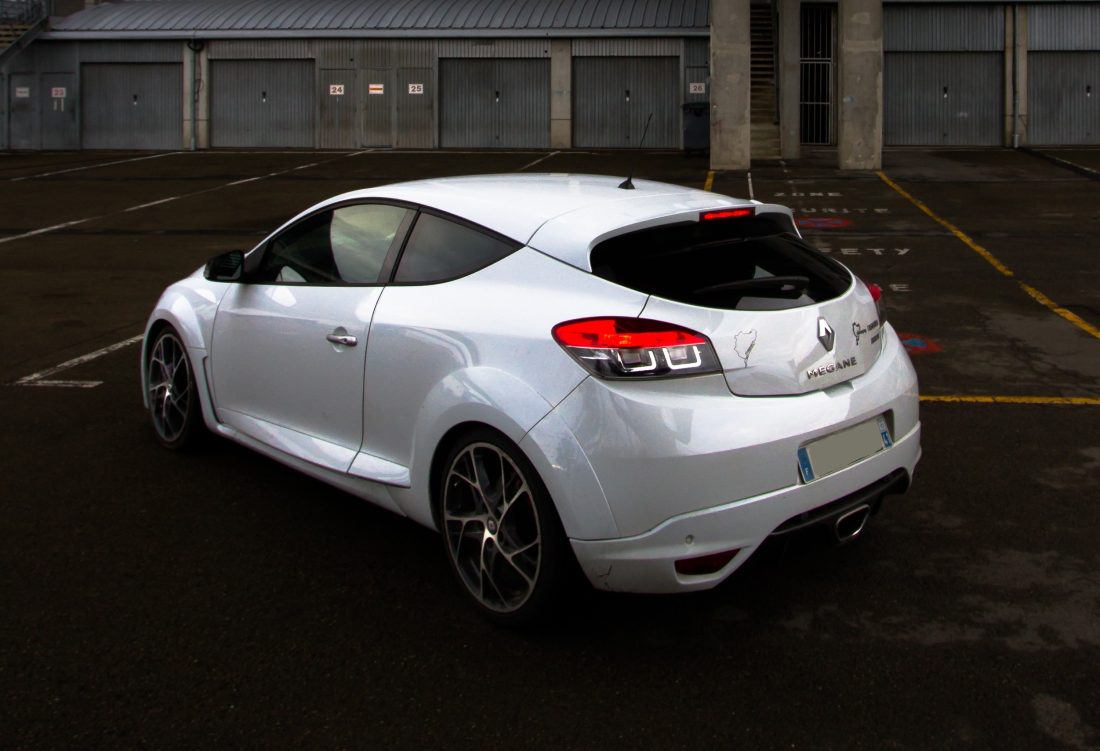
For the first time in the magazine, our track test is devoted to a front-wheel-drive car, more accessible than the sometimes extreme models we have tested. I can already hear some of you crying sacrilege, but if we are going to try one, we might as well pick from among the most capable of the bunch: the Renault Mégane 3 RS.
Launched in 2009, it represents one of the best compromises between performance, purchase price and ease of use that can be found in the front-wheel-drive market, and it benefits from very good support from Renault Sport, which regularly offers special editions. It is also important to thank the sporting arm of the diamond brand for the momentum created around its models, because you will not, for example, find any sporting character inherited from competition in a bland Peugeot 208 GTI... Like it or not, Renault deserves credit for maintaining this link in its sports models, to the great delight of the brand's enthusiasts. There is still a little hope while we wait for the result of the RCZ-R, which I have not yet had the chance to try, but to enjoy circuit driving in a modern French car, the RS models are the only viable alternative...
Approach
I have to admit that when my alarm went off on the day of the test, I did not feel the same excitement as for the previous issues. It is October, the weather does not look very kind, and I am about to test a front-wheel-drive car with a 4-cylinder engine... Great! I have arranged to meet at the Bugatti circuit in Le Mans with Bruno, the car's owner, who comes to drive at practice sessions offered to licence holders by the Automobile Club de l'Ouest. This outing closes a fine, long season for this Mégane RS of more than twenty club days of all kinds: Le Mans, Magny-Cours, Val de Vienne, Spa, Hockenheim, Nürburgring, and so on... perfectly in the spirit of Racer's!
Several modifications have been made to the car, both to the chassis and to the engine, and it has always driven to these track days by road. It is a good opportunity to take a close look at the running costs and reliability of a Mégane 3 RS used intensively on track.
Not quite standard any more...
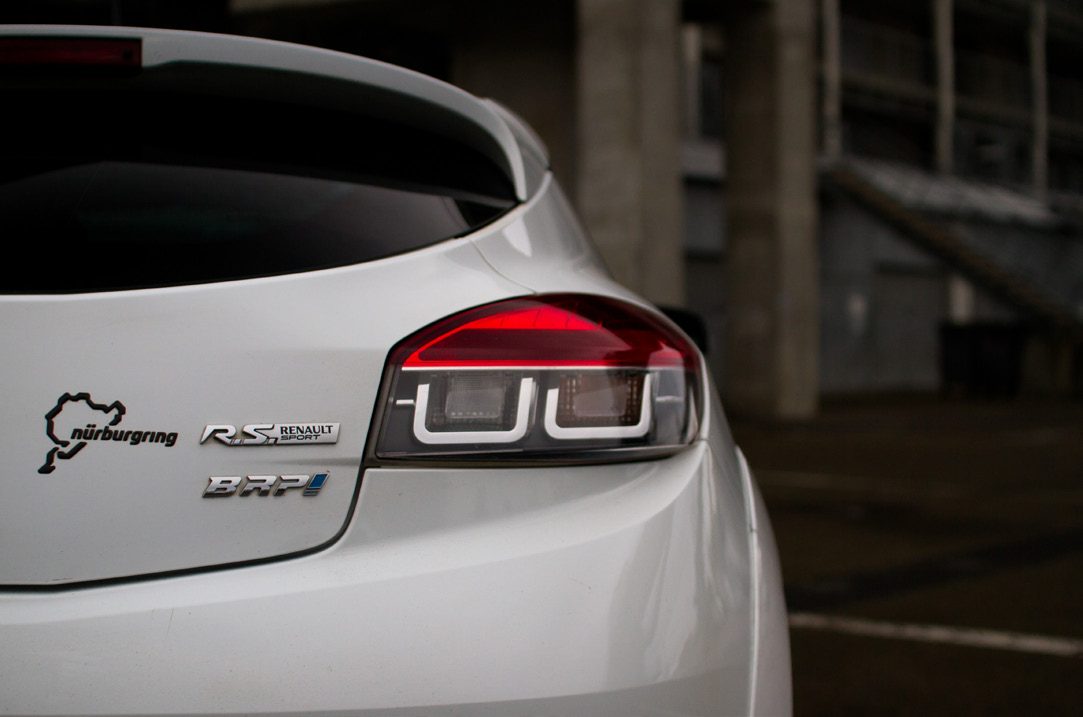
When you walk up to it, it looks completely standard. But the closer you get, the more you realise it is a well-honed track car. Low, with a little negative camber at the front, there is not much to criticise about the looks of this car. I even dare to say, at the risk of dropping in your esteem, that I find it really beautiful and successful! Apart from the big badge on the front end, I find it well proportioned, with attractive lines.
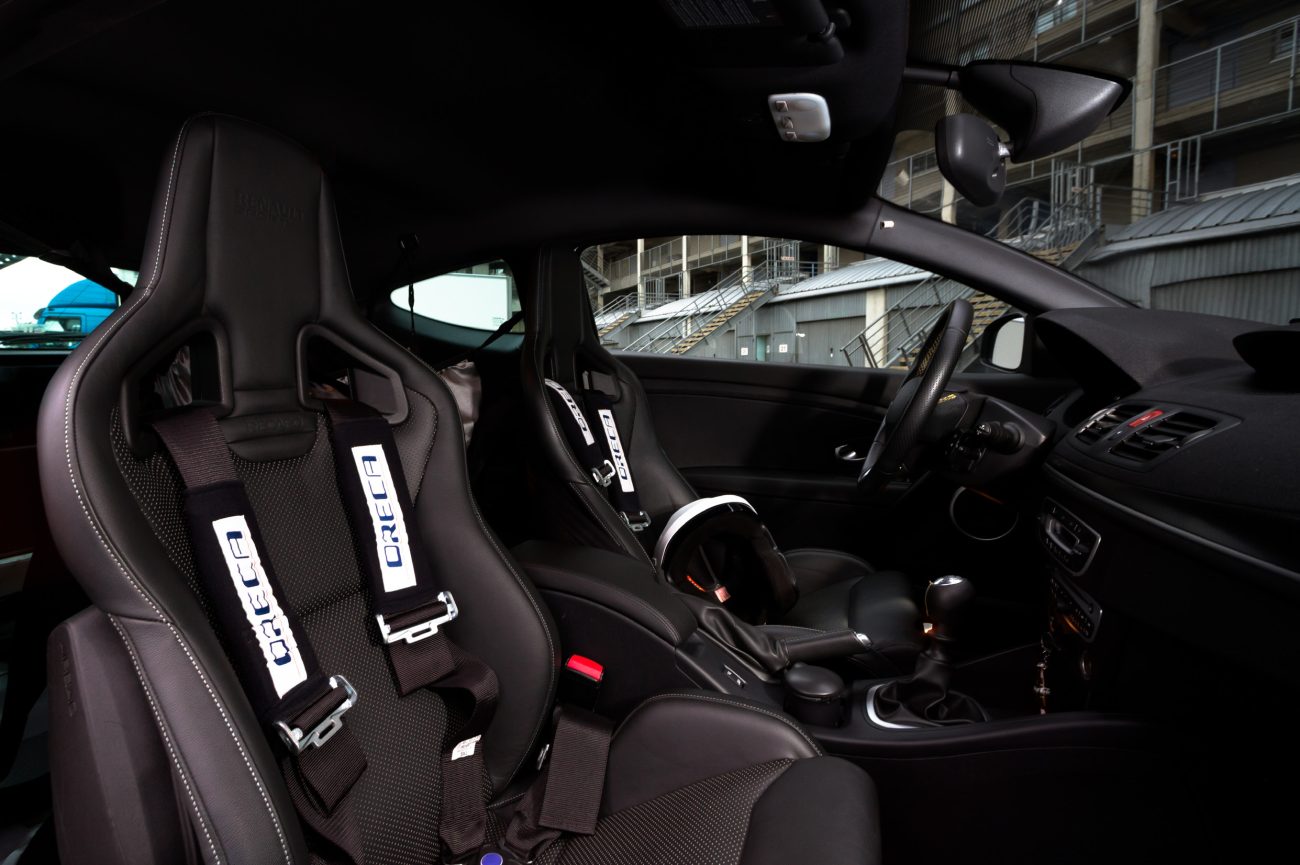
It is above all once the driver's door is open that the sportiness begins to show: the leather sports seats are simply magnificent and, even though it is a rather expensive option, the quality is there. The use of certain plastics reminds us, however, that this is a Renault and not an Audi or a BMW, but the overall atmosphere smells of sportiness: rev counter with a yellow face, Renault Sport plate on the dashboard, RS Monitor and sports steering wheel. Add to that a completely emptied rear section, Oreca harnesses with aviation-style buckles, a fire extinguisher and a helmet bag placed behind the seats, and you are very quickly in the Club atmosphere you are after. Perfect!
While the photographer looks for the best angles to show off the car, the owner and I go through the improvements that have been made. The 250 hp offered on a standard Mégane RS is rather lively, but if you hope for a rush of adrenaline each time you turn the ignition key, don't hold your breath. The turbocharged 4-cylinder does not rev very high and, apart from the whoosh the turbo releases at the exhaust, there is nothing to get your teeth into as far as awakening our senses is concerned! Here, a complete Milltek exhaust has been fitted, along with a larger-volume Forge intercooler and a remap carried out by BR-Performance. The power measured on the dyno is close to 330 hp, which is rather interesting on paper provided you manage to get it all down onto the ground...
On the chassis side, a complete KW Clubsport kit replaces the standard dampers and a strut brace has been fitted at the front. The braking is entrusted to Endless pads on standard discs, aviation-type brake hoses and high-performance fluid, as well as cooling ducts for better cooling of the system. Added to this setup is a second set of 18-inch wheels, fitted with Michelin Pilot Sport Cup tyres, patiently waiting in the paddock for the track to decide to dry out! I like this kind of setup and these simple modifications, which aim to improve the car's behaviour as a whole. All that remains is to get behind the wheel to see whether it is fun...
First impressions
We decide to wait until the start of the afternoon to do the test, in the hope that the sky does not darken too much. Half an hour before the track opens, we fit the semi-slicks because it has not rained for quite a while, and I cross every finger I have available for a dry track. In the pre-grid, the atmosphere is good at these sessions reserved for licence holders: a Corvette Z06 lines up behind me, I spot a Nissan GT-R, a Cayman Cup and other Renault Sport models. A varied field, very varied in fact, since on my right a car you could call original is about to take to the track: a Citroën BX! My first thought at that moment? "There is absolutely no way I'm getting overtaken by a BX!!!" I'm always wary of owners who turn up at club days with offbeat cars. At any moment there could be 300 hp in its boot and it will make a fool of me on the track... Fortunately for me and my ego, that won't happen, but I want to congratulate the owner if he is reading us: bravo for the initiative!
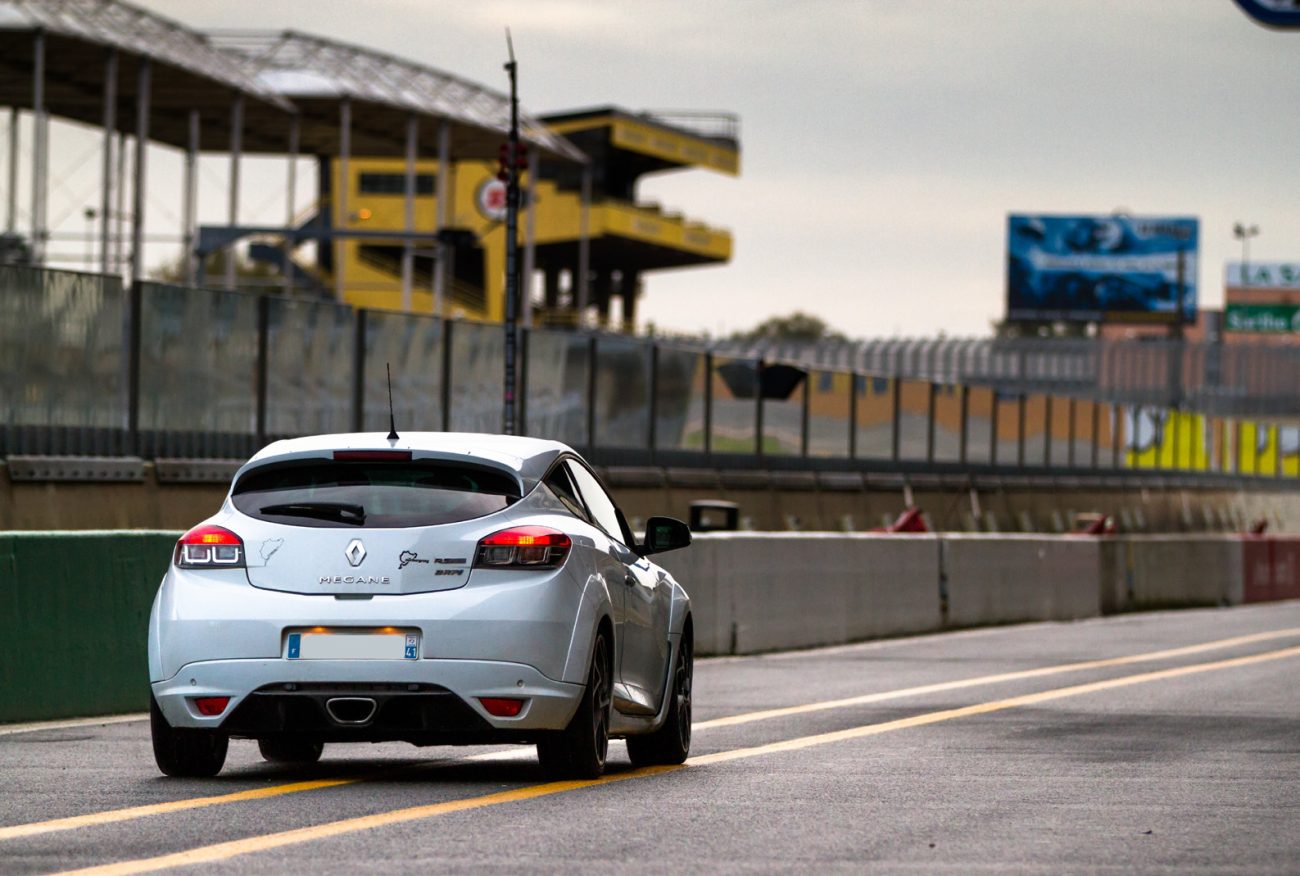
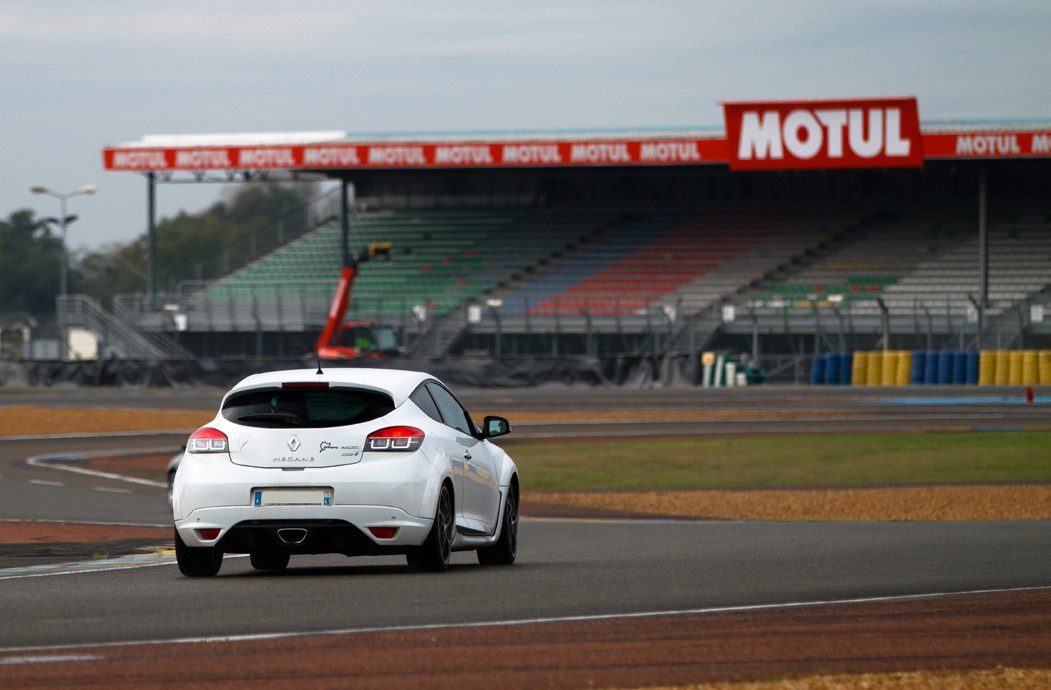
I take to the track carefully for a reconnaissance lap and to bring the car up to temperature. First bad news on leaving the pits: the Dunlop curve is full of damp patches, so I will have to be very careful. On the rest of the circuit the line is generally dry, but a few damp areas remain and raindrops keep falling. After this first lap, I come to the conclusion that I will be able to push on and report the sensations at the wheel, but I will keep a good margin in reserve so as not to damage anything today...
Surprising
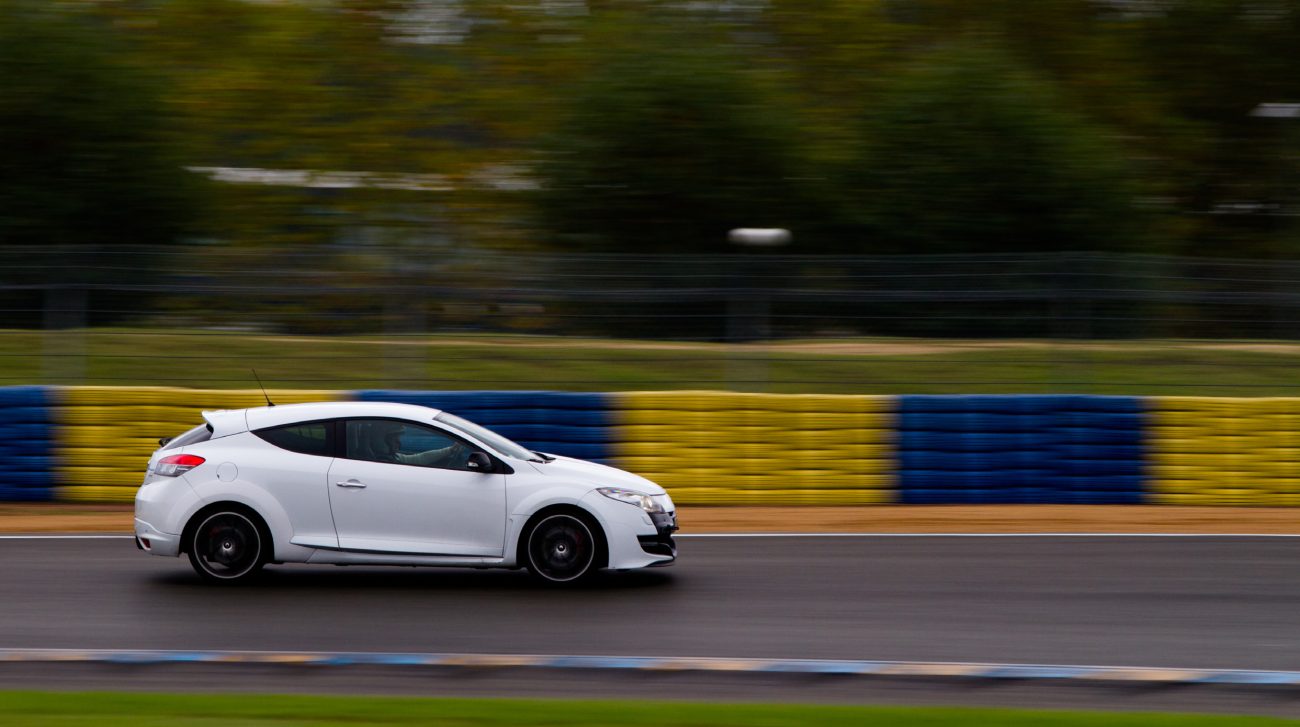
The first hard braking holds a few surprises for me. The car goes sideways as I try to turn in on the brakes: the Michelin Pilot Sport Cups are still cold and remind me of it immediately! The brake pedal is extremely sensitive and the bite very strong, so I will have to be precise to get anything out of it. The dampers are real planks of wood and the perfect support of the Renault Sport seats, together with the harnesses, gives me good information coming up from the body. But at this stage I already know that it is set up too hard for these still damp conditions. So I take the time to get the tyres properly up to temperature, especially at the rear, and I increase the pace.
The Milltek exhaust gives voice and, even though I found it particularly unpleasant at standstill (too dull), it turns out to be showy as the pace rises, with a little pop at each gear change. The engine work seems well done, I have no boost cuts and the turbo's response time stays reasonable. But the increase in torque and power makes second gear unusable, too short: the front end is completely overwhelmed, undermined by the few damp patches still present. So I will keep 3rd gear in the tightest corners...
The feel inside is good and, now that they are up to temperature, the Sport Cups offer very good grip. The KW Clubsport suspension setup gives a very incisive front end, with sensitive and precise steering. I even get caught out several times thinking I am in a standard Mégane 3 RS, which is very easy to drive. The front end is glued to the track, but searches for its way a little over the small bumps under braking, sometimes making the rear end wander. That is the price to pay when you choose a very firm setup: you gain in efficiency and precision, but the car becomes less consistent. I like the concept, but I approached it too easily and it lets me know that I will have to sweat a little to set a lap time. Message received...
At the limit
The Dunlop curve is slippery, still very damp on the run-off widening on the left, and I am forced to lift off the throttle fairly early. In the corner, under load, the Mégane is very stable and hints at a good cornering speed if it were completely dry. Then I hit the brakes for the chicane, with the bite still impressive, and I load the front to place the car into the left. Everything is rather sound and effective if you do things in the right order: the rear follows without complaint and there are not many questions to ask yourself before getting back on the power on the exit, unlike the Corvette Z06 that I let past during the warm-up laps and am now trying to follow. On every straight, I watch it pull away with its V8 and its devastating sound, reminding me that I only have a little turbo 4-cylinder... But the Mégane's agility brings the smile back in the following corners. You have to be patient to let it settle, and I am still surprised by the grip of the tyres. If you set aside second gear in tight corners, traction is very good, it doesn't understeer and the limited-slip differential does its job properly. I enjoy driving it, with a lively and effective car. That is a good point!
The Bugatti circuit is a demanding layout for the brakes. It begins to vibrate a little with pad deposits, but the effectiveness is still there. On the opposite straight, I overtake a few participants who politely let me through before I arrive at the fast Chemin aux Bœufs chicane. It is impossible to cheat too much on the kerbs, there are stakes in place on the inside for the upcoming competitions. It goes through quickly, but the rear end starts a small slide on entry: you must not fall asleep at the wheel. Once again, the stiffness of the whole package takes precedence over its apparent ease of use. In the Esses Bleus and the Raccordement, I revel in its precise front end and I complete this first fast lap in 2 min 04 s. It is a reassuring time given the weather conditions, since drops of rain are still falling, which prevent the track from being completely dry, notably in the Dunlop curve and on the heavy braking zones at Garage Vert and Chemin aux Bœufs.
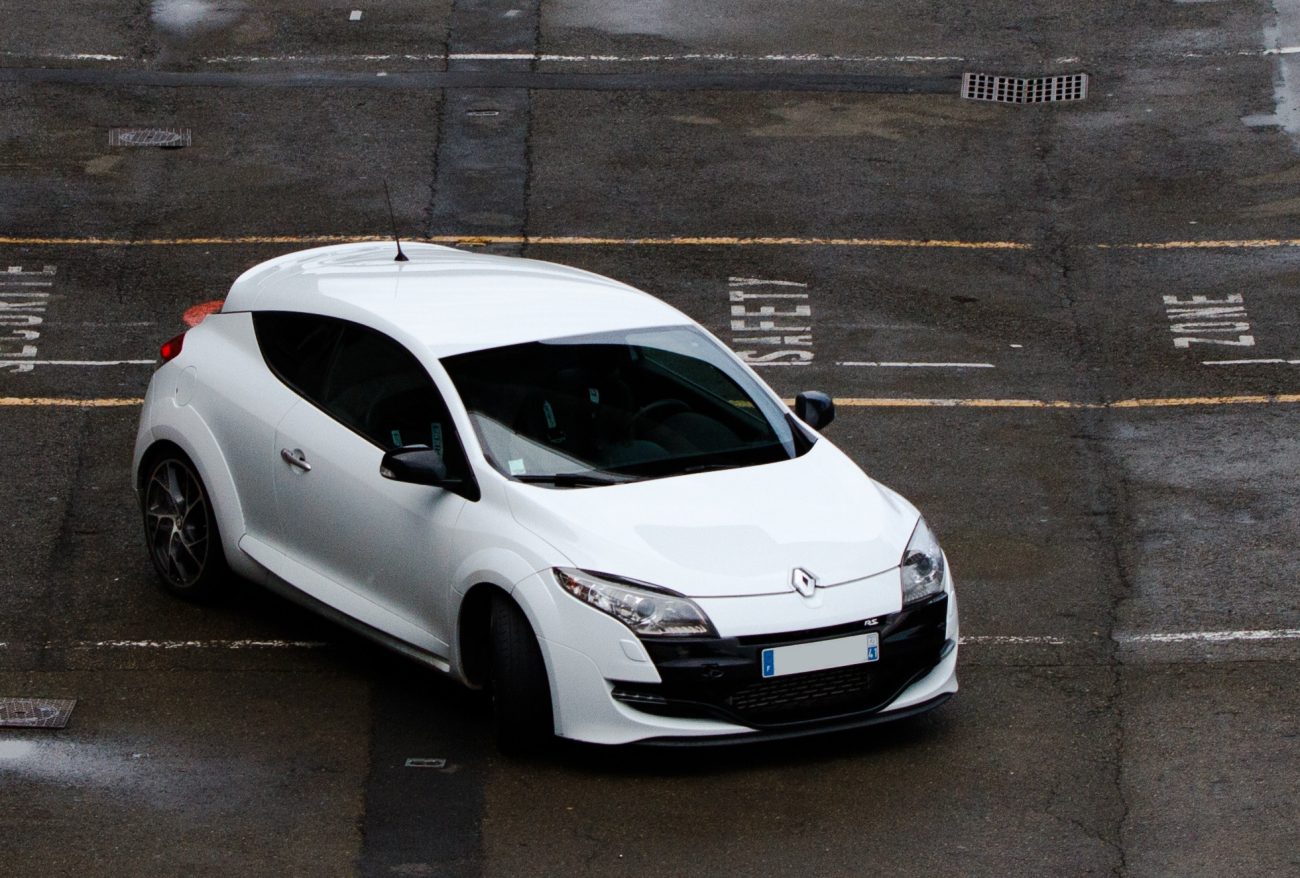
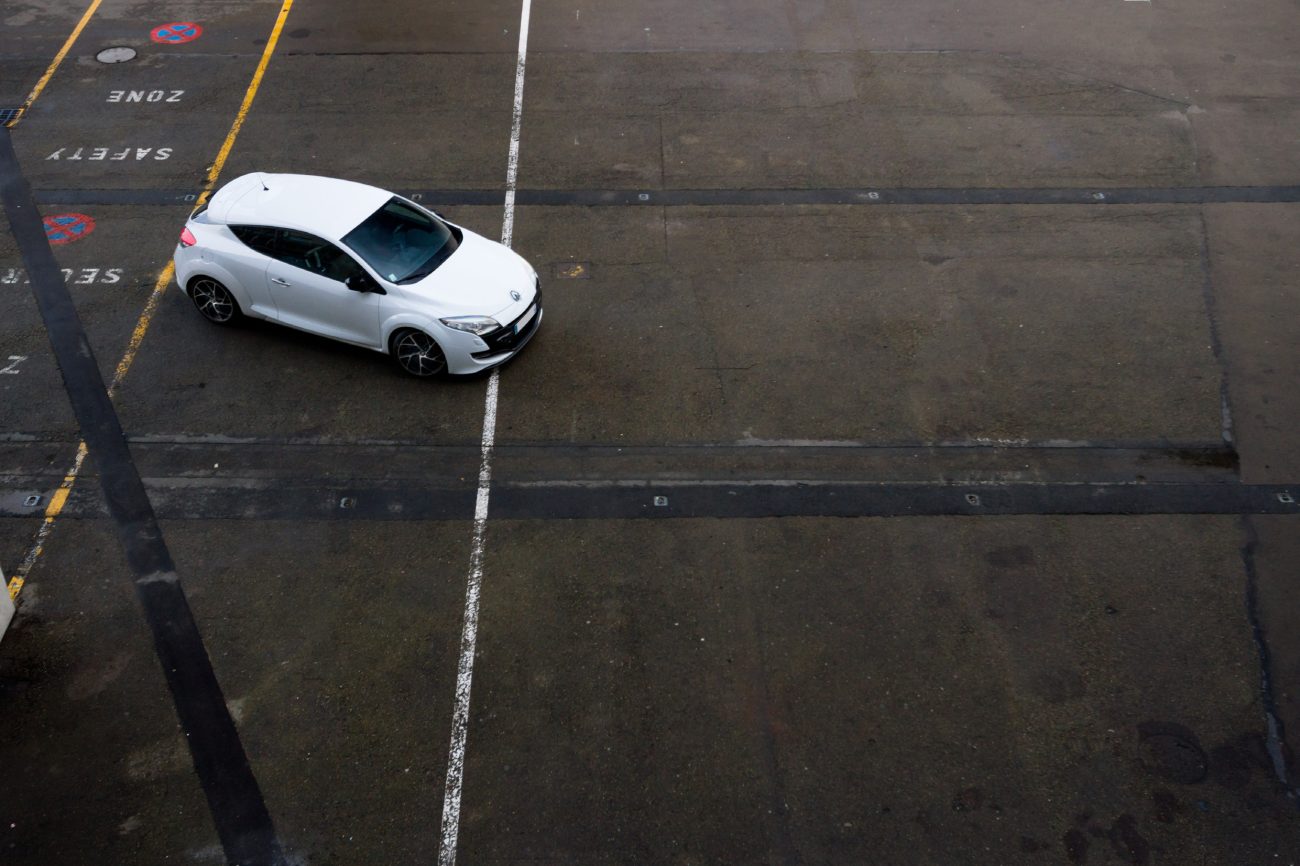
I decide all the same to take it a bit further by pushing my braking points later and loading the front end more on entry. The brake pedal is still very sensitive, with a very good initial bite, and I sometimes get caught out by triggering the ABS. The brake assistance is a little too strong for my taste, but that is not inherent to this build because I have the same feeling on every Mégane RS...
After 3 laps, I am more and more surprised by the effectiveness of this car which, thanks to the modifications, offers a top-level performance. I also catch up without much effort with the Corvette Z06 I had in my sights, which has a hard time taming its horses with its standard tyres and the greasy track. Even though it is more demanding and more powerful than a standard version, the Mégane remains a front-wheel-drive car where there are fewer questions to ask when getting back on the power than in the car ahead of me...
Oops...
I start my 5th lap when it begins to show some signs of fatigue: small engine cuts appear in 4th and 5th. I slow my pace a little because I also feel the brake pedal fading and, a few corners later, disaster: I have no brakes at all, the pedal is soft! It is a real shame because, until then, it was almost faultless. It is also rather surprising because the outside temperature is not very high and, even though I am setting a pace, I have only done 5 timed laps and the car is well equipped: suitable brake hoses, high-performance fluid, good pads. To be looked into...
This brings me to a crucial point: reliability and running costs. As mentioned at the beginning of the article, this Mégane RS did more than 20 track outings in 2013 (and the same in 2012), and no minor ones either, since it has only run on prestigious, fast and demanding circuits. So I take advantage of the lunch break to badger Bruno about how he uses his car. In 2 years of intensive track use, there have only been consumables to replace, with no particular mechanical problem. Servicing has been doubled, even tripled, to guarantee good oil quality in the engine and gearbox. Apart from the brakes, the tyres and the modifications, there have been no costs.
On that subject, it started track driving on Toyo R888 semi-slicks, but recently it has been running on Michelin Pilot Sport Cups. Admittedly more expensive to buy, they offer more consistent grip and better wear resistance on this model. Be careful, however: these tyres are more demanding than the Toyos, they need a longer warm-up. But once hot, they are more consistent and do not have a peak of performance as the Toyos can have.
This reliability analysis had not reckoned with a parameter we do not control: chance (or bad luck, call it what you like...). A week after the test, I had the opportunity to try for a lap time again at the Bugatti circuit to try to find perfectly dry conditions. Unfortunately, the car did not agree: a Christmas tree of warning lights on the dashboard with the engine light on, an indication of a faulty injection and a noticeable loss of power. That smells bad! I had to go and say it was reliable for it to throw a tantrum. My test therefore ends there and I will not be able to test it on a dry track. It was then being repaired, for an electronic problem that seems minor at first sight.
Verdict
To be very frank with you, I thought I would be bored on a big circuit like Le Mans with this car, given the tests carried out in previous issues. That was not the case, far from it. I complete my best lap in 2 min 02 s 44, which is quite promising for totally dry conditions, where I think it should be lapping around 1 min 57 s, or even better. No longer as forgiving as a standard Mégane 3 RS, it requires a little experience to be driven at a good pace and gives good sensations in return. You get a lot of enjoyment at the wheel and, thanks to its improvements, it can allow itself to run on big circuits without blushing in front of more prestigious cars.
However, you must always keep in mind that it is at heart a mid-range mass-market saloon. Even though it has a very pronounced sporting character, it is not a car intended for intensive back-to-back track outings. The modifications made here do it a lot of good, but they put the overall reliability to a severe test...
This article comes from issue 5 of Racer's, Marc Peraldi's magazine. Thank you Marc!