Next trackdays
weekday
weekend or public holiday:
 Drift allowed
Other country
 Andorra
 Austria
 Belgium
 Bulgaria
 Croatia
 Czech Republic
 Denmark
 Finland
 Germany
 Hungary
 Ireland
 Italy
 Luxembourg
 Monaco
 Netherlands
 Norway
 Poland
 Portugal
 Romania
 Slovakia
 Slovenia
 Sweden
 Switzerland Drift allowed
Saturday
21 Nov
21 Nov
 Albacete
Tomorrow

Tandas Privadas
18°

Open pitlane.
Saturday
21 Nov
21 Nov
 Bedford Autodrome
Tomorrow

Javelin Trackdays
6°

Starting from £179.
Saturday
21 Nov
21 Nov
Blyton Park
Tomorrow

Trackday Solutions
5°
£119. Open pitlane.
Saturday
21 Nov
21 Nov
 Bourbonnais
Tomorrow

Torque Drift School
12°
€200 per day, €350 per weekend. Day of sliding on a wet slope.
Saturday
21 Nov
21 Nov
Brands Hatch
Tomorrow

MSV Trackdays
8°
From £219.
News and articles
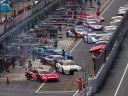
The paddock of a track day looks like a well-behaved zoo: you always meet the same species, each convinced it is the only one of its kind. There are dozens of varieties, but five turn up at every outing, whatever the circuit, the weather or the price of the coffee. Here is the field guide, to be read with a smile. Good news: everyone recognises themselves in it, and those who claim otherwise are probably number 4. 1. The beginner who has read everything He has read three books, watched forty videos and learned the ideal line for every corner of a circuit he has never seen. He arrives the day before to scout the car park, with a notebook, a stopwatch and a laminated checklist. In the morning briefing he is the only one taking notes, and he asks a question about tyre pressures to which the instructor responds with a polite smile. On track, everything gets complicated: he applies everything at once, which amounts to applying nothing at all. He thinks about the apex, the far-away gaze, weight transfer, the mirror and the next corner, and he discovers that a brain does not have as many processors as a modern car. By the second lap he already drives like someone reciting a poem learned by heart: correctly, but without understanding a word. His gear deserves a mention. A race suit bought before he ever drove a lap, matching gloves, and a bag so neatly packed that it takes him ten minutes to find his wheel wrench. He printed the track map and highlighted the braking zones in three colors, which will be useful right up to the first corner. At the lunch break, he is the one rereading his notes over his sandwich, before heading back out with a new theory. It usually lasts a lap and a half, which is how long it takes the circuit to offer another one. In the evening he leaves tired, head full, and already signed up for the next date: the mark of the very best. 2. The one with perfect tyres and no level to match His tyres cost two months' salary, his wheels are forged, his brake pads have an Italian name and his calipers are painted a colour that does not exist in nature. In the pits he likes to open the boot and let a circle of admirers take the guided tour. He knows the part number of every component, the price of every component and, on good days, the purpose of a few of them. On track, though, he laps three seconds behind an old standard hatchback driven by someone very calm, and that is where the argument with himself begins: "There must be a setting." There always is, of course: the body is too high, the track too narrow, the temperature too cold. Each new piece of kit removes a little of his excuse, but plenty remain, and he already has an order form for the next one. He also has the car that silences the pits when it starts. The engine is tuned, the exhaust has been "optimized", and the noise is such that you recognize his arrival before you see him. The brakes are racing brakes, but he treats them as if they were borrowed. The best part is the comparison moment: the neighbor in the next pit, driving a standard sedan, politely asks him how much horsepower he has. He answers precisely, down to the last horse, then asks the same question back and gets: "I don't know, enough." It is the most dangerous answer in the paddock. 3. The lap-time fan He knows his times to the hundredth: yesterday's, those from two years ago and those of his neighbour in the pits, which he obtained without asking. He checks his app at every return, with the look of a trader in front of his screen, even though the day is made for driving, not for comparing. In the pit lane he is already setting up the recording of the next lap. His best lap was always "ruined by traffic", by a yellow flag or by a car whose driver "never looks". He sometimes leaves the pits just behind someone faster to "benefit from the slipstream", which is an elegant way of asking to be overtaken in the first corner. By dint of chasing the hundredth, he sometimes forgets the corner that was supposed to bring it to him. In the car, the camera is mounted, the GPS too, and the data streams live to a phone sitting on the dashboard. Back at the pits, he sets up a laptop in the middle of the garage and overlays his curves on yesterday's, looking like a Formula 1 engineer with a camping budget. In the evening, at the debrief with himself, he has gained two tenths in the chicane and lost four on the straight, without quite knowing why. He goes home delighted anyway: on a graph, there is always a reason to hope. And the following weekend, he comes back to hunt for that tenth like a treasure hunter. 4. The king of the missing mirror He drives straight, focused, confident: what happens behind is an unimportant detail. Faster cars caught up with him three corners ago, flashed their headlights, then flashed them a second time, and he still has not noticed. In his world, the track starts at the front bumper and stops at the windscreen. In the pits afterwards, he complains that "people tailgate", that "some drive like idiots" and that the day would have been perfect without the others. He does not understand that the others are precisely the ones who waited, with admirable patience, for a gap that never came. The marshals, for their part, know him well: they have already waved a blue flag in his direction with the serenity of people who know he will not see it. There is a more sophisticated variant: the one who looks carefully behind him, but only to decide to change nothing. He saw you, that much is certain, and concluded that the line was his. You follow him for three corners thinking his car has a transmission problem, before realizing it is a problem of principle. Most track days do provide clear passing rules, repeated at the morning briefing. The king of the missing mirror, for his part, did not read the rules: he looked at the pictures. 5. The quiet pro An old car with no stickers, a plain helmet, a flask and a smile. He arrives early, sets up his corner of the pits in ten minutes, and looks like anything but someone you would notice. While the others compare their wheels, he checks his pressures, his fluid levels and his torque settings, then sits down with a coffee, like a man with nothing to prove. On track, he drives so smoothly you think he is slow, until you look at his lap time. He never brakes late, he brakes right. He does not overwork the car, he lets it breathe. He moves over without a thought when a faster car arrives, and when he overtakes he leaves the necessary room to the one he passes. At the end of the day he has done more laps than anyone, with brakes that have not faded. He says nothing about his technique, but gladly answers anyone who asks, without the tone of a know-it-all. It is the only species to take inspiration from without saying so: calm, clean, consistent, and always one eye on the mirror. You do not become him by buying something, but by driving a lot, listening to those who know more and accepting, from time to time, to be the beginner of the day. To observe these species in their natural habitat, the EuropaTrackdays calendar lists the track days near you, with the circuit, the organiser and the format. See you in the pits. Read also: Getting started on the track: what you need to know before your first day · Racing lines · Warming up your tyres: the method Any resemblance to existing drivers is, of course, purely coincidental.

EuropaTrackdays turns 20 on 1 January 2027 (already!). A good occasion for the biggest update the site has had in a long time: bug fixes, better navigation on phones, search with filters, simpler photo upload and a few other new features that we leave you the pleasure of discovering. The heart of the site is still the calendar, which is slowly taking shape for 2027: most of the dates will arrive by the end of the year or very early in 2027, depending on the organisers. Take a lap around the site and tell us what you think: a bug, a page that does not look right, an idea for an improvement? Write to us from the contact page. Thank you for your loyalty, and welcome to the newcomers 😊.

Racer's was an online magazine devoted to track driving in France. Its first issue came out in spring 2013, and EuropaTrackdays was already welcoming the initiative, with a tone that was "both professional and relaxed". The magazine's motto said it all: "the magazine for trackday drivers.. written by trackday drivers". Free at the start, it was later offered at 2 € an issue. A simple idea: learning to drive calmly on a circuit Often shunned because wrongly lumped in with dangerous driving on the road, circuits were attracting more and more sports car owners. Racer's wanted to give them all the keys to driving with peace of mind. Its writing never claimed to replace the advice of a qualified driving instructor on the spot, but to serve as a foundation before heading out alone on a track, or for improving. Every issue brought together the same regular features: a track test of a car, often rare or modified, carried out on a circuit and not on the road; a driving feature: racing lines, load transfer, braking, heel-and-toe, driving position; a technical subject: the turbo, suspension set-up, tyre warm-up; "La bonne traj'": a circuit under the microscope, with the ideal racing line and the braking points; news, photographers' portfolios and, depending on the issue, reader trackday drivers in the spotlight. Marc Peraldi According to the introduction published in the first issue, Marc Peraldi is a state-qualified driving instructor and mechanical engineer, and he put this twofold experience at the service of Racer's readers. He was then an instructor at renowned driving schools, such as the Porsche Sport Driving School or the Le Mans driving school, and a volunteer in the organisation of the 24 Hours of Le Mans, where he drove the Safety Cars or worked in race control. He built up his driving experience at club track days, then kept progressing by rubbing shoulders with professional drivers. He was thus as close as possible to what readers go through all year round: preparing their car, fine-tuning their driving and looking for the best car to drive. A team of enthusiasts Marc Peraldi was not alone. Three professional instructors, Dimitri Enjalbert, Vincent Capillaire and Guillaume Greuet, each had solid international racing experience and had been teaching driving for many years. Racer's gave them "the pro's eye" at the end of each article, and they also wrote features: driving position for Dimitri, the Sébastien Loeb Racing LMP2 for Vincent, tyre warm-up for Guillaume. Dimitri Enjalbert has his own page among the EuropaTrackdays instructors: see his page. Dimitri Enjalbert Professional instructor Vincent Capillaire Professional instructor Guillaume Greuet Professional instructor Kevin Goudin Photographer On the pictures side, two passionate photographers. Kevin Goudin, based in the south-west, covers as many events as possible at the circuits in his region, notably the Racercar and GT de Série races at Nogaro. Loïc, in Belgium, an amateur driver of a BMW M3 e46, photographs the circuits in his region and the Nürburgring, where he covered the Nissan GT-R test in issue 3. The issues, one by one Issue 1 (April 2013): test of the Porsche 997 GT3 RS, racing line theory, the turbo, the ideal lines on the Bugatti circuit at Le Mans. Issue 2: test of the Nissan GT-R, load transfer, Magny-Cours in F1 layout. Issue 3: test of the BAC Mono at Spa-Francorchamps, braking. Issue 4: test of the BMW M3 E92 DM Performance, heel-and-toe, Nogaro, insurance. Issue 5 (November 2013): test of the Mégane RS 330 hp, suspension set-up, driving tips for Dijon-Prenois. Issue 6: more than 1,000 hp gathered on the Lurcy-Lévis track, the French Evo Days, driving position, the Sébastien Loeb Racing LMP2, racing lines at the Chambley circuit. Issue 7 (August 2014): test of a Ferrari 355 Challenge, the right lines at Issoire, advice for beginners at track days. Issue 8 (February 2015): test of a Renault Clio 3 Cup, racing in the Clio Cup, tyre warm-up, readers' trackday drivers. Racer's articles on EuropaTrackdays Some of the magazine's articles have found a new home here, with Marc's agreement: Porsche 997 GT3 RS (issue 1) Nissan GT-R GLR 600+ (issue 2) BAC Mono, put to the test at Spa-Francorchamps (issue 3) Heel-and-toe (issue 4) BMW M3 E92 DM Performance (issue 4) Renault Mégane 3 RS (issue 5) Suspension and chassis set-up (issue 5) Renault Clio 3 Cup (issue 8) Warming up your tyres: the method (issue 8) The driving position (issue 6) Racing lines (issue 1) Load transfer (issue 2) Braking (issue 3) More Racer's articles will be added over time.
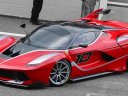
"How much does a track day cost?" This is the first question every beginner asks, and their partner too, usually in a different tone. The short answer: registration is just the tip of the iceberg. Here's the long answer, with figures, price ranges, and a few tips to keep the bill within reason (which, on the track, is a very relative concept). Because depending on the organizer, the track, and especially the car, the same satisfaction at the end of the day can cost €100 or €10,000. Registration: the displayed price This is the line you see on the calendar. According to the open track days listed by EuropaTrackdays in 2026, the median registration fee for a full day is around €200, with most days costing between €120 and €400. A half-day generally costs a little more than half the price of a full day. Some organizers also offer packages (ten half-days, membership cards) which lower the final price, provided you stick to them; otherwise, it's a great way to support an organizer, who certainly deserves it. Small local club days, which exist everywhere and cost much less, are harder to spot and often just as nice, but the organization is not always very rigorous and your bodywork might not appreciate the free aperitif at noon. Three price differences: the organizer, the circuit, the car A median doesn't tell the whole story: two track days may only have the word "track" in common. There are three main sources of discrepancy: The organizer: a little bit. On the same circuit, organizers don't charge the same price because they don't offer the same services: limited or unlimited number of cars, instructors, insurance, meals, support. At Spa-Francorchamps, a day's admission ranges from €469 with one organizer to €990 with another; at Hockenheim, from €390 for a German club (for its members) to over €700 with a coached organizer; at Le Castellet, track access with lunch and an open bar costs €650 to €800 with a car-brand club this year, €890 for a day of open track time with another, and €990 for seven hours of track time with a third. The difference is rarely more than double, but enough to compare what's actually included before choosing the cheapest option. The circuit: a lot. A registration at La Châtre (it's a remote spot in France) will cost you less than €100, while an all-inclusive day at Le Castellet (also in France, but closer to the sea) starts at €650 and can exceed €1,500. On one hand, a family day out, where you picnic on the hood of your car and everyone knows each other; on the other, a day out where they bring you drinks before you're even thirsty. Both have their regulars, and we respect the differences. A well-known circuit is expensive to rent, and that's reflected in the registration price. The same gradation can be found throughout Europe: a lap of the Nürburgring Nordschleife on open laps costs €35 at the ticket office, while a day on a major Formula 1 circuit like Barcelona-Catalunya costs between €550 and €900 with open track day organizers, and much more in coached formulas or those reserved for racing cars. The car: enormously. It's the difference we forget when comparing entry fees, yet it's the one that weighs most heavily on the season. On a Focus ST, a set of sporty front brake pads costs €120 to €180, a set of discs around €250, a set of four sport tires around €700, and fuel for the day around €80. On a supercar with carbon-ceramic brakes, the pads cost hundreds of euros, a set of discs is ten thousand or more, a set of semi-slick tires costs €1,500 to €2,500, and the number of liters of gasoline (or kerosene, if you prefer) consumed by your V12 will make you long for a turbocharged 3-cylinder. We won't even mention the differences in repair costs in case of over-enthusiastic braking at the end of a straight. In short, the enjoyment is virtually identical, down to the tenth of a second, the grin on the way home is the same, and only the bill is worlds apart. The most sensible approach: choose the car, the circuit, and the organizer in that order, not the other way around. Fuel: it goes fast On the track, a sports car consumes... (I'll let you fill in the blanks based on your own experience): you're very often at full throttle. Expect 20 to 50 liters per 100 km, or 30 to 250 liters per day, depending on the car and the actual track time. I'm not converting that to euros; it's not the right time for that. Tires, brakes: those are consumables too This is where the budget comes into play, and where we understand why experienced drivers look at their tires with the tenderness of a cat owner. A set of sport tires costs several hundred euros, a complete set often between €600 and €1,000 for an ordinary car, more for a sports car. On the track, they wear out two to three times faster than on the road: a set typically lasts three to six days, not a season. The same applies to brakes. A set of pads lasts a few days, a set of discs about ten, and the brake fluid needs to be changed at least once a year (see the article on getting started on the track). The good news: you don't need racing pads to begin with; good sport pads do the job perfectly well, and you change them less often than you might fear. The bad news: it all depends on the car, as you can see just above with the difference between a Focus ST and a supercar with carbon-ceramic brakes. Maintenance and wear and tear An oil change every two or three days, wheel alignment checks as often as possible, wheel nuts tightened before every drive, a clutch replacement now and then—and there you have it, maintenance takes its toll on the budget. The car will also age much faster with all the physical stress you put it through. In short, expect to spend a few hundred to a few thousand euros per year on maintenance, in addition to your usual routine. Travel, accommodation and meals The ideal circuit is rarely close to home. A 300-kilometer round trip costs around €100 for fuel and tolls, plus a hotel night and a meal once you exceed 250 kilometers, bringing the total to at least €100 to €150 per person. This is why day trips are often more economical than they seem when chosen close to home, and why group weekends with carpooling or shared accommodation are a viable option. Here too, the price range is wide. On one hand, there's the paddock breakfast, with coffee and industrially produced chocolate croissants included in the entry fee, which has the advantage of being free and keeping you going until noon. On the other hand, there's the local gourmet restaurant, where you spend €180 per person and leave feeling heavier for the afternoon. The former costs around €5 and doesn't show up in your lap time, while the latter costs significantly more and is noticeable in the first two sessions. The same goes for the hotel: between a room a stone's throw from the circuit and a luxury hotel with a sea view, the difference isn't measured in lap times. Insurance: Read before you pay Your car insurance policy very often excludes track use. There are day policies available (around €20 to €30 for track liability, more to cover your own car), and annual policies that cover all track days. In any case, it's best to discuss this beforehand, in writing, not after you've watched your fender weeping all by itself in the gravel trap. A season's budget: an example To give you an idea, here's the budget for an amateur driver who does five track days a year in their home country (or a neighboring one) with a standard sports car, driving moderately but also not holding back. These figures are current estimates and should be adjusted based on your car and location. The calculation isn't new: in 2009, a speedster driver who raced ten days a year drew up his own, line by line, and arrived at "less than 8,500 euros all included," of which 350 euros was for a crash into the gravel trap, fiberglass repair included. Seventeen years later, tires have increased in value, brake pads too, and the crash hasn't aged a day. Four days, four bills Nothing shows where the money goes better than an example. Here are four very different outings, with all the expense lines, including car wear and tear (that is, the amount of tire and brake wear consumed during the day). The registrations are from the calendar; the rest is an estimate that may need adjusting. To make a fair comparison, all four outings depart from Brussels. How to reduce the bill Without giving up on enjoyment, you can lighten the bill in several ways, and most of them consist of spending less on repairs rather than cutting back on the rest. In conclusion If you only remember one thing: the entry fee is just the tip of the iceberg, and rarely the biggest part. The rest is determined elsewhere: by the car you bring, its tires, brakes, and maintenance; by the distance between you and the track; and above all, by the cleanliness of your driving. A driver who brakes in time, checks their mirrors, and pits when the car tells them to will use less tire, brake pads, clutch, and patience, and will never encounter the most expensive line in their budget: going off the track. To compare prices for multiple days, the EuropaTrackdays calendar displays the rates for each day, along with the track, organizer, and package. Have a budget question or a great deal to share? Let us know via the contact form; other drivers will benefit. Read also: Braking