The various track tests in Racer's magazine have taken us through several worlds of trackdays. Sometimes very exclusive like the BAC Mono, or with heavily modified cars like the Nissan GT-R, BMW M3 or Mitsubishi Evo that I have been lucky enough to drive, they all represent a substantial budget. And even if it is impossible to deny that motorsport is expensive, we are going to try to offer you an interesting alternative, on a more reasonable budget: the Clio Cup.
Race car
This is where I start to lose a good number of readers: between the Renault-phobes and those who don't have the E(B) licence to tow, it's not a done deal... But looking at it more closely, this car is particularly interesting. Whether in terms of driving technique, sensations or budget, the Clio Cup is a very good compromise for enjoying yourself on a circuit. I will try a Clio 3 Cup here, but those on smaller budgets can also opt for a Clio 2 Cup, older but no less interesting.
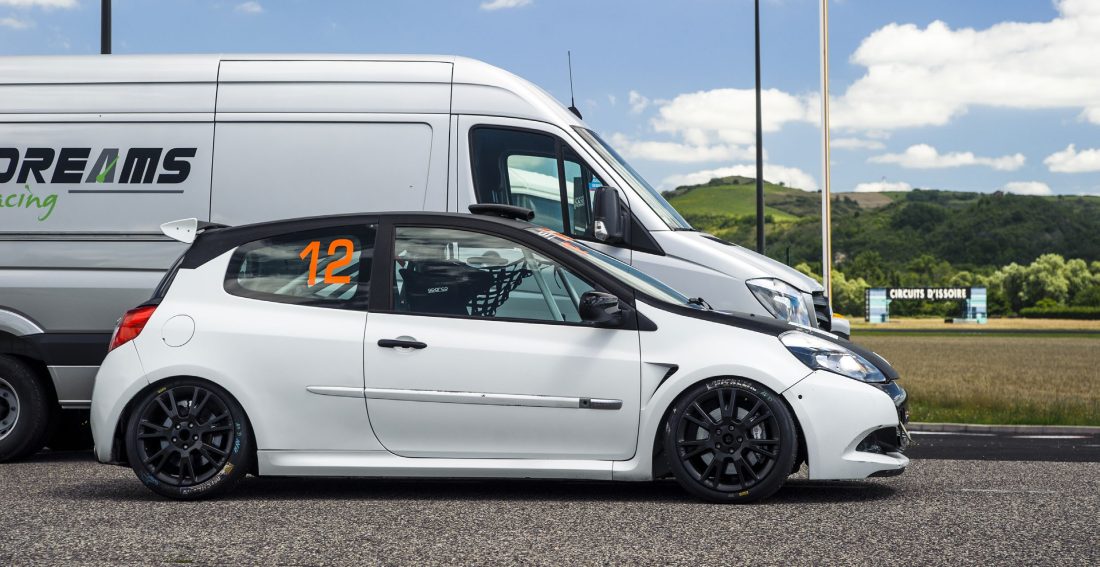
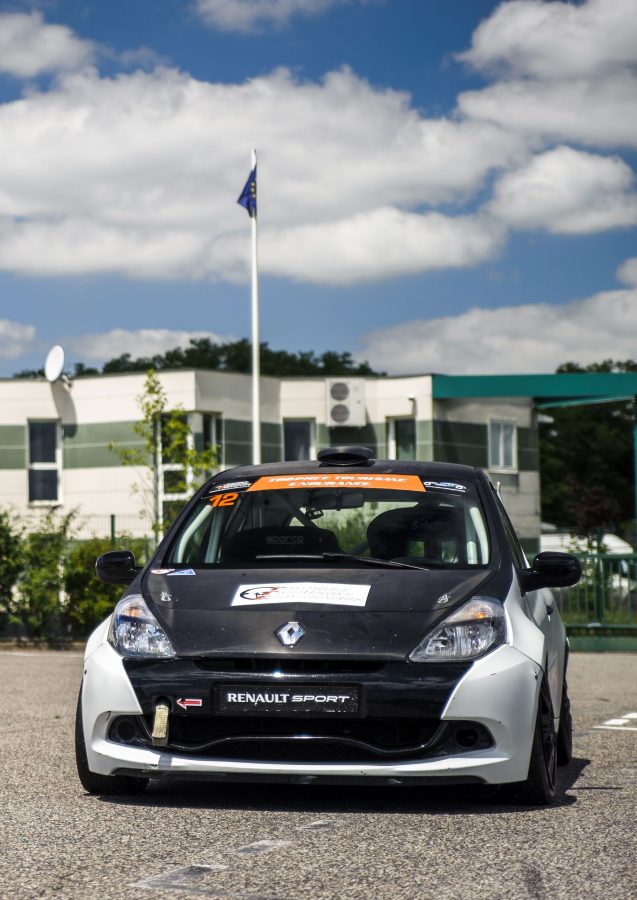
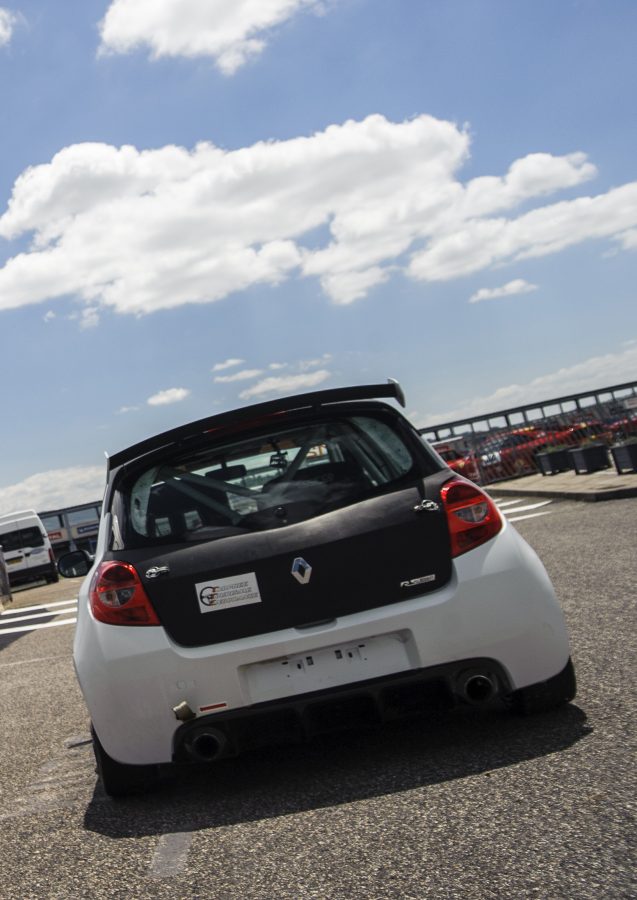
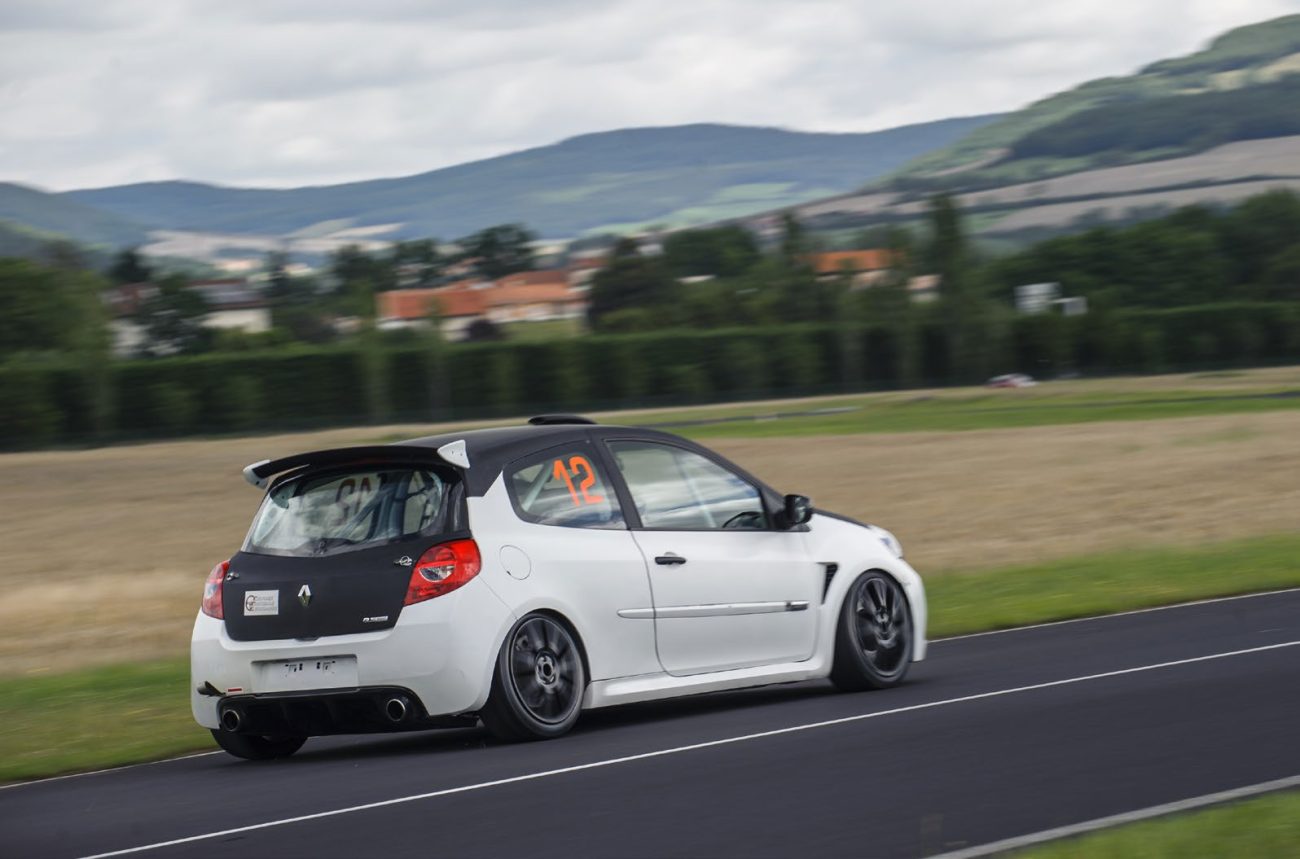
The version I am trying today is very understated on the outside, letting you appreciate the overall lines and the racing atmosphere. From a distance, you might even think it is a well-equipped road version, but it is as you get closer that you realise it is a race car. Very low and with aggressive suspension settings, it seems to have only one desire: to hit the track! And given today's very kind weather, I'm not going to deny myself...
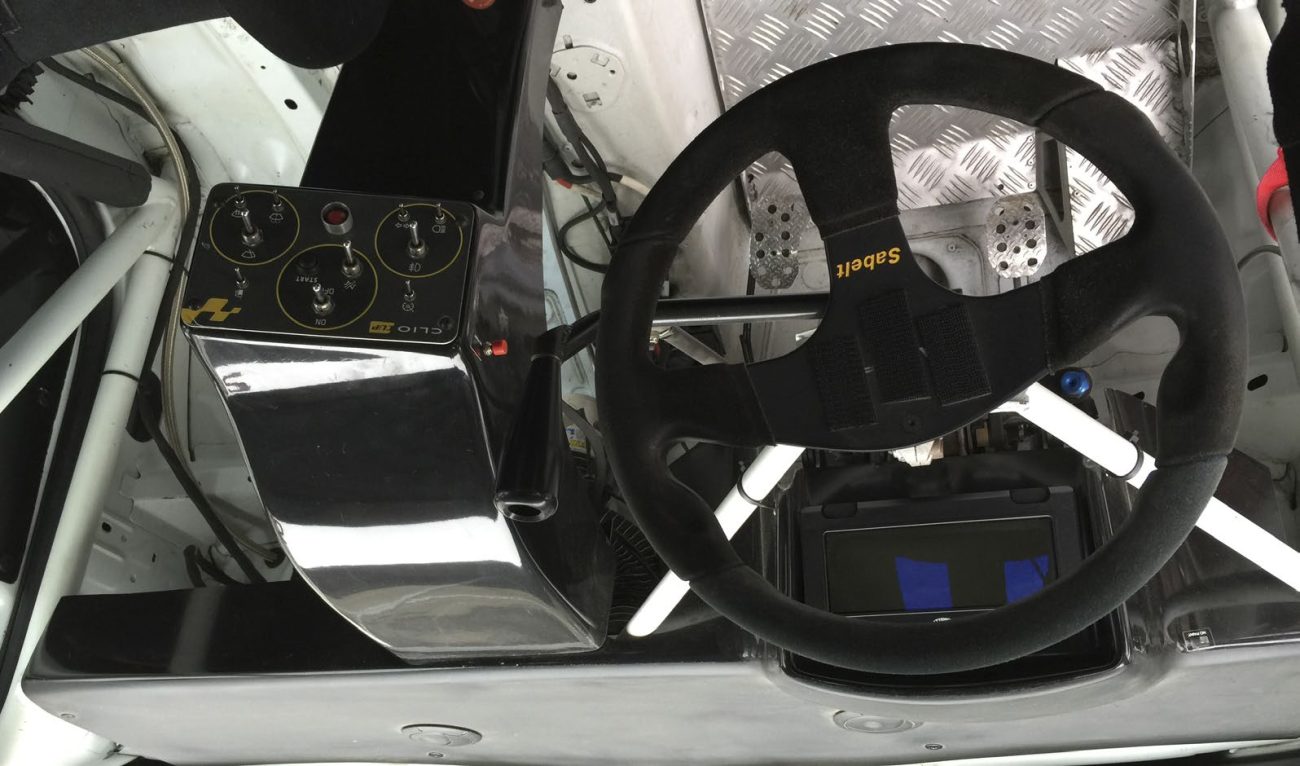
Opening the very light driver's door sets the tone: unlike the outside, the inside has nothing left in common with a standard Clio. To settle into the bucket seat, you hook up the window net and clamber over the imposing roll cage as best you can. In terms of comfort, forget it, there is absolutely nothing in the cabin! A central control panel with a few switches, a brake bias adjuster and a digital display just behind the steering wheel are the only equipment present. But once settled in, you feel good, with a fairly low driving position, close to the steering wheel and the gear lever. The throttle and brake pedals are close enough to make heel-and-toe easy, and a big alloy footrest lets you brace your left foot properly. Perfect!
First impressions
Well strapped into the bucket seat, I wait patiently for our track session to open. It is 26 °C this early afternoon, which will be perfect for getting the slick tyres up to temperature quickly, but right now I would rather be in a GT with the air conditioning. No point hoping for a little fresh air in the cabin at a standstill, I am HOT! I look at the little vent above my head, which opens directly from the roof air intake, but it doesn't look very sympathetic...
At last the light turns green: I engage first by pulling the lever towards me. The clutch is fairly docile, you need a bit of throttle to get the car moving but everything happens quite naturally. My first goal will be to warm up the tyres and get the measure of the car's general behaviour.
First stage: the gearbox. It is simple to use, but it requires perfect mastery of heel-and-toe. Going up through the gears, you don't need to touch the clutch: you stay flat on the throttle and pull the lever towards you. But for downshifting, you have to use the clutch and push the lever while heel-and-toeing, without being too timid with the throttle blip, or you risk not getting the lower gear in or having the gearbox lock up. On paper, it may sound complicated, but you get used to it very quickly and it is rather fun to use.
Next, getting the tyres up to temperature. While the exercise is fairly easy for the front, the temperature of the rear tyres often gives drivers a hard time. Indeed, the Clio is a front-wheel-drive car with all the mass on the front, and to heat the rear tyres you have to be patient! For my part, given the outside temperature during the test, I won't have much difficulty... I'll take the opportunity to make a parenthesis on this subject: you are not alone on the track! When you drive at a trackday, you cannot afford to weave around all over the place to heat the tyres as if you were racing. Especially if you are on an open day, you are going to merge into traffic with drivers who are already up to speed. So remember to keep an eye on your mirrors and to follow Guillaume Greuet's advice on warming up tyres, published in this issue.
In terms of behaviour, this Clio seems very sound and particularly well set up. Guillaume Greuet, our columnist driver, went back to racing in the TTE championship (Trophée Tourisme Endurance) at the wheel of this Clio 3 Cup and fine-tuned the suspension settings as he went along. That is certainly why I find it effective... With the big 17-inch wheels and the slicks nicely hot helping, you find a very responsive and precise front end. On the brake side, the feel is good: a firm pedal at the initial bite, but sensitive enough to handle a good trail-off of the brakes. In short, all the conditions are met to pick up the pace and do what it is meant for: attack!
Sensations
The time has therefore come to go and tickle the high revs and push on. I hold my steering wheel firmly, straighten the wheels and floor the right-hand pedal! I have no words in my vocabulary to describe what happens, I would need to find the exact opposite of "Wow!". I had forgotten, in this very appealing racing atmosphere, that the Clio is powered by a 4-cylinder engine of a little over 200 hp. It is linear to a fault and there isn't a whiff of torque... Fortunately the gearbox is short and the engine noise fills the cabin, because to be honest, it is deadly boring in pure acceleration! As someone who loves engine sensations, I'll pass...
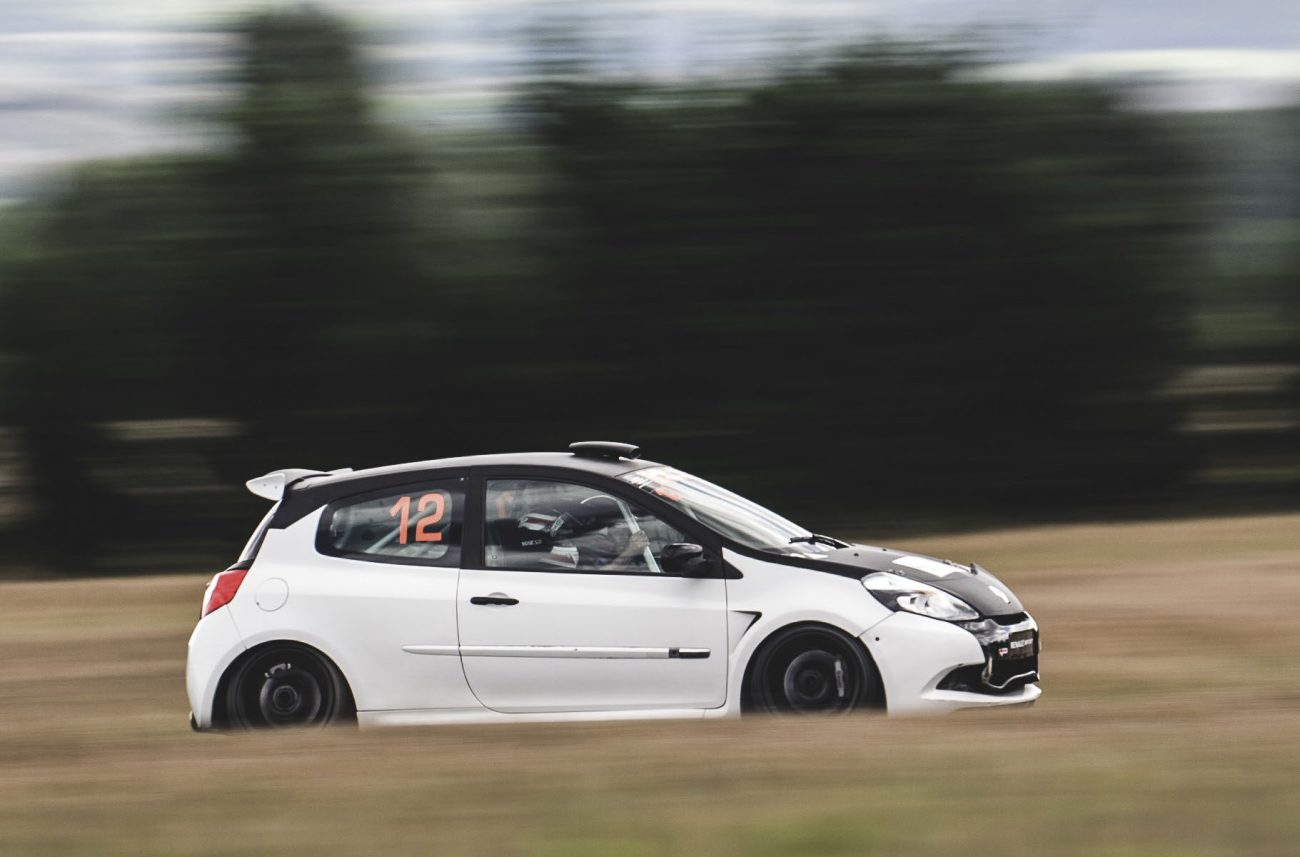
But this apparent flaw is actually a very interesting point in terms of driving. If you slip up and don't prepare your corner exit properly, you won't be able to use the engine to make up for the blunder you have just committed. Imagine yourself with 20 other guys behind (or women, to our great pleasure), who have exactly the same car as you and who haven't slipped up: you will quickly drop down the race classification. And with that in mind, you get a monstrous kick out of driving this car while enjoying its many other qualities. It brakes late, the front end is incisive and when you hit the brakes hard, you have to be precise so as not to let the rear step out. It is playful and gives the driver good information, encouraging you to ask more of it on every lap. In "motorsport", there is "sport", and this Clio Cup reminds me of it at every moment. This is real driving, there are no superfluous electronic aids to help you out of trouble. I sweat behind the wheel, I love it...
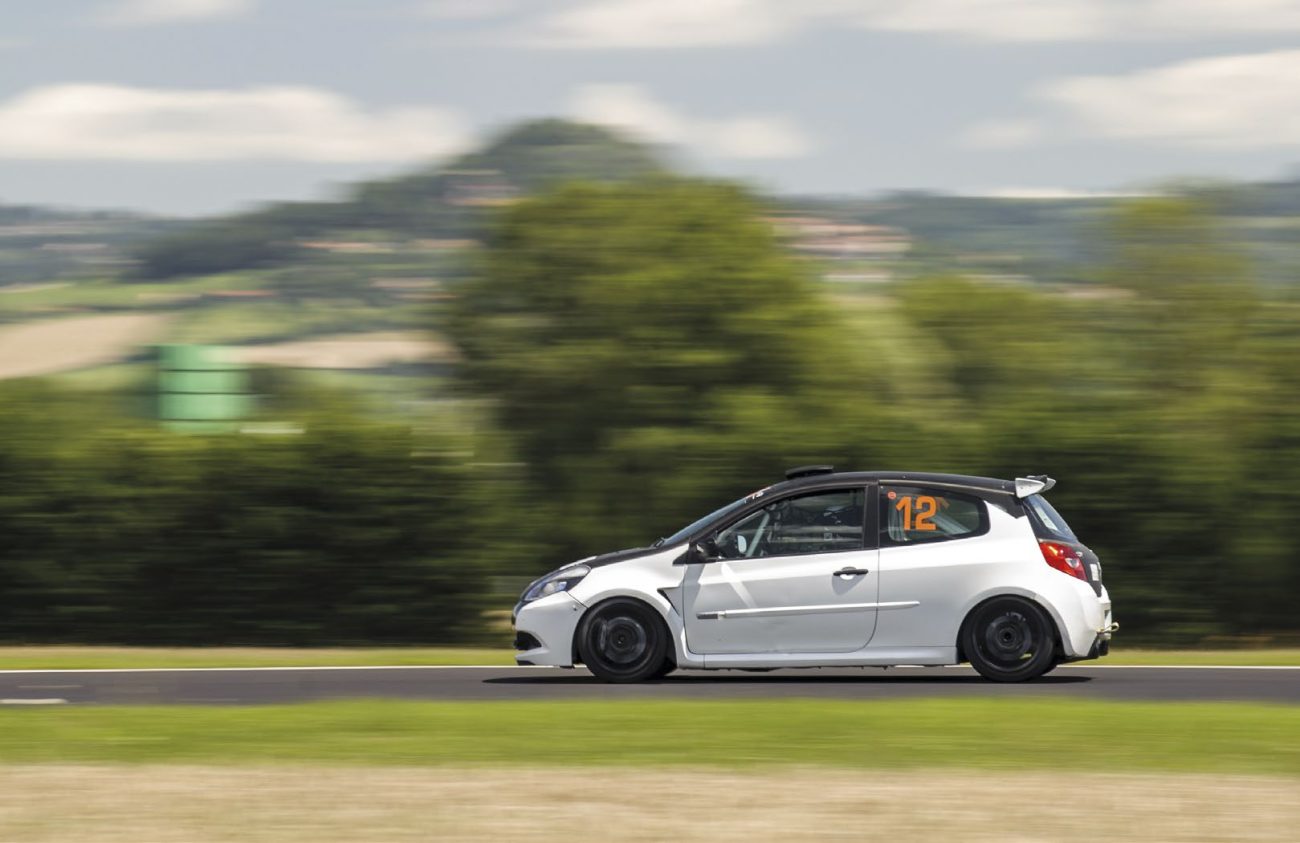
Using the gearbox is really fun, you have to be firm and precise on the lever. The engine noise is very present in the cabin and, even though it is only a 4-cylinder, you enjoy listening to it at every downshift. I even get caught out on a 3rd-to-2nd shift: I don't blip the throttle enough and rush the lever a bit too much, second doesn't go in, you have to stay focused! All the car's mass is on the front and, when you go onto the brakes, the rear quickly becomes unloaded, forcing a few steering corrections so as not to slide too much. You constantly try to prepare the exit well, to keep speed so as not to lose too much time. In fast corners, the car hops a little but you must not lift off the throttle. It goes through hard and the sensations are good, very good. You get carried away, even when you are used to driving much more powerful cars.
Back to the pits
During the cool-down lap, just before handing it back to its owner, I realise I am smiling to myself in my helmet. I didn't take a lap time, nor even compare myself with the other cars on the track, I just had a crazy amount of fun at the wheel during the few laps I was allowed. And even though I had time to look at the scenery on the straights, because the engine doesn't really push you around, you must keep your eyes well open to brake late and make the most of the car's potential. The Clio Cup demands technique from its driver to go fast and sends top-level sensations back in return. And when I drive at a club day, that is what I am looking for above all...
It is also rather comfortable not having to wonder whether the brakes will last more than 5 laps or whether the oil temperature will climb too high. It's a race car, it is made for this! So what can you compare it to? Well, actually, not much... A Renault Clio 3 Cup in good condition and well equipped changes hands today for around 25,000 €. With that budget, there is a good number of cars available on the market, but to reach this level of performance, safety and reliability you would certainly have to add a few parts to them. For those who want to get hold of a modern race car, the Clio Cup is one of the best ways to do it, but you must be vigilant when buying. I was lucky enough to try a sound, particularly well set up example, but there are also plenty of "lemons" on the market, owing to their busy past in competition. Be vigilant and don't hesitate to get help from a professional for any purchase.
The importance of suspension settings
By Dimitri Enjalbert
When you race in a single-make formula like the Clio Cup, all the participants have the same car and the fight to make the difference is intense. The only modifications possible for the drivers are the suspension settings: ride height, caster, camber and toe. The details of these modifications were covered in issue 5 of Racer's, in which I took part. A car like the Clio Cup is sensitive to settings, you play a lot with camber to try to scrape the last tenths. With marked negative camber, you gain top speed because there is less contact with the ground, and you increase grip in corners. But increasing it too much doesn't bring only advantages: you lose stability at high speed, it takes longer to heat the tyres and wear can quickly become premature. Under braking, with a lot of negative camber, you often lock the rear wheels because of the small contact area with the ground in a straight line. You end up with flat spots on the tyres, which become very troublesome...
So when you are trying to set up a car like the Clio Cup, you have to go about it sparingly. On a starting grid, you can clearly see the differences in settings from the outside and yet the gap between the pole-sitter and the others is counted in tenths, even hundredths. It really depends on the feel you have at the wheel of the car, on each person's preferences. If you drive a Clio Cup at trackdays or in competition, I recommend a setup that favours safety and endurance. Since there are a lot of Clio Cups on the market, you see all sorts of things in terms of suspension settings. You must not change everything at once, otherwise you end up driving a completely different car and a driver who struggles. The main thing is the feel at the wheel...
And the Clio 2 Cup?
By Bastien
Bastien, what made you switch from the Mégane 3 RS to a Clio 2 Cup for club driving?
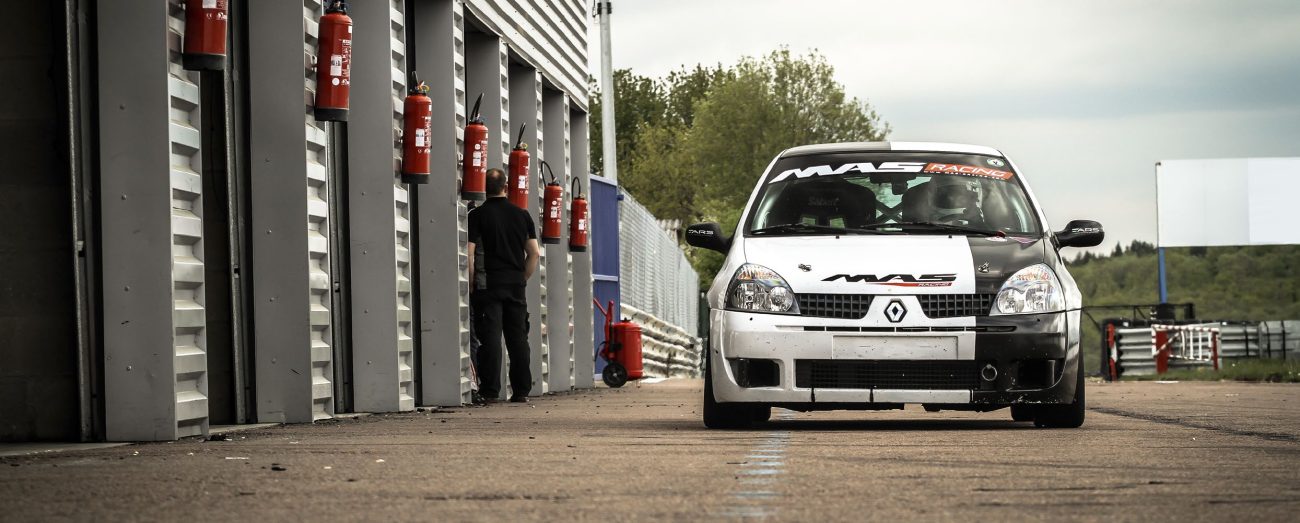
It is mainly a question of running cost. The Mégane was about 120 litres of petrol over a day, with the Clio it is barely 80. Consumables are generally cheaper too. The only problem comes from the tyres: it is hard to find used slicks in the Clio 2 Cup's size... Then, even though the Mégane 3 RS is an incredible car, it remains very "simple" to drive. I needed more sensations and to progress technically behind the wheel. The Clio Cup is a technical challenge for me every time I drive it. I also share this passion with my wife, who also dreamed of a race car!
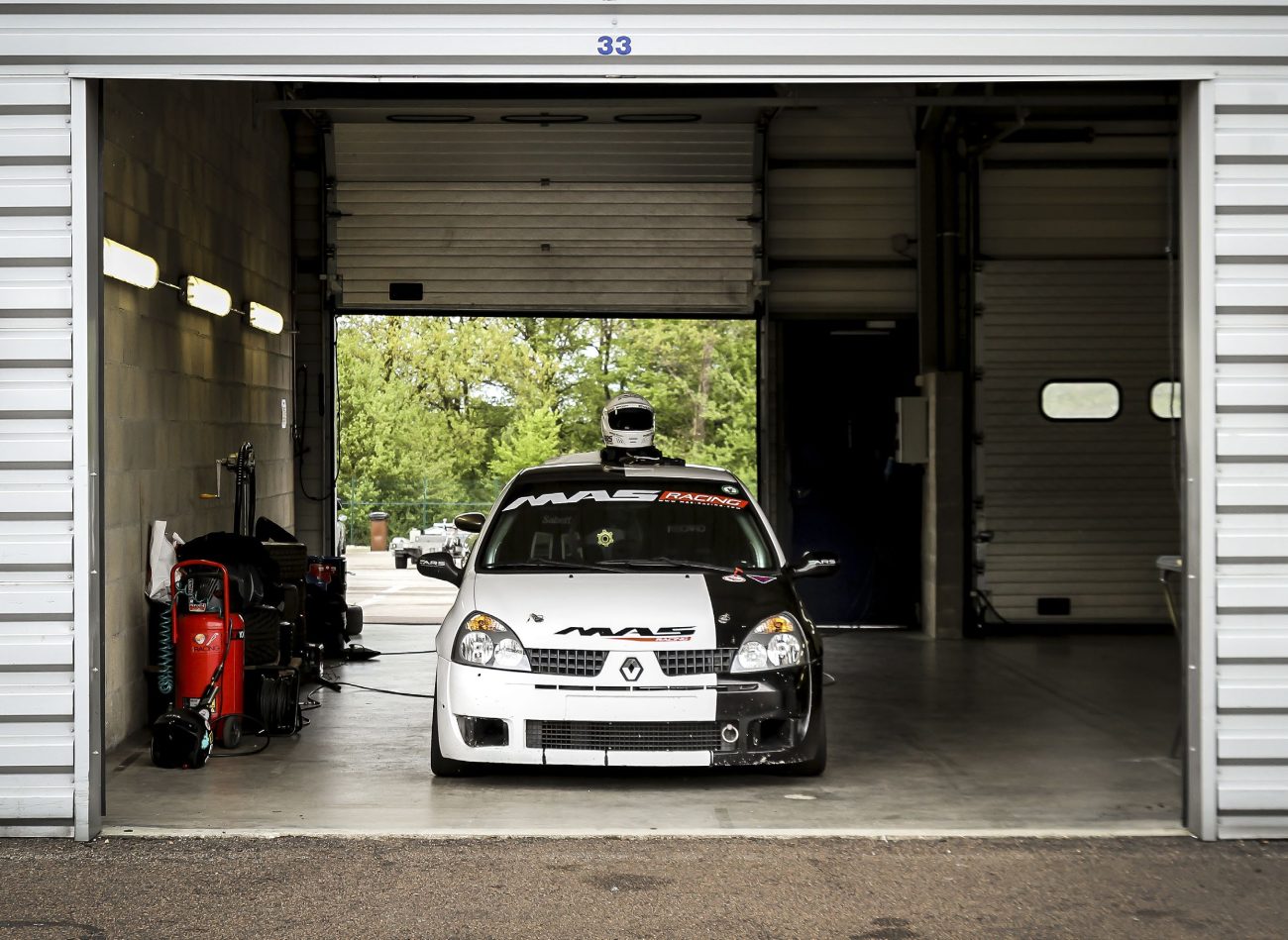
What are its main qualities when you drive? And its flaws?
What I like about this car is the sensations it gives! Very lively, with a great sound inside and a fantastic sequential gearbox. You hear absolutely everything in the car, you feel the slightest bump, the slightest vibration. When you drive, it smells of petrol, the roll cage puts you in the mood and the bucket seats with side wings show that you are not here to mess about: it is this slightly extreme atmosphere I like on board, there is nothing superfluous! But what I like best is that with my small budget, I can go and play without complex with some big, far more prestigious GTs. My best memory remains a memorable battle with a friend in a Nissan GT-R at Dijon, very good-natured. I would catch up in the twisty part, and he would pull a huge gap on me on the straight. It pushed me to push hard to catch up on every lap. Just thinking about it, I'm grinning from ear to ear! Its flaws? It's a bit short on engine for me, but honestly that's the only thing...
If you had to change, what would you take?
On a reasonable budget, I would like to move to a Clio 3 Cup. But if I had more means, I would take a Porsche 997 Cup, without hesitation. It is the same concept, but everything better!
This article comes from issue 8 of Racer's, Marc Peraldi's magazine. Thank you Marc!