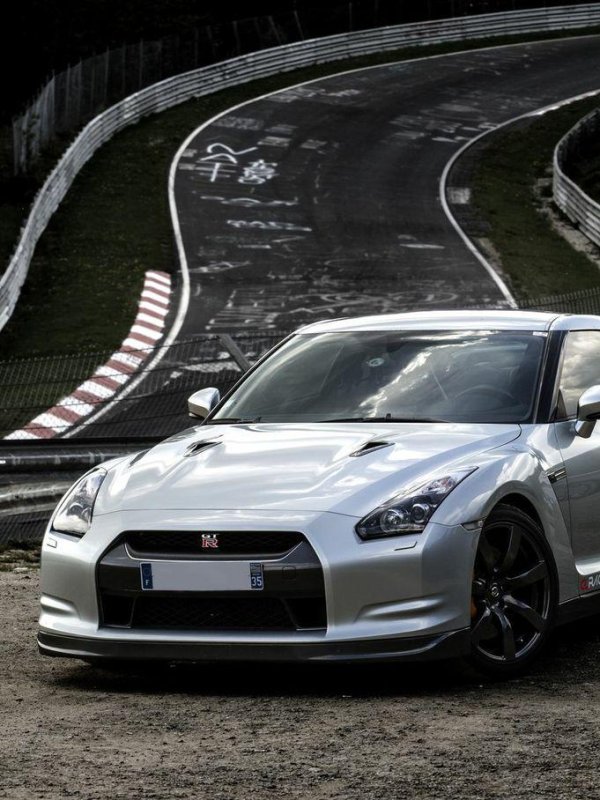
The antithesis of our track test in the first issue with the Porsche 997 GT3 RS, the Nissan GT-R gets people talking. You can read and hear all sorts of remarks about it: too much on-board electronics, an easy car to drive, unreliable, too heavy… But one thing is certain: it sends lap times tumbling on track, so it had to pass through our hands.
We hesitated a lot over doing this test, given how much reaction the Nissan GT-R provokes. Comments on this car appear in every car magazine, and another test wouldn't have added much new to the mix! Then one day, while working on the development and promotion of the magazine, we received an invitation from the French specialist in tuning and servicing Nissan GT-Rs: Ludo, from GL Racing. He offered to lend us his personal GT-R for 2 days so we could do a full report! After careful thought (about two and a half seconds, stopwatch in hand…), we of course accepted! If you're going to test a GT-R, you might as well test a really sharp one…
To stay as close as possible to the way Racer's readers use their cars, I am going to drive to the circuit on the road and describe my whole journey. Two full days available, weather that looks kind for this start of May… And what if I went to the circuit where this car has humbled plenty of sports cars? The Nürburgring's northern loop is the obvious choice for this test: more than 1000 kilometres of road there and back and a track open in the evening for a good 2 hours, everything is in place to offer you a complete test!
Why this one?
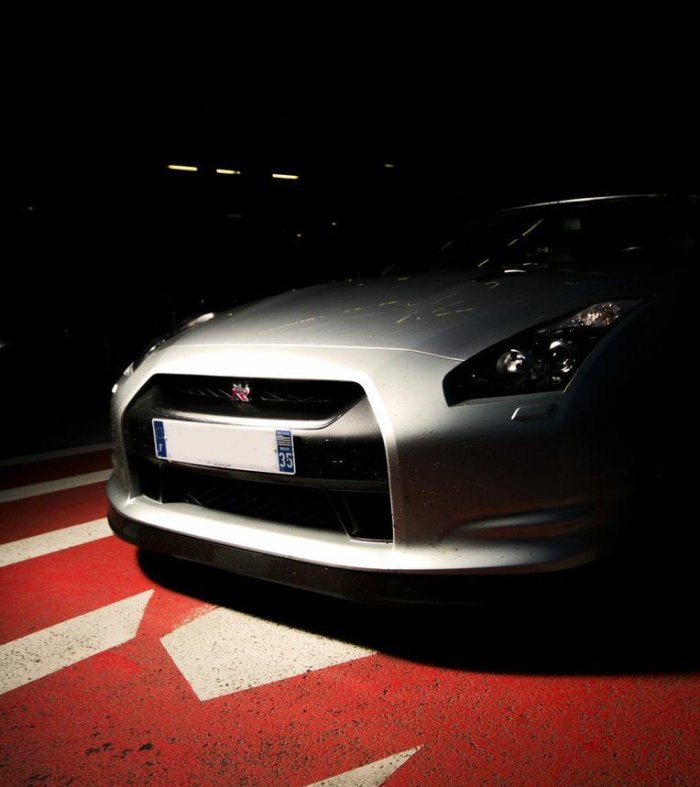
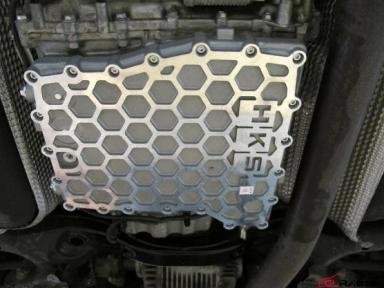
Appointment made, I go to the GL Racing workshop to pick up the car. What I liked a lot about this invitation is that the tuning seems "thought through". The aim was not just to add extra horsepower, which is easy on these turbocharged engines where you can get 800 or 1000 hp without too much difficulty, with a wallet to match. Working on the car's overall behaviour was an important goal for this project: engine, chassis, brakes, gearbox and reliability… nothing is left to chance. It's starting to smell good, but I still brace my neck for a few violent assaults because of the claimed power of 620 hp and… 860 Nm of torque. Given that the base is a 2009 version rated at 485 hp and 580 Nm of torque, that leaves you dreaming!
Its main flaw comes from the 1750 kilos it shows on the scales. It's not the first GT-R I will try on track, and it's true that its bulk is sometimes a nuisance. The electronics manage a lot of things, but can do nothing about the car's lack of agility in tight corners… we will come back to that later.
But the biggest attraction of this car is its price! A 2009 version like this one is easily found for less than 50,000 euros. To find the same level of performance from the competition, you have to spend a lot… a lot more! To drive the point home, Nissan improves the performance year after year with very subtle changes. In general, the GT-R intrigues: either you love it and are grateful for its exceptional performance, or you hate it, claiming it is too easy, that it has no real gearbox and too much on-board electronics. For those in the second category, I think you won't like the new Porsche GT3 either, which will only be available with PDK.
First impressions
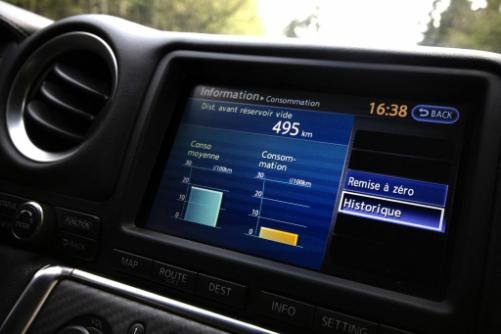
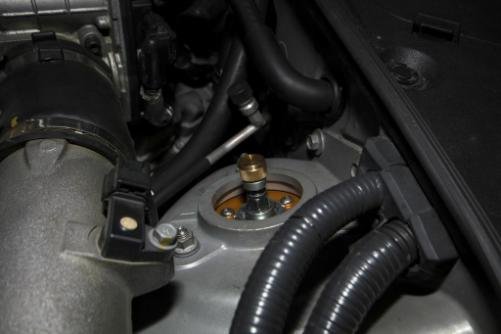
After a quick presentation of the car, I settle in and hit the road. The GPS gives me 535 kilometres to the destination, which leaves me time to get to know the car. One of the particularities of this tuning is the damping: an Öhlins Road & Track kit has been fitted, adjustable in firmness with knobs on the top of the dampers, and replacing the car's original adaptive suspension! I chose to set the car fairly firm, but without overdoing it, because the Nürburgring track is very bumpy and needs a bit of compliance given the mass of the machine. The first few metres are on small country roads that will take me to the expressways and the motorway towards Germany.
A first observation comes quickly: I confirm, it's an anvil! The 1750 kilos are well and truly there: the steering is heavy, the GT-R hunts for its line and skips a little over bumps… nothing like a standard version that is rather soft on the road. This behaviour comes from the damper setting I chose. I could correct it by softening everything… but I like staying in this "Racing" mood, even if it means a slightly sore back! The very positive point is that the steering sends back quite a lot of information: I know where my wheels are placed and what is happening at that exact spot on the road surface.
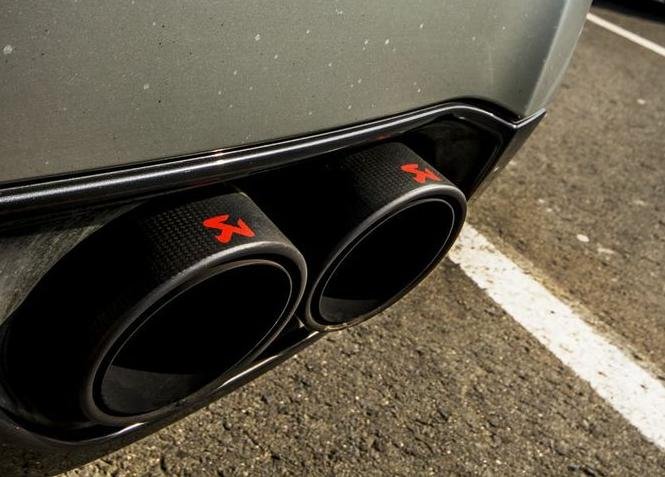
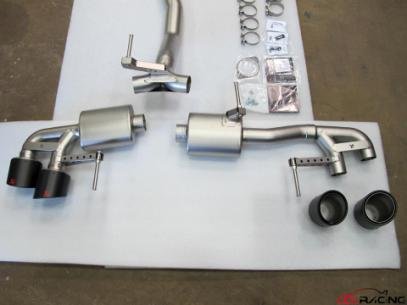
The journey continues in the Paris traffic jams (for a change…). The gearbox is very smooth and, when you stay in Auto mode, it quietly goes into sixth at 60 km/h. You get all the comfort of a modern vehicle and a good stereo to keep you busy. The Akrapovic exhaust tips give a dull rumble at low revs and every passage through a tunnel makes other vehicles tremble. At the wheel of a GT-R in traffic, you don't really feel like you're in a car. You literally "fly over" the traffic, in a rather unusual noise mixing transmission whine, turbo whistle and V6 sound. A simple press of the accelerator is enough to extract yourself from any situation, and its size, with its prominent nose, forces other vehicles to move over to the right-hand lane.
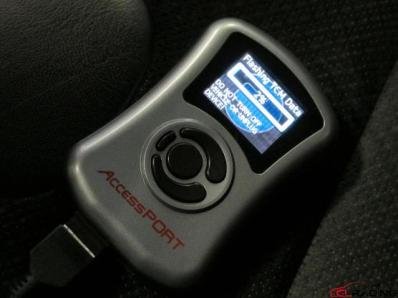
Out of the Paris region, the motorway clears. I'm going to be able to start… doing absolutely nothing! I'm in France and I need my licence to work, so I stay calm, settled at 140 km/h. At this speed we are at 3000 rpm and the on-board computer shows consumption of around 12 L per 100 km. Another interesting feature of this tuning is that you can change the engine management at any moment from inside the car, with no silly, ugly additional box: everything is integrated into the original controls of the on-board computer. I have the choice of 4 maps: the most powerful mode claiming a little over 600 hp, an intermediate mode around 550 hp, the original configuration (480 hp) and… an "economy" mode to favour fuel consumption on the motorway. Very good idea! For my motorway leg I use this last mode, which makes the car a bit limp but is more than enough for driving at this speed.
Powerful? Noooo…
Then comes the first toll booth, synonymous with the only moment of freedom on our beautiful French motorways! I select "high roller" mode and I'm going to be able to gauge the health of this engine tuning. The barrier goes up, gearbox in manual mode, I grip the wheel firmly and floor it! The first words that come to mind come from a well-known English expression: "OH MY GOD!!!" The 860 Nm of torque arrives violently, and that with the revs barely past 3000 rpm. The road is a bit greasy and I haven't switched off the traction control: it flashes all over the place to manage this abundance of torque. The Akrapovic exhaust, which until now gave a dull and not very pleasant sound, screams and excites my eardrums! The rev counter is devoured in the blink of an eye and the gears follow one another quickly at the slightest touch of the right-hand paddle. It pulls without a break, without any jerk, and I'm already far above the legal limits while I'm only in 4th! That's promising…
The rest of the journey to Germany will seem very long, and the traffic conditions on the autobahn won't let me test the car's top speed. That matters little to me: what I want to know is whether its behaviour and the enjoyment felt at the wheel on track will be there. The Nürburgring Nordschleife is open for 2 hours at the end of the day, in "Tourist" mode. That is, it is not a private trackday but an opening to the public, like a toll road. This original concept is unique and lets anyone come and do a few laps of this legendary circuit: car, motorbike, van… It will therefore be hard to set an "official" lap time for this tuning, because the car park fills up before opening, but we will already have an idea of the beast's potential. My aim will be to see whether you can have fun on track with this Nissan GT-R, without being totally assisted by the electronics, since the adaptive suspension has been dropped.
On track
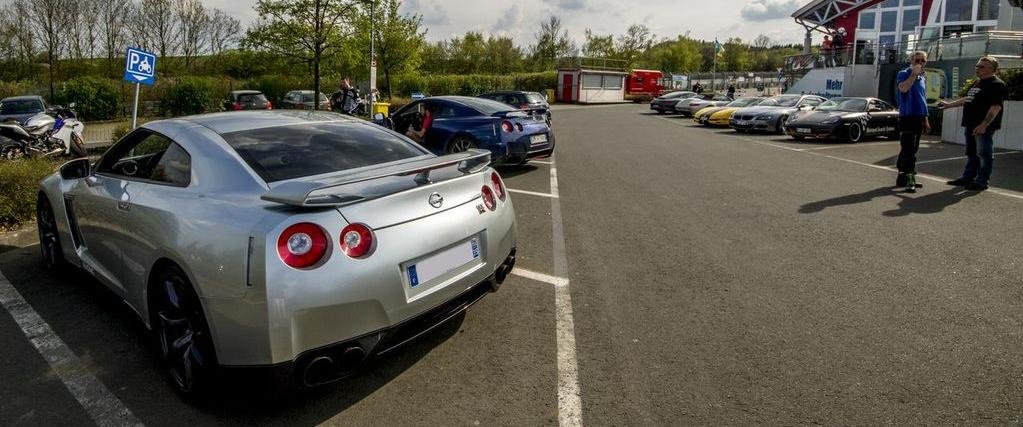
I'm going to do the first lap with Loïc, the photographer dedicated to this test, to get a few shots from the inside. It will let me build up the pace calmly and check whether there are any particular warnings on the track, roadworks or otherwise… The car is fitted with standard tyres, in this case Dunlop Sport Maxx, and the braking has been improved with Performance Friction discs and pads, high-performance brake fluid and cooling ducts. The bite is there, with a fairly firm and precise pedal. I raise the pace gently while keeping a big safety margin, and I like the behaviour with these dampers. I get good feedback, but I still miss harnesses to be properly strapped into my seat and take in even more information from the chassis. The engine, thanks to its 600-plus hp, lets me fly past everything on the track at that moment, and the rest time between each corner becomes short because it comes out so quickly. The car's high mass manages to be forgotten, but you must not get too carried away in the fast sections… I can feel I'm going to sweat a bit taking it to the limit!
The first lap ends and I drop off the photographer so he can set up at a strategic spot at the trackside. Loïc says to me, almost as white as his helmet: "I thought it was a gentle warm-up lap?" We have just completed a warm-up lap in 8'15 BTG, with a lot of traffic on the track at opening time. All that without trying… it's true that the GT-R is fairly easy to handle when you leave the traction control on. But now the serious business is about to begin…
Time attack
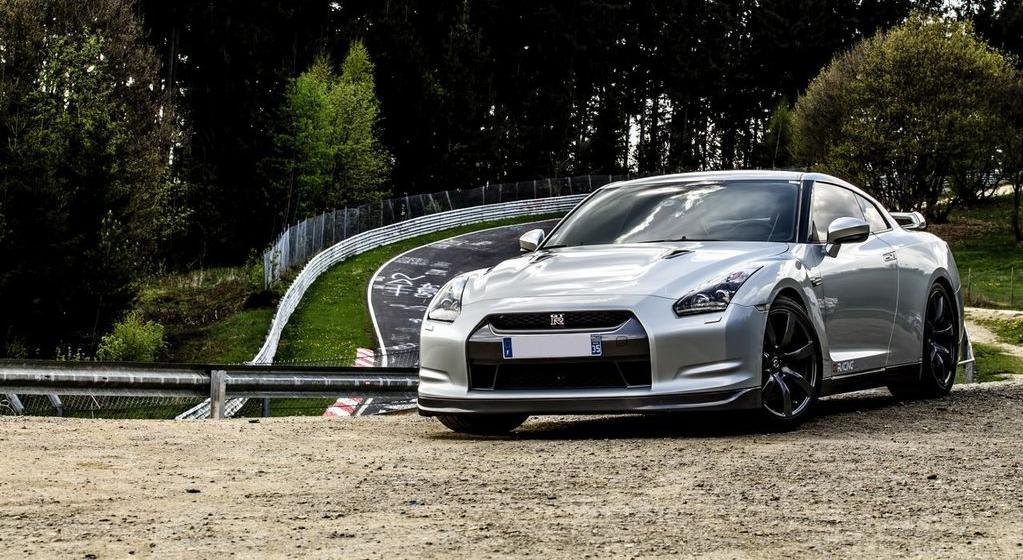
While the photographer gets into position, I fine-tune my driving position. The original electric seat adjusts in every direction, as does the steering wheel, which makes it easy to find your ideal position. Its size makes you feel small behind the wheel, with its long bonnet and 1.90 m width. A Lotus Elise looks like a model car next to it. Anyway, enough talk: I put the transmission in Race mode, I switch off all the electronics and I set the map to the biggest setting. Here I go… but I'm scared!
The engine is incredible, it pulls non-stop, whatever the engine speed. I arrive at the first braking zone at Tiergarten at 230 km/h, the brakes respond perfectly well with good bite. Positioning the car comes fairly naturally, the rear follows me nicely as I brake into the corner, but it's when getting back on the power that I'm caught out a little. I had forgotten how violent the arrival of the torque is, and the car oversteers excessively despite the 4 driven wheels! I'm going to have to go back to some driving basics and remember to wait until I have the wheels straight before releasing all the power… Off to a good start!
I arrive at Hocheichen, a series of medium-speed corners in 3rd or 4th. The Öhlins dampers do a remarkable job, I don't feel the 1750 kg at all as I throw it from one corner to the next. The choice of a firm setting suits me perfectly: I kept a bit of compliance so as not to have a car that "bangs" on the slightest bump, but unwanted body movements stay limited. I pass Flugplatz and begin the descent leading to the bump before the left, then the braking for Aremberg. The power is still there, the exhaust screams and I'm in 6th at 270 km/h before braking. A few vehicles stop me taking the compression of the Fuchsröhre at very high speed and we come upon a yellow flag for a broken-down vehicle at the side of the track. At that point I have three vehicles ahead of me: a BMW E36 with a roll cage, an Audi R8 and a rental Swift! At the exit of Adenauer Forst, we are released and I swallow those 3 cars in a few seconds… And yet, judging by the sound, it was an R8 V10, which still develops 525 hp. The engine tuning by GL Racing is astonishingly effective. When you drive tuned turbo engines, it often happens that you get boost drops or dips in the power curve. Here, none of that: the turbos blow hard, the engine doesn't flinch and it keeps asking for more!
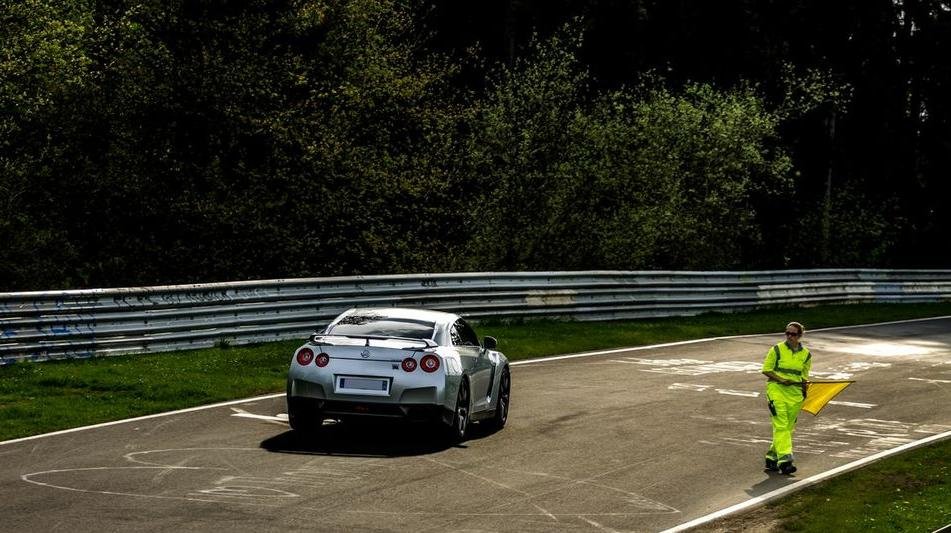
Next I reach the downhill section taking us to the village of Adenau, which will put the brakes through a severe test. This is where I'd like the GT-R to weigh 200 kilos less: a long fast right-hander with a slight camber to the left leading to a big braking zone and a very tight right/left (Wehrseifen). The brakes don't flinch, even if it's starting to smell a bit hot, but the car suffers… In that situation there is nothing you can do about its bulk, which gradually carries us wide. You have to be patient: there is no run-off there and it is out of the question to tempt fate and damage the car…
I pass Ex-Mühle and its uphill corner (it's more of a wall in fact, so steep is the slope). There it's magic: the 860 Nm of torque pull us out of this corner at an incredible speed, where other vehicles struggle to climb this obstacle. As a result, the fast left that follows, before the braking zone of Bergwerk and which is taken flat out by almost all the vehicles I have driven here, forces me to lift off the accelerator slightly. With semi-slick tyres it would go flat without a problem, but the Dunlop Sport Maxx, good as they are, start to slide more and more. Then comes the long climb that takes us further on to the legendary Karussell. With this much power, it isn't that long, since I'm approaching 250 km/h there. I catch up with two Corvette Z06s, which politely put their indicators on to let me through…
The Karussell, with its concrete slabs, doesn't suit the GT-R much, again too heavy for this exercise, but the dampers do their job. I'm very surprised by the efficiency of the braking, which shows no signs of weakness. I still have bite and it seems enduring, which is reassuring given the speeds reached. The following sequences of corners, Hohe Acht and Wippermann, are taken with a lot of speed, but you can't be idle behind the wheel. When braking before Brünnchen, the car settles perfectly in a slight four-wheel slide. The GT-R in this configuration is different from a standard GT-R. Without the electronic aids and the adaptive damping, you no longer feel constantly assisted. You are in charge of what you do and mistakes are not forgiven, especially on this track with no run-off!
In traffic…
I complete this first quick lap in 7'49 BTG, which is already very fast. The official time of a 2009 Nissan GT-R is 7'29 on a full lap, which would be roughly 7'10 BTG. But today we don't have the track to ourselves (maybe one day… if Racer's becomes a big magazine!). Having to manage overtaking means keeping a big safety margin to respect the other track users, in particular the few bikers present, and the yellow flags stop me from setting a time. But I'm still going to try to bring it all down a bit! I set off again and do 7'40 BTG exactly, still with a yellow flag and traffic. I'm struggling to keep a good tyre pressure, as they tend to get a bit too hot and the pressure rises. I have to let them down twice to get back to a reasonable pressure…
But another serious problem arrives. I've done 3 laps and the fuel tank is approaching reserve! 3 laps, a little over 60 kilometres, and I put in nearly 50 litres of petrol. I redo my sums several times, but I'm not wrong: that's well over 80 litres per 100 km!!! It stings a bit, but mostly I don't understand Nissan's choice of such a small fuel tank. It must be a part shared with Renault…
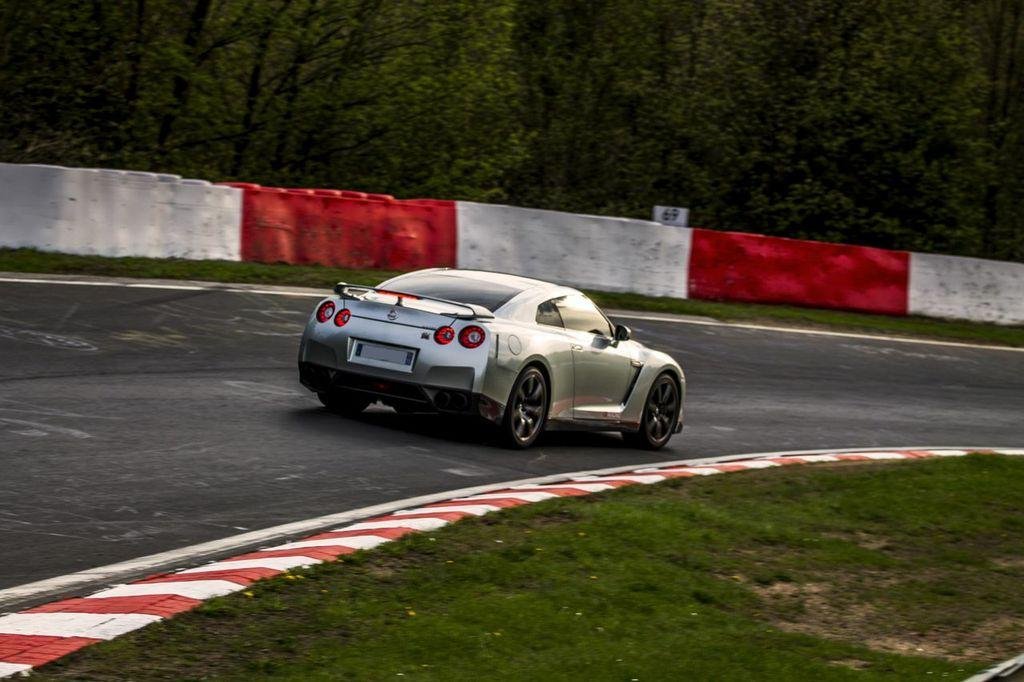
I've refuelled and finally managed to maintain a good tyre pressure: I set off for a last lap in "Time Attack" mode. The GT-R doesn't flinch: neither the engine nor the brakes show any sign of fatigue. In some places the tyres rub against the arches because the loads are so high, I could perhaps have stiffened the suspension a little more. I get a big sideways moment on turn-in under braking at Aremberg, but it works out. I still don't get the chance to take the compression of the Fuchsröhre the way I'd like, having to make an overtake right in the descent, but I'm still doing 220 km/h there. Another yellow flag is out and there's no way to cheat: the marshals are watching closely!
I keep bullying the beast, which regularly reminds me that it weighs 1750 kilos by throwing me wide. The braking is still powerful and it hardly ever understeers if you modulate your brake pressure well on corner entry. On exit, I allow myself a few "a bit early" re-accelerations: it slides when the torque arrives, but it's rather healthy and easily controllable. A few more overtakes to manage, and I complete this lap in 7'34"71 BTG. Good!
I won't try for better today: the traffic won't ease and we already have a good idea of the potential of the tuning. I estimate the time lost to the yellow flag at about ten seconds, the bikers made me break my rhythm at Adenau and Ex-Mühle, and I still haven't been able to take the compression of the Fuchsröhre without an overtake to manage. I think the true lap time is around 7'10 BTG without those slowdowns. With an empty track and a few more laps to get used to it, this car is capable of going for the 7 minutes BTG, that's for sure.
Verdict
Apart from the lap time, which is hard to really take into account because we were on a "Tourist" session, it is the behaviour of this Nissan GT-R tuned by GL Racing that is interesting. To all those who claim that the GT-R is a bicycle you can drive with your eyes closed, I answer that this one is different. With the electronics switched off, it's real driving and it's good!!! Its engine is exceptional, with more than 600 hp and a monstrous 860 Nm of torque… The brakes are durable and the Öhlins dampers send a lot of information back to the driver. Admittedly, it remains too heavy to consider doing track days regularly, its fuel consumption is very high and its running costs are significant. Its use should be limited to big circuits like Spa-Francorchamps or Dijon: no point hoping to lap Folembray or Dreux with a car like this, it would damage it more than anything. On that subject, I think that by removing the leather interior and fitting two proper bucket seats and harnesses (essential!), you would already save quite a few kilos, given that a front seat weighs nearly 60 kg…
For what type of driver?
If your idea of trackdays is to arrive on a trailer with a sharpened car, this one is not for you. But if, like many, you come by road to your track days while only doing 3 or 4 outings a year, while still enjoying decent everyday comfort, I think you can't do better at this level of performance! It is more capable than the standard car and offers real, unsanitised driving sensations. It's not for just anybody, it will take some time to adapt to the very high performance, but after that… it's so good!
It pulls endlessly, the sound is superb, it brakes hard without showing major signs of weakness, and it sets incredible lap times: I like this compromise. I've already had the chance to drive on the road in a Porsche GT3 RS or a Lotus Exige: after 50 km, I no longer felt like driving… Those cars are intended exclusively for the track, even though they are road-legal. The GT-R is versatile, and even more so in this configuration cooked up by GL Racing: when you want to unplug a cable and have fun on track, it knows how to do it and give its driver pleasure thanks to the subtle modifications. The enjoyment of driving is what matters most, isn't it?
This article comes from issue 2 of Racer's, Marc Peraldi's magazine. Thank you, Marc!