The notion of load transfer in driving is always tricky to approach: it is a vast subject that calls for a solid grounding in mathematics. Here we will clear things up with a simple technical approach, but you will (still) have to do a little maths to understand what happens during acceleration and deceleration on our favorite circuits.
It is important to clear up right away a big confusion between the terms "mass" and "load". If a professional instructor ever talks to you about mass transfer during a briefing, you have a very easy way of catching him out! Mass transfer does exist: it literally means that a mass moves from a point A to a point B. It is constantly present when you drive, and corresponds to the movement of the vehicle's center of gravity as the moving parts move. But the forces it generates are much smaller than those of load transfer, which are physical forces directly linked to body movements: squat, dive, roll... If someone talks to you about mass transfer on a driving course, either you are hunting for the last thousandths of a second with your track engineers, or the instructor doesn't know what he is talking about!
Load distribution
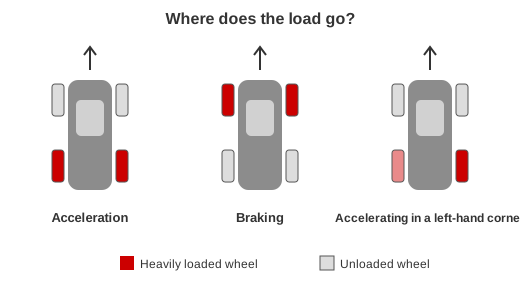
The first thing to remember is that, when you drive, what you do with the pedals is at least as important as what you do with the steering wheel. How much pressure you put on the accelerator or the brake pedal has a direct influence on the behavior of the car. Under acceleration, it squats and "loads" the rear. Under braking, it dives and "loads the front". These body movements are very easy to see on a tall vehicle with "soft" suspension (Dacia Duster owners are called to the stand...), but less so on a competition vehicle such as a single-seater or a prototype. Yet, even when almost imperceptible from the outside on a race car, load transfers are no less important: chassis engineers watch them closely to know how the car will behave in the phases when it is leaning on its tires.
When you drive, the car is never in the same position: the load is distributed over the four wheels according to what you ask of it. If you turn left while accelerating, it is the right rear wheel that takes the most load. Since most circuits run clockwise, you turn right more often and sometimes wear the tires on the left side faster! It is also why, in very top-level competition, the suspension settings can be different left and right, to suit the circuit in question. It is enough to make you tear your hair out, there are so many possibilities...
Understeer, oversteer
The best way to understand the influence of load transfer on the behavior of the car is to pick a flat area and drive in circles. I did say "drive in circles", not do donuts at full throttle with the steering at full opposite lock (BMW fans, I salute you!). You can take a roundabout, but if our "pals" from the police are reading us, they will cry scandal and claim that Racer's is encouraging readers to do anything on the road...
Keep a constant speed for your circles, say 50 km/h. Without changing your steering angle (the position of the steering wheel), accelerate... What happens? Your car squats at the rear, the front wheels are "unloaded" and the car drifts away from its initial line, describing larger circles: this is called load transfer to the rear. It has two important consequences.
First, it is easy to see that, to put a car's power down, it is preferable to have rear-wheel drive, because under acceleration it is the rear wheels that are pressed into the ground. I have nothing against front-wheel-drive sports cars, which can be very fast, but it is not the most efficient solution (besides, if it were, Formula 1 cars would almost certainly be front-wheel drive...). In reality, the most efficient solution would probably be four-wheel drive: when you turn while accelerating, the front wheel on the outside of the corner is also loaded, so it can be used to put power down. That is why, if you look at the history of motorsport, four-wheel drive was quickly banned. Audi tried it in the early 90s with its Quattro system on the Audi 80 in Supertouring, literally crushing the competition, and then the rules changed. Today, with Audi again, four-wheel drive is making a comeback in endurance racing on the E-Tron Quattro hybrids, a clever workaround of the regulations to redistribute electric power to the... front wheels!
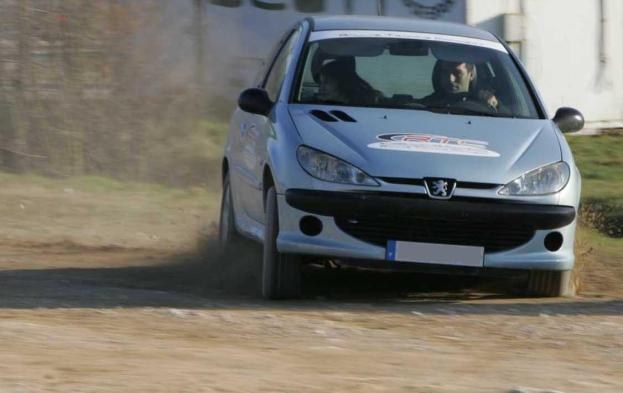
Second important point: when you accelerate, the front wheels are unloaded. On a circuit, on the way out of a corner, you therefore can't afford to get back on the throttle too hard with the wheels turned, or the car will "understeer". The front wheels, short of load, can no longer respond to what we ask of them at the steering wheel: we ask them to turn while lifting them off the ground. No wonder the front tires scream for help in this situation!
I'll take the opportunity to make a recommendation to amateur drivers who drive at club days: before crying scandal because your car understeers, and investing thousands of euros in new suspension, new tires or new settings, think about taking a driving lesson with an instructor who will ride as a passenger: it will cost you far less. Often, a car understeers excessively because it is being asked to understeer! I'm not saying that fitting "performance" parts is pointless, far from it, and you will find a lot of information on track-oriented equipment in the next issues of Racer's. But this "racing" equipment, which lets us go faster and faster on track, will hide some flaws in your driving if you are a beginner, because it takes the loads better. When you drive on a circuit, you must constantly develop your personal technique before wanting to add speed...
Understeer doesn't only occur when you lose load on the front. When the wheels are locked because of overly hard braking, however much you load the front axle, the car won't turn and understeers: our tires have a grip limit that we cannot cross.
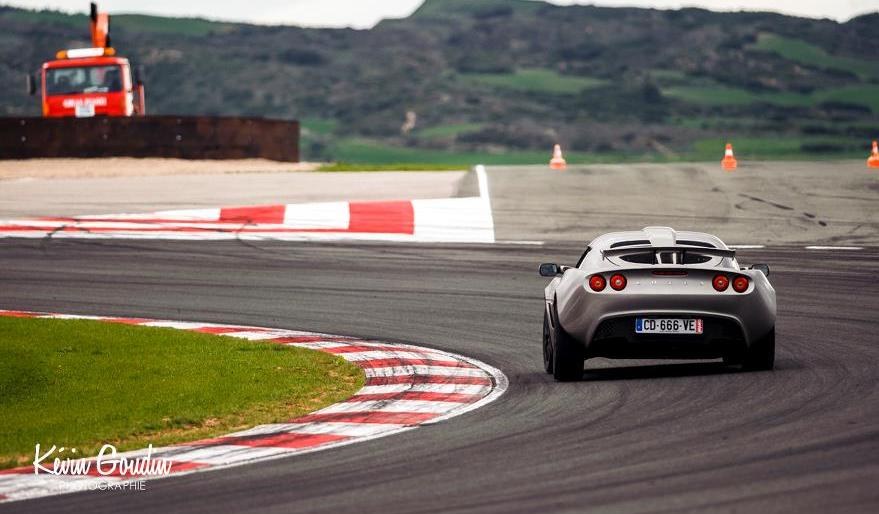
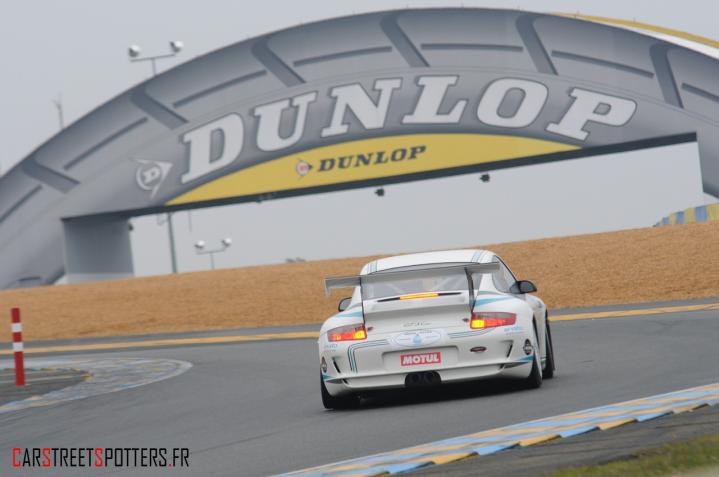
Let's go back to our flat area, where you are driving in circles at constant speed. Now, still without changing your steering angle, suddenly lift off the accelerator. The front of the car dives and it moves closer to the inside of the corner. By suddenly lifting off, we have generated a load transfer to the front, which gives the wheels more steering ability since they are "pressed" into the ground. That is why, in fast corners such as the Dunlop corner at Le Mans or Blanchimont at Spa-Francorchamps, it is important not to lift off the accelerator mid-corner, or the rear axle will be completely unloaded and will try to come round to the front!
This is what we call "lift-off oversteer". It differs from "power" oversteer, where all it takes is flooring the accelerator in a rear-wheel-drive car for the rear wheels to spin and the car to step out. This oversteer is dangerous for the uninitiated and is eliminated on production cars by the manufacturers, thanks to "reassuring" chassis settings and omnipresent electronic aids. But when you switch off the ESP, beware of lifting off in a fast corner!
Turning in on the brakes
This load transfer to the front is one of the most important points of driving on a circuit. Mastering it gains precious seconds, but it is also the hardest to learn. If you compare two drivers arriving at the same corner at the same speed, one with his foot on the accelerator and the other with his foot on the brake, the lines will be completely different. The whole art of driving lies in modulating the brake pressure to "play" with the load transfer onto the front axle on corner entry. This increases the steering ability (and so helps the car turn) while keeping a higher cornering speed. This is what we call turn-in. If a driving-school instructor ever taught you that when turning you must get back on the accelerator, you will have to get that out of your head to drive on a circuit...
Maths... again and again
If I started on the mathematical explanation of longitudinal load transfers (front to rear and vice versa) and lateral ones (left to right and vice versa), a single issue of the magazine wouldn't be enough, and I doubt you feel like taking an advanced maths course before a day of track driving! So I will give you just one formula, to give you an idea of the parameters that affect load transfer. Longitudinal load transfer is expressed as follows:
Load transfer = M × γ × h / E
- M: the mass;
- γ: the acceleration or deceleration (expressed in g);
- h: the height of the center of gravity;
- E: the wheelbase.
It is easy to see that a Formula 1 car, even though it has a low mass and a very low center of gravity, undergoes a large load transfer because of its very high acceleration and deceleration capabilities! A production car, say a Scénic, undergoes a maximum deceleration of around 1 g in emergency braking with standard tires. On a Formula 1 car, with slick tires and aerodynamic downforce, it can reach 4 g. So you can imagine how large the load transfers are, even though they are barely noticeable from the outside.
These load transfers are what we are going to try to exploit in our driving. You will say: easy, I brake later than everyone else, I stay flat on the brakes on entry, I'll get a huge load transfer and I'll turn into my corner perfectly with plenty of speed. But it is not for nothing that mastering load transfer is the hardest thing to learn in driving...
The tire's friction circle
Before we can exploit load transfers, we must take our environment into account: tires, track condition, weather... It is fairly easy to understand that we cannot ask the same of the contact with the ground in fine weather, with slick tires on a perfectly smooth surface, as in the rain with worn road tires. We can afford to load the front axle more (hard on the brakes) when there is plenty of grip, whereas we must be more vigilant when there is less grip. Weather and surface are parameters we can't act on (unless you are seriously rich!): it is up to us drivers to adapt. We will mainly be limited by our tires which, at a certain point, will no longer accept the load and will slide. This limit can be pushed back by improving the quality of the tires or adding aerodynamic downforce, for example, but there will always be a moment when the tire reaches saturation.
Take the example of a Formula 1 car, on slicks on a perfectly dry track, whose driver has the steering turned and the wheels locked. The combination of steering angle and brake pressure is beyond what the tire can take: the wheels lock and the car goes straight on. Even at the highest level, equipment isn't everything and certain rules must be respected.
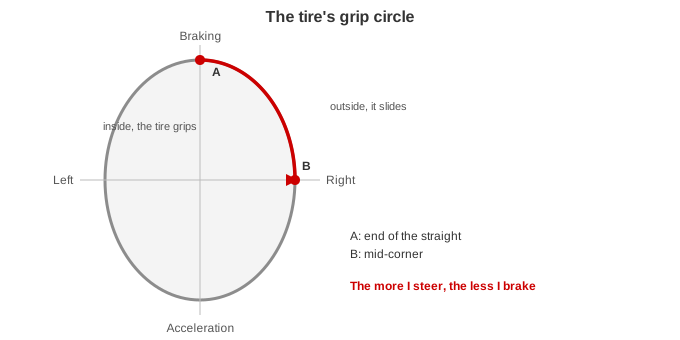
The situation is easy to picture thanks to a graph called the tire's friction circle (or Kamm circle), which is not actually a circle but rather an ellipse. It models the load that can be asked of a tire according to acceleration and steering angle. It represents the limit of grip: inside it, the tire grips; outside it, it slides. You can clearly see that the tire copes better with longitudinal forces than with lateral ones. Depending on the type of tire, this "circle" varies: taller or less tall, wider or narrower.
What the ABS does
When you are in a straight line and braking, you try to be at point A: you brake hard, up to the tire's grip limit but without exceeding it, otherwise the wheels lock. If you turn the wheels, you have to reduce your brake pressure so as not to leave the circle and keep grip.
That is exactly the role of the ABS in emergency braking: it eases off the brake pressure so that you stay within the friction circle and thus keep steering ability. Without ABS, when the wheels are locked, however much you turn them, not much happens and you go straight on!
Driving
Let's now look at our driving on the approach to a corner. I am at point A (on the friction circle), wheels straight, and I have just done the best braking of my life: late, hard and without locking the wheels! I am going to have to turn my wheels to point B (in this example, I am turning right). I need to follow the line of the circle from A to B. In practice, this means easing off the pressure on the brake pedal as I turn the steering wheel. This type of braking is called trail braking, which follows this rule: the more I turn, the less I brake. There is a permanent link between what you do at the wheel and what you do at the pedals.
You will ask me: "That's all very well, but when do I stop braking?" I refer you to the article on racing lines in issue 1 of Racer's, which says that you can only get back on the power in a corner if the car is pointing toward the exit. There is no universal truth about where braking ends. In a tight corner with a variable radius, it is often close to the apex, but every corner has its own characteristics. To work it out, you will have to take your environment into account: the car you are using, the surface, the tires, the weather... But always remember that what matters is preparing the corner exit.
And getting back on the power?
Once the car is pointing toward the corner exit, I can think about getting back on the power. But if I accelerate too hard with the wheels turned, I will leave the circle... So the pressure on the accelerator must be the exact opposite of that applied during trail braking. This is called progressive acceleration: the more I unwind the steering, the more I can accelerate...
This article is from issue 2 of Racer's, Marc Peraldi's magazine. Thank you, Marc!