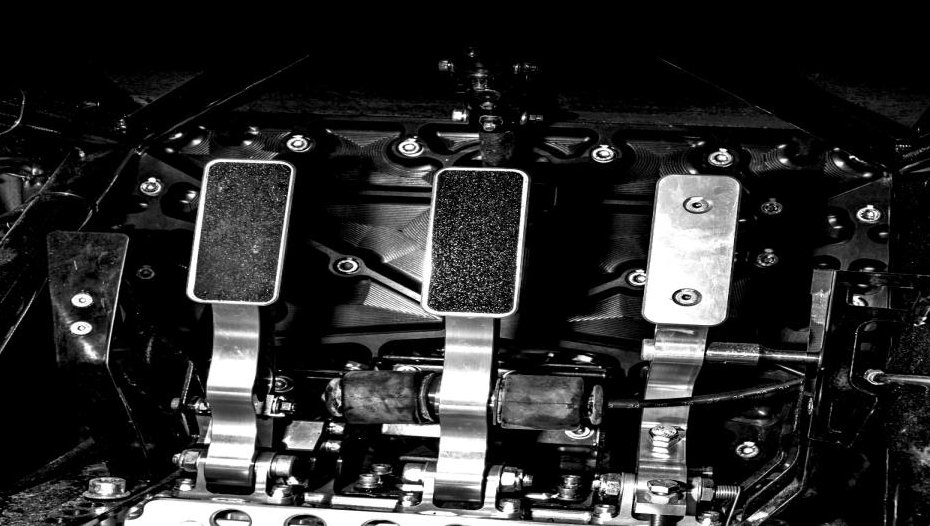
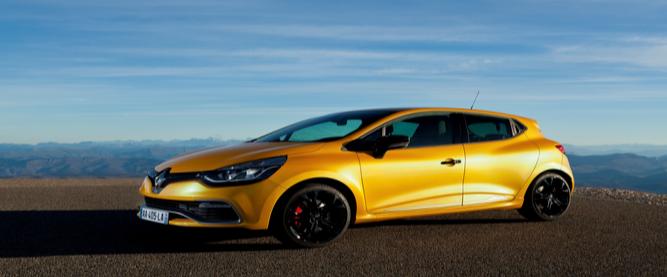
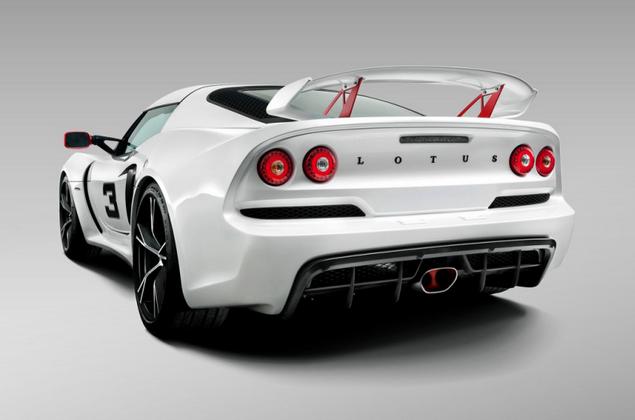
The first three track tests in RACER'S reflect the trend in modern sports cars very well. The clutch pedal is gradually disappearing, giving way to robotised or sequential gearboxes. You can see it at every sports car manufacturer, whether German, French, Italian or Japanese. Ferrari gave up manual gearboxes a long time ago, Nissan has been causing a stir with its dual-clutch gearbox since the launch of the GT-R, the new Clio 4 RS has paddles on the steering wheel, and even Porsche, which held out with its sporting models, no longer offers the GT3 with a manual gearbox. That is how heel-and-toe is slowly being lost, becoming less and less useful for driving. But fortunately for us, there are still plenty of manual gearbox aficionados... Take the career of a young driver who starts in karting, moves up to F4 and then Formula Renault, and ends up in Formula 1: he will never have had to press a clutch pedal to downshift! Incredible, isn't it? There is even a rumour in the trade that some current F1 drivers would be unable to drive a historic car on a track, where heel-and-toe and double-declutching are compulsory.

Heel-and-toe
So why tackle this subject in 2013? Even though the trend is slowly changing, the vast majority of sports cars that run on club days still have a manual gearbox: Megane RS, Lotus Exige, BMW M3, Porsche 997 GT3 and so on. That said, I will not run down sequential or robotised gearboxes in this article, because everyone is free to choose what they want for their car and finds their driving pleasure in their own way. It is no coincidence, after all, that manual gearboxes have not existed in competition for many years: electronics do it far better than we do, and in terms of performance it is unbeatable! But mastering heel-and-toe still brings a great deal of personal satisfaction, as every blip of the throttle on a downshift awakens our senses. Learning the technique takes a long time, a very long time, and the driving schools that still teach it are becoming rarer and rarer. This article will help you understand what it is for and give you the basics to put it into practice, but the most important advice we can give is to practise it every day to master it, at the risk of looking ridiculous pulling up at a red light in the middle of Paris in your little diesel...

Gearbox lock-up
Before getting into the technique itself, we need to understand why heel-and-toe is needed on a car with a manual gearbox. There are many misconceptions about it, such as the idea that there is a real one and a fake one, or that it lets you change gear faster, but its main role is to prevent gearbox lock-up. This shows up as a very unpleasant sensation, especially at high speed, of the driven wheels locking. On a front-wheel-drive car, not mastering it has no great consequences, but as soon as you start driving hard in a rear-wheel-drive car, the rear wheels locking can have... surprising effects! To understand what gearbox lock-up is, we need to break down all the stages of a downshift and analyse the impact of our actions on the mechanics and on the behaviour of the car. The main mechanical assemblies that play a part during gear changes are the clutch and the gearbox: conveniently, these are things we can act on! When we say "gearbox", we will treat it as exactly equivalent to the wheels. The rotation speed is of course not the same in value, but it is directly linked and proportional. To begin a downshift, we generally start by pressing the left pedal. We say that we "declutch". This means that we cut the link between the engine and the wheels so that we can operate the gearbox. We are therefore left with two completely separate mechanical assemblies, which will turn at different speeds. The wheels keep a high rotation speed because they are in contact with the road, while the engine's revs fall because it is free. That is where the whole problem lies! When we release the clutch pedal, the engine and the gearbox will be turning at very different speeds, with 2 possible outcomes: either the engine speeds up to match the rotation speed of the wheels, or the wheels slow down to match the engine. If you have ever tried to turn an engine's crankshaft by hand, you will have noticed that it is quite hard... So it is the wheels that slow down! The moment we re-engage the clutch, the gearbox "locks" so that the wheels return to a rotation speed that matches the engine speed. When driving a rear-wheel-drive car this phenomenon is a real nuisance, because during braking there is a load transfer to the front of the car. The rear axle is unloaded, causing the rear wheels to lock instantly when you release the clutch. On a high-speed downshift while the car is loaded up in a corner, it can really, really end badly!!!
The throttle blip
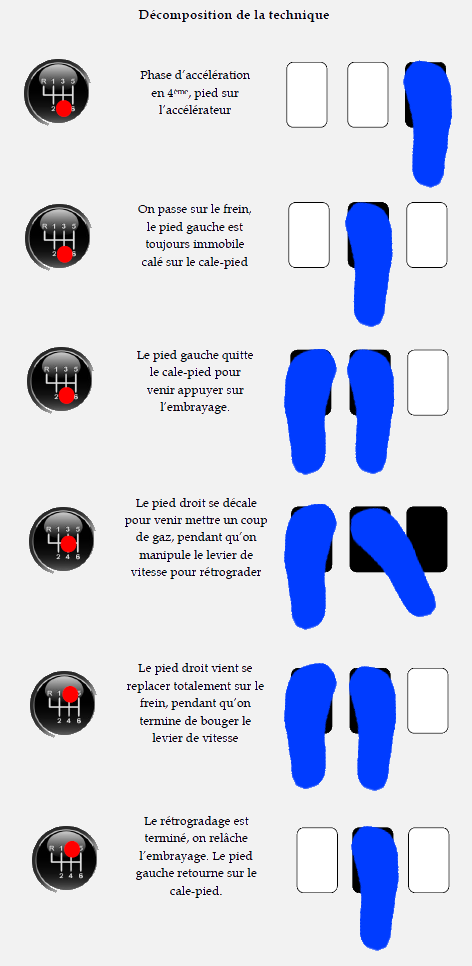
To get round this problem, we have to give the throttle a blip before releasing the clutch pedal. This brings the engine speed up to a level close to that of the gearbox (and therefore of the wheels), and avoids lock-up. This is called the "throttle blip". The only problem is that at that moment we are rather busy! Left foot on the clutch, right foot on the brake, one hand on the steering wheel and the other changing gear. You can try phoning a friend, but overall we have very little left to spare to give that blip of throttle. We have to press three pedals at the same time when we only have two feet (or so it would seem...), and of course it is the right foot that has to share itself between the brake and the accelerator. The term "heel-and-toe" is a misnomer, because it is not literally the heel that touches the throttle pedal. Depending on the pedal layout, you will adapt the position of your foot across the two pedals.
Difficulties
There are two big difficulties in applying this technique. The first is that the throttle blip must be made at the right moment and with the right intensity to be effective. If you do it too early, the engine will drop back in revs before you have released the left pedal and will not completely eliminate the gearbox lock-up. If you do it too hard, the engine will be revving too high and will tend to "push" the car when you release the clutch. The second difficulty is one of the most important points to remember from this article: heel-and-toe must NEVER disturb the braking. It will therefore take many long hours of practice to master this technique, the aim being to make it completely automatic so that you can concentrate on the other things you have to manage at that moment. Once you have these prerequisites in mind, you have to get started in stages. First, practise the movements by breaking them down while stationary, with the engine off. Then, without touching the brakes, learn to time a brief, precise throttle blip when you downshift, for example when approaching a roundabout. And finally, put it all together to produce a heel-and-toe. At the start it will look like nothing and you will look ridiculous, the car lurching because you moved too much on the brake pedal, or because the blip was too strong. But before mastering it completely, we have all been through that...
The real one, the fake one?
For some years now there has been a controversy about how heel-and-toe should be done. There is supposedly a real one and a fake one, and only the "deadly killer drivers" would use the "REAL" one! But in reality it is not a matter of falsifying a technique, but of adapting to technical developments in our gearboxes. Indeed, the old generation of heel-and-toe combined the technique with "double-declutching". For example, on a historic car that does not have a synchromesh gearbox, you must double-declutch for the gears to engage, otherwise it crunches! On modern cars it is no longer necessary, because the synchromesh makes our job easier. To understand properly, you have to look inside a gearbox. If you are lost by the end of this page, don't panic! Doing the first one is more than enough these days.
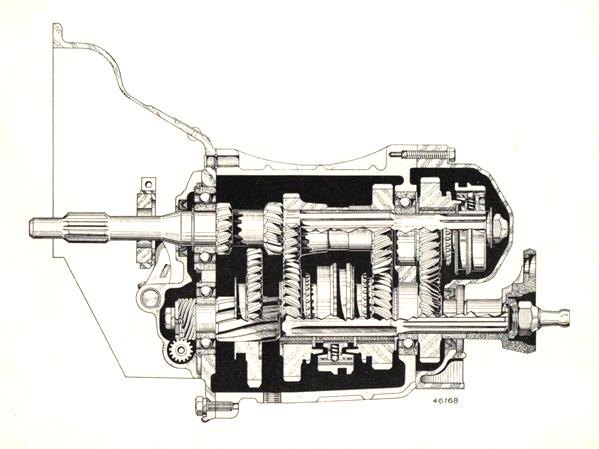
To try to sketch the situation simply, there is an input shaft and an output shaft. The input shaft is the one connected to the engine (when the clutch is engaged), and the output shaft is the one connected to the wheels. Double-declutching consists of spinning up the input shaft so that the gears mesh more easily when you downshift. You release the clutch while the gear lever is in neutral, and blip the throttle at that precise moment. Since the clutch is engaged but the gearbox is in neutral, the engine will give speed back to the input shaft while the output shaft keeps turning with the wheels. When you finish the downshift with the gear lever, the two shafts will be turning at roughly similar speeds, assuming you gave the right blip... The gears will therefore be able to mesh without difficulty and there will be no "crunching". For many years now, gearboxes have had "synchros" that help the gears to mesh. Doing the "simple" version is enough to avoid gearbox lock-up and nasty surprises when driving a rear-wheel-drive car. Going into the whole workings of a gearbox and the function of the synchros would be beyond the scope of motor-racing driving. We have simply given you a few elements to understand what happens mechanically and the point of performing the heel-and-toe technique. For those who want to go deeper into the subject (and who have not fallen asleep), you will find below two very useful links for understanding in detail how a gearbox works.
Useful links
- stephane.genouel.free.fr: an excellent blog explaining how a manual gearbox works. At the bottom of the articles there is an animation that lets you move the gear lever and see the mechanical action it produces. Perfect for understanding how it works. Well done to him!
- www.engineworld.fr: another very good blog with quality articles, not devoted solely to gearboxes. You will also find articles on mechanics in general, in particular detailed explanations of how new-generation dual-clutch gearboxes work.
This article comes from issue 4 of Racer's, Marc Peraldi's magazine. Thank you, Marc!


